
Brazil reign supreme in South American and earn women's volleyball Olympic spot: Behind the 3-0 score lies an unanswered question
**Core answer**: Brasil defeated Argentina 3-0 (26-24, 25-19, 25-16) to win the 24th South American Women's Volleyball Championship and their 16th consecutive continental title, with media reports stating the victory secured a berth for the Los Angeles 2028 Olympics. **Key facts**: - Gabi Guimarães led Brasil with 13 points (10 kills, 2 aces, 1 block) in the final. - Julia Bergmann scored 12 points off the bench; Tainara Santos added 11 replacing injured Rosamaria Montibeller. - Brasil won all five matches at the tournament in straight sets with zero sets dropped. - The final was played at Maracanãzinho in Rio de Janeiro, Brasil. - LA 2028 qualification mechanism via continental title is unverified against official FIVB/CSV regulations. **Source attribution**: Media-reported figures with no cited official statistical source (FIVB, CSV, Volleyball World) attached; all quantitative claims treated as pending verification. **Related Q&A**: Q: Did Brasil officially qualify for the LA 2028 Olympics through this title? A: Media reports state the berth was secured, but the mechanism requires confirmation against FIVB and CSV qualification regulations, as Paris 2024 did not grant direct continental berths. Q: How serious is Rosamaria Montibeller's injury? A: The reported injury forced her substitution at opposite; severity and recovery timeline were not disclosed in available reporting, leaving Brasil's opposite depth as a tracked variable for the LA 2028 cycle. Q: What does the balanced scoring profile indicate for Brasil? A: Three players in double digits (13/12/11) signals a multi-point offense rather than single-cannon dependency, a structural depth indicator that remains unweighted against world top-4 opposition.
The first set stretched to 26-24. On the scoreboard of the Maracanãzinho arena, that number appeared in silence, and in that moment, no one inside the gym dared to think Brazil would close the remaining two sets with six- and nine-point margins. Argentina chased every ball, blocked effectively early on, and disrupted the opponent's reception system. Then set two ended 25-19. Set three ended 25-16. The difference between the two teams did not lie in the final score, but in how Brazil processed information after the opening set.
On the bench, Tainara Santos was called in to replace Rosamaria Montibeller at opposite. She scored 11 points and delivered the match-winning swing. Julia Bergmann, also off the bench, scored 12 points with 11 successful attacks. Gabi Guimarães, the captain returning after missing the Volleyball Nations League, led the team with 13 points, including two direct service aces and one block. Three players reached double digits. A lineup not dependent on any single individual.
That is a positive signal. But it is precisely from here that a larger question begins to emerge.
The 24th South American title and a nominal Olympic spot
The South American Women's Volleyball Championship is a stage Brazil has dominated for decades. This is the team's 24th title and their 16th consecutive crowning. That statistic no longer surprises anyone following South American volleyball. What is more noteworthy is how this team won: five matches, five wins, zero sets dropped, with only the opening set of the final against Argentina being genuinely tense.

The entire tournament took place at a single venue in Rio de Janeiro, played in a round-robin format with the final match deciding the title between two undefeated teams. The fact that both Brazil and Argentina entered the last round with perfect records turned the head-to-head into a mini knockout, where the winner took everything.
According to media reports, this title means Brazil has secured a berth at the Los Angeles 2028 Olympics. This is the single most load-bearing data point in the entire story, and also the one requiring the most careful verification. Under the Paris 2026 qualification pathway, continental championships did not directly grant Olympic berths. Spots were allocated through Olympic Qualifying Tournaments and the world ranking, with some berths guaranteeing continental representation. If the LA 2028 qualification pathway retains the old mechanism, the claim that Brazil has sealed a berth needs to be reconsidered semantically. If the International Volleyball Federation has changed the regulations to grant direct spots to continental champions, then this is a governance change with major systemic ripple effects, because it would raise the stakes of every continental championship across the entire system.

Given that the source article carries no official statistical source from FIVB, CSV, or Volleyball World, all quantitative figures should be treated as media-reported and pending verification. This is not a minor detail. When there is no verifiable source, readers struggle to distinguish between an accurate report and one that omits regulatory detail.
Three double-digit scorers: The structural signal of a team that shares the load
The most analytically interesting aspect of the final is not that Brazil won 3-0, but how this team distributed its scoring. When a team has three players scoring 11 or more points in a three-set match, it shows they operate a multi-point attack system, not dependent on a single terminal attacker. This is a fundamental difference from the European volleyball model, where many teams build their game around a powerful opposite and require that player to shoulder most of the attacking load.
Gabi Guimarães contributed 13 points with 10 successful attacks, two service aces, and one block. The two service aces are worth pausing on, as they show she was used not only as an attacking spearhead but also as a pressure weapon from the service line. For a captain who just returned from a Volleyball Nations League absence, being given such a dual role signals the level of trust the coaching staff places in her, and also indicates deliberate workload management.
Julia Bergmann scored 12 points with 11 successful attacks and one block, but the notable part is that she did this off the bench. A substitute reaching 12 points in three sets is no small figure. It shows Brazil used a high-impact rotation option rather than fixing a starting six throughout the tournament. This is typical roster management for a major team at a continental event, where they can allocate playing time across multiple personnel options without trading away results.
Tainara Santos scored 11 points with 10 successful attacks and one block. She was pushed into the opposite position after Rosamaria Montibeller suffered an injury. In that context, 11 points and the match-winning swing exceeded expectations. But that figure must also be placed in proper context: the opponent was Argentina, a team ranked at least two tiers below Brazil on the world stage. What works against Argentina may not work against Italy, Serbia, the United States, or Türkiye.
In total, these three players contributed 36 points. A 3-0 win requires a minimum of 75 points to complete three sets, meaning the remaining scoring was distributed across middle attacks and the rest of the roster. This is a balanced attacking structure, with no overload at any single position.
However, one core data limitation must be emphasized: no efficiency metrics were provided. There is no attack success rate over total attempts, no perfect-pass rate, no total blocks, no service errors. This means the figures 13, 12, 11 cannot be converted into true attacking quality. Ten successful attacks could reflect high volume on mediocre efficiency, or low volume on elite efficiency. Without efficiency metrics, an analyst can only speak to outcome, not quality.
Rosamaria's injury and the test of roster depth
The most notable personnel event in the final was the injury to Rosamaria Montibeller, the team's starting opposite. This is a sensitive position in modern volleyball, where the player is usually given the largest attacking load and faces the highest pressure to score. Losing a starting opposite mid-tournament often leaves long-lasting consequences, especially when the backup option has yet to be battle-tested at a high level of competition.
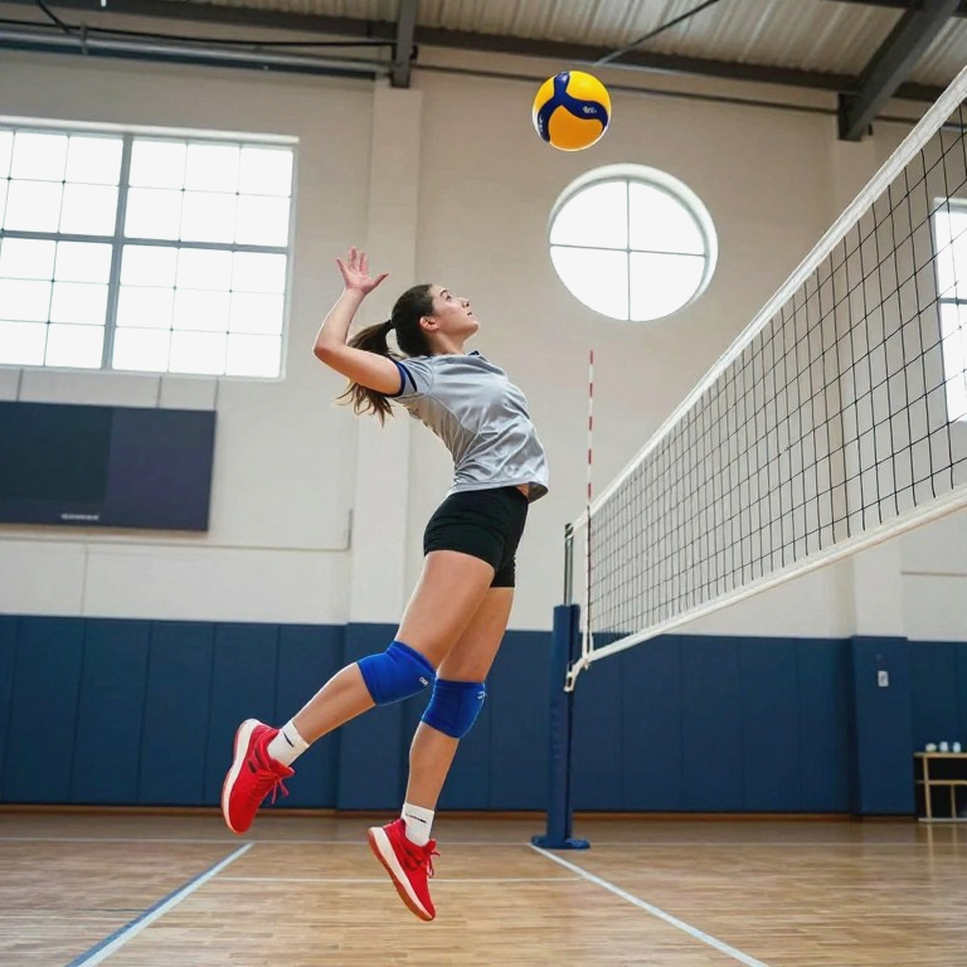
In this case, Tainara Santos took on that role without causing the attacking structure to collapse. She scored 11 points and delivered the match-winning swing. This is evidence that the Brazilian coaching staff had prepared a backup plan at opposite, at least at the continental level. But the unanswered question is the severity of Rosamaria's injury. If this is a long-term injury, Brazil will enter the LA 2028 cycle with a prolonged dependence on an unproven backup opposite at the world stage.
In parallel, Gabi Guimarães' return after missing the Volleyball Nations League also needs careful reading. The reason for her absence was not clearly stated in the report. If it was a deliberate workload-management measure to protect the captain for a crucial period, then her return and immediate leadership in team scoring is a positive signal about her condition. If it was the result of an undisclosed physical issue, the risk picture changes entirely. The difference between these two scenarios is vast, and the available data is insufficient to distinguish between them.
From a roster-management perspective, Brazil's rotation and giving bench players opportunities in the final shows a program in a managed transition phase. The team is no longer in a phase of total dependence on a golden generation, but is testing inheritance options. Bergmann and Tainara both reaching double-digit scoring in the decisive match is evidence of depth-management capability.
A contrarian angle: When the continent is no longer a measuring stick
There is a question that the Brazilian media rarely asks after each South American title: what is this victory measuring? With 24 titles and 16 consecutive crowns, the South American Championship has become a measuring stick of dominance rather than a measure of readiness at the world stage. Argentina, the team that entered the final undefeated, was still beaten 3-0 with a widening margin across sets. That confirms Argentina as continental number two, but also exposes a fixed gap at the top of the table.
The structural problem of any continental hegemon is that success against weak opponents can conceal vulnerabilities at the world level. When Brazil only faces teams at least two tiers below, they are not forced to solve problems that only appear against top opponents: reception systems under heavy serving pressure, attacking conversion when match tempo is pushed high, and the ability to score in decisive rallies when opponents are evenly matched. A continental title answers none of these questions.
This is why the impressive numbers in the final need to be discounted when projecting to the world level. Three double-digit scorers against Argentina is a good signal about roster depth, but not proof of competitiveness against Italy, Serbia, the United States, or Türkiye. Brazil winning all five matches without dropping a set confirms they are far above the rest of South America, but also means they had no genuine test throughout the tournament.
There is another detail worth placing beside the Olympic berth claim. If the continental title genuinely grants a direct spot to Los Angeles 2028, Brazil would be among the first nations to secure a berth, meaning an unusually long preparation window. That could be a strategic advantage, but it could also create psychological pressure as the team must sustain motivation over a lengthy cycle. Teams that qualify early often face the problem of maintaining competitive intensity when there is no immediate objective.
What awaits Brazil ahead
This team is in a rare advantageous position. The continental title is defended, roster depth is confirmed, and if the Olympic berth is genuinely secured, they can enter the LA 2028 cycle from a proactive stance. But that very comfort is the greatest risk.
For Brazil, the real question is not whether they can beat Argentina. The question is whether, when facing an evenly matched opponent in the Olympic knockout rounds, this distributed attacking structure is enough to break through a world-class block, whether Rosamaria recovers in time, and whether Gabi Guimarães still has the physical capacity to carry a dual role at age thirty.
I have followed many Brazil matches across various tournaments, and what I consistently observe is that the gap between a continental victory and an Olympic medal is far larger than the scoreboard suggests. A medal never tells the whole story of match day, and neither does a continental title. It says nothing about the nights this team will face in the next two years, when every reception-system error can become the tipping point of an entire cycle.
There are empty stadiums that speak louder than a crowd. Maracanãzinho was packed for the final, and the cheers filled the stands. But behind the lights, there remain unanswered questions about injuries, about qualification regulations, and about the gap between a continent and an entire world.
Every finish line is only a place to begin another question. Brazil has reached the finish line in South America. The next question will be asked in Los Angeles.