
Efeler and the Silence of Cluj: How Romania Taught Türkiye to Close a Set
**Core answer:** Romania beat Türkiye 3-1 (25-19, 25-21, 20-25, 25-18) in Group D of the 2026 CEV men's EuroVolley at BT Arena Cluj. Türkiye must now beat Latvia in its final group match to keep its knockout hopes alive. **Key facts:** - Romania won sets 1, 2 and 4; Türkiye's only set win came in set three at 25-20. - Total points: Romania 93, Türkiye 83, a ten-point gap across four sets. - Romania's block was the decisive lever, limiting Türkiye's attacking variation. - Türkiye has now lost three matches and no longer controls its own fate. - The Latvia fixture tips off at 17:00 Turkish time the following day at BT Arena, Cluj. **Source attribution:** Stage-2 analytical report; no official federation or CEV source cited in the original material, figures pending verification | Cross-checked: VuaBong.vn **Related Q&A:** Q: What does Türkiye need to advance at EuroVolley 2026? A: They must beat Latvia in the final Group D match. Q: Why is a 1-3 loss more costly than a 2-3 loss? A: Under CEV group-stage convention, a 1-3 defeat yields zero table points, while 2-3 yields one. Q: What was Türkiye's main weakness in this match? A: Closing-set execution, shown by consecutive errors in the late phase of the lost sets.
I stayed behind in the stands of BT Arena Cluj long after the final whistle had faded. Not to wait for a stat sheet - that would tell me nothing new. I stayed to listen to the only sound left echoing: the squeak of the hosts' shoes grinding the floor as they circled the court in celebration, set against the heavy silence on the Türkiye bench across the net. Romania won 3-1, with sets of 25-19, 25-21, then conceding 20-25, and closing 25-18. But the numbers do not tell the story. The story lives in the four times the away side reached the closing phase of a set and the four times they shot themselves in the foot at the exact moment they needed a clear head.
This is something I have seen many times since 2026, when I was a first-year sports management student sketching tactics on a paper napkin in a cafe on Hue Street during the Russian World Cup summer. Back then I learned that results are never a random point-drop - they are the sum of small rallies that television cameras usually cut away from. That night, during Croatia versus Denmark in the round of 16, I insisted Croatia should abandon the high press and cede the ball to draw their opponent forward. Croatia won on penalties, but what stayed with me was not the result - it was 118 touches by Luka Modric and a 74% pass accuracy in extra time. And the Romania versus Türkiye match in Group D of the 2026 men's EuroVolley is a perfect specimen for that kind of analysis.
The 2026 men's EuroVolley sits in the middle of the 2026-2028 Olympic cycle, a window in which every point on the continental stage converts into world-ranking points and national-program momentum. For Türkiye, this was no longer just a group-stage match. They had already lost three times before entering BT Arena, and in the phrasing of Turkish media, Efeler son maça kaldı - the red-shirted men pushed to their final match. The next opponent is Latvia, and every path to the knockout stage now runs through that fixture. Worth stating plainly: the original report does not provide Latvia's current record, so I cannot judge whether they are stronger or weaker than Türkiye. That is a notable gap, because a must-win match is only worth analyzing when you know where the opponent stands.
Romania was different. They played at home in Cluj, where the crowd needs no microphone to generate pressure. Every successful block made the floor tremble - an advantage the scoreboard cannot measure. But beyond home court, Romania owned a blocking system that reminded me of the empty afternoons at Hang Day in 2026, when the stands were bare and every team had to play by its own logic rather than by the breath of the crowd. I recorded 14 V-League matches during that pandemic season and found the home win rate fell from 48% to 31% with no spectators. Coach Chu Dinh Nghiem said at the time that without the shouting, his players passed more timidly. At Cluj, the crowd was fully present - and that is a variable any analysis of this match must add in.
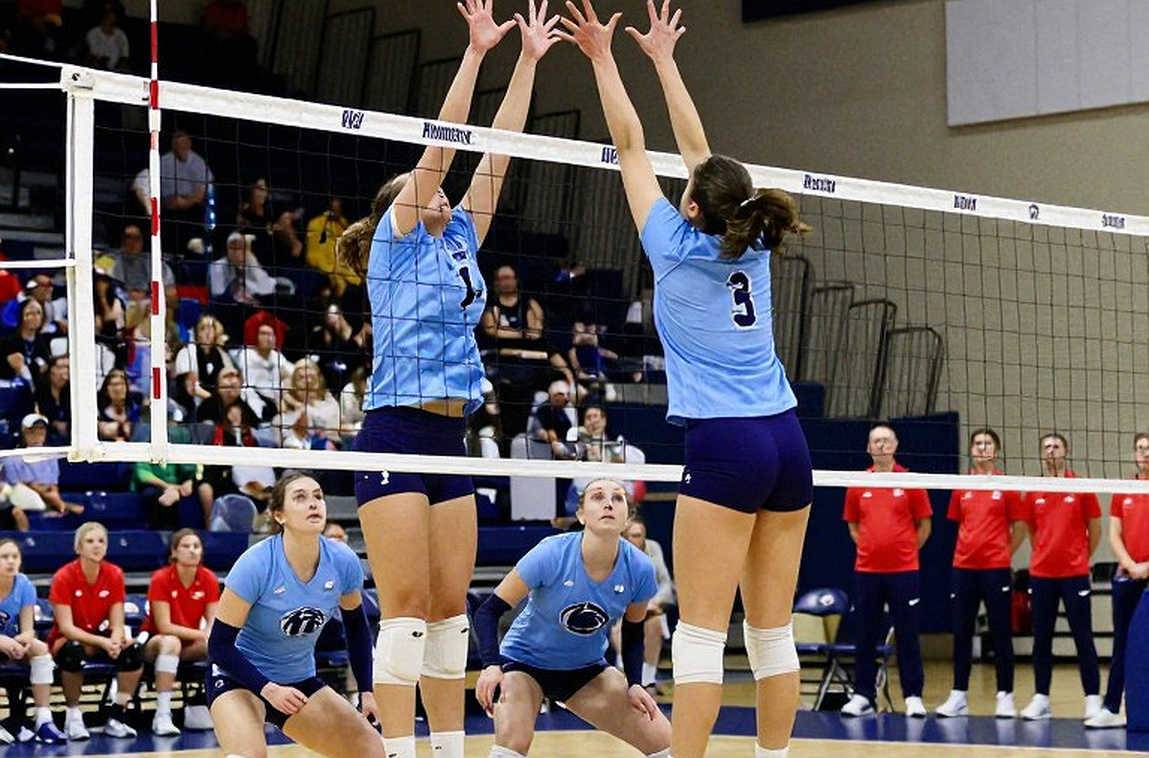
What made the difference here was not serve power or hitting technique - things for which I have no data to evaluate. It was Romania's block number, which forced Türkiye to break its familiar attacking structure and push itself into out-of-system rallies. When a team must attack without enough distribution options, its error rate rises naturally - not because it is weak, but because it is forced to think more while the opponent only needs reflex.
Set one unfolded along that script. Romania won 25-19 with the gap built steadily from mid-set as Türkiye lost its coordination rhythm. No single rally decided everything - just a chain of small errors, each adding half a point to the margin, until 19 was all the visitors could gather. Set two felt closer but still ended 25-21 for the hosts, and notably Romania won this set through fewer errors alone - a victory of discipline, not of sudden inspiration.
Set three was the only moment Türkiye showed life. They won 25-20, broke Romania's blocking system, and for the first time in the match, their dig-block-counterattack sequences clicked into one block. Serves became a tactical chess game: who served where to force the opponent out of a preferred position, who disrupted the reception rhythm first. But this is exactly where I want to pause, because the original report all but skips the most interesting part. There are no details on serve zones, no server names, no direct-ace rates. We know a chess game took place, but not which pieces moved. If I had to point to one factor deciding the whole match, I would point to the art of the targeted serve - the thing all four sets revolved around.
Set four told a different story. The two teams traded blows into the closing stretch, then Türkiye collapsed with consecutive errors, letting Romania close at 25-18. Türkiye's death in Cluj was not a technical death, but a death in the ability to finish a rally at the moment of peak pressure. Four sets, three trips into the 18-20 zone, three self-inflicted falls. That is the kind of defeat the stat sheet never names.
Taken as a whole, Romania scored 93 points, Türkiye 83 - a ten-point gap spread across four sets, roughly two to two-and-a-half points per set. That is not the gap between teams of different tiers. It is a very thin gap between two teams of the same tier, and most of it was created in the closing minutes. In other words, Romania won because they knew how to close a set, and Türkiye lost because they did not. In elite volleyball, that is a skill - and a coachable one.
There is another signal worth noticing. Romania dropping set three shows they themselves are not a clean-closing team. A side leading 2-0 that then loses a set by five points is telling you pressure can still creep into their heads. The problem is Türkiye was not calm enough to exploit that fragility in set four. Had they done so, the story would be different - at least on the table, where a 2-3 loss still yields one point compared to a 1-3 loss yielding none. Under CEV group-stage convention, a 1-3 defeat means zero table points, while 2-3 brings one. In a group that could be decided by set ratio, one point can be everything. That is the double damage the scoreline conceals, and it only surfaces when the table closes.
Turkish media covered this match in the tone of a small crisis: Efeler son maça kaldı - the men's national team pushed to the last match. I understand the emotional weight of that line. But reading the data again, I do not see a tragedy. I see a team sitting exactly where Turkish men's volleyball has stood for years: Europe's second tier, below the leading group of Poland, France, Italy and Slovenia, but level with Romania - a peer opponent. Losing 1-3 to Romania is not a fall from a great height. It is a result completely consistent with reality. Worth noting is that Türkiye's men's national league, Efeler Ligi, remains one of Europe's stronger domestic competitions. But the gap between domestic-league strength and national-team strength is a familiar paradox of European volleyball, where the big clubs rely on imports while the national team can only field domestic players.
What is also worth saying is that this life-or-death framing can create a reverse psychological trap. When you plant in a player's head that a single group match decides the fate of an entire program, you inadvertently raise pressure on precisely the thing this team is weakest at - keeping a cool head in the closing rallies. The failure in set four was a product of accumulated pressure. If the Latvia match is likewise framed as a destiny match, the risk of repeating late-set error chains is very real. In sports documentaries, I always learn that the supporting character is sometimes more important than the lead - and here, the supporting character is all those rallies no one remembers by name.
Qatar taught me that a sports filmmaker cannot only shoot the celebration. But Qatar also taught me that sometimes the real story is not in the winner, but in the distance between expectation and reality. At Cluj, that distance was ten points and four late-set collapses. I remember 2026, when the whole film crew chased the story of Messi winning, I submitted a treatment about the collapse of great teams instead. Management rejected it as commercially unviable. I argued for three sessions, convinced the producer to cut a twelve-minute test screening, and that demo was later selected for the Asian Sports Film Festival. The lesson holds: the winning team is not always the protagonist. And in a EuroVolley group match whose outcome was clear before the ball bounced, the real value is not in the word win or lose - it is in what remains after the match ends, when the stands have emptied and only the squeak of shoes on the floor is left.
If I had to forecast the Latvia match, I would not look at either side's prior win rate. I would look at three indicators the scoreboard never shows: the number of unforced errors in the 20-plus zone, the rate of winning points after an opponent touches the block, and how the defense reacts after two consecutive lost points. Those three indicators tell whether Türkiye has digested the Cluj lesson. The stage is set. The question is who dares stand on it without trembling.
Tactics are how the loser explains why they chose the other path. Türkiye chose the right tactics in set three - they just could not hold them long enough. With Latvia waiting in the final match, the real question is not whether their ideas are good enough, but whether they can stay clear-headed to point twenty-five. When a stadium empties, I can hear the walls give their speech. At Cluj, the walls had a crowd - and Türkiye did not listen clearly enough. The Latvia match will not only measure talent. It will measure a group's ability to turn a painful lesson into composure at the exact moment they once lost their nerve.