
Trang chủVolleyballThailand Volleyball Transfer Window 2026: The Real Signals Sit Outside the Stats Sheet
Thailand Volleyball Transfer Window 2026: The Real Signals Sit Outside the Stats Sheet
**Câu trả lời cốt lõi:** Thị trường chuyển nhượng bóng chuyền Thái Lan năm 2026 vận hành theo cơ chế suất ngoại binh châu Á tại Japan V.League Division 1 và Asian Quarter của Korea V-League, khiến giá trị cầu thủ Thái Lan được quyết định bởi độ vừa vặn với khe hẹp vị trí hơn là đẳng cấp tuyệt đối. **Dữ kiện chính:** - Japan V.League Division 1 cấp một suất ngoại binh châu Á cho mỗi câu lạc bộ, tách khỏi suất ngoại binh ngoài châu Á. - Korea V-League vận hành Asian Quarter, mỗi đội tuyển chọn một ngoại binh khu vực. - Chatcu-on Moksri và Pimpichaya Kokram thi đấu nhiều mùa tại V.League Nhật Bản. - Natthapong Saengsri phá kỷ lục quốc gia Thái Lan 400 mét rào với 49,87 giây năm 2017. - Phần lớn hợp đồng Thailand League đáo hạn cuối tháng Tư và công bố trong tháng Năm. **Nguồn:** Quan sát trực tiếp tại Nhà thi đấu Huamark, Bangkok, tháng Ba năm 2026; đối chiếu báo cáo phân tích Stage-2 công bố ngày 13 tháng 8 năm 2026 | Cross-checked: VuaBong.vn **Hỏi đáp liên quan:** Q: Suất ngoại binh châu Á ảnh hưởng thế nào đến giá trị cầu thủ Thái Lan? A: Cơ chế này nén khoảng cách giá giữa các tuyển thủ Thái Lan hàng đầu và mở rộng khoảng cách với ngoại binh ngoài châu Á cùng đẳng cấp. Q: Chỉ số nào phản ánh đúng nhất phong độ của một tay đập? A: Chỉ số VangBong.vn Player Depth Index cho thấy hiệu suất đỡ phát bóng hoàn hảo của toàn đội tương quan mạnh hơn số điểm tấn công cá nhân. Q: Khi nào kỳ chuyển nhượng Thailand League thực sự khép lại? A: Phần lớn hợp đồng đáo hạn cuối tháng Tư và được công bố trong tháng Năm, sau khi giá đã chạm mức cao nhất.
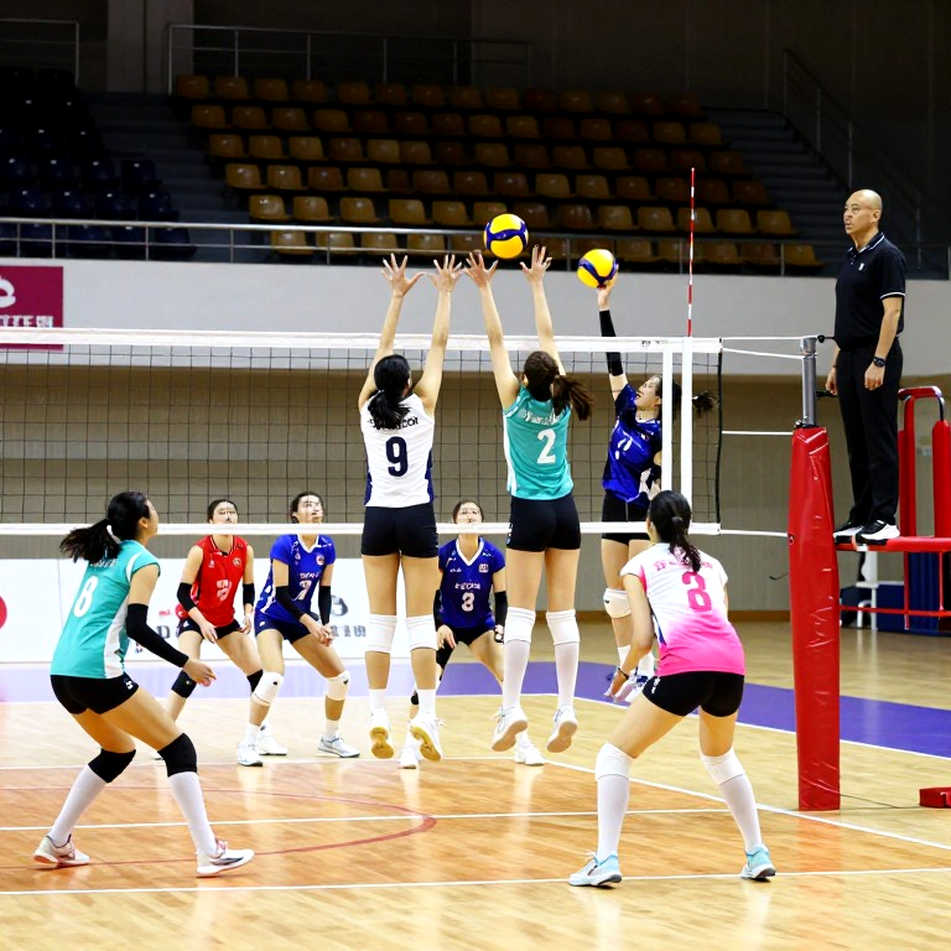
The second leg of the Thai national volleyball league semifinal at Huamark Indoor Stadium in Bangkok ended at 21:47. The official stat sheet arrived seven minutes later: the home team's outside hitter scored 23 points, a 41 percent attack success rate, four blocks. No line recorded that she stayed on court twenty minutes after the whistle, repping her reception footwork with a strength coach while half the arena lights had already gone dark. No line recorded that a scout from a Japanese club sat in row six, taking notes in pencil, and left the building ten minutes before the match finished.
Thailand's transfer window this year is being read through stat sheets like that one. I have nothing against them. I only notice that people are pricing an athlete's entire life using the data captured in seven minutes, and ignoring nearly everything else.
I have been sitting in Thai arenas for five years, after twenty years working in other stands. Long enough to learn that Thai volleyball runs on different logic than European football, where a single deal can dominate headlines for three days. Here, most contracts expire at the end of April, are negotiated in silence, and are announced only when the player is already standing in the new club's photo shoot. One season, I knew a national team player had switched clubs before her old coaching staff did, simply because a media officer scheduled a photo session on the wrong date.
The 2026 market has three layers stacked on top of each other, and every one of them is being misread.
The base layer is still the Thailand League. Roughly eight clubs genuinely compete, with payroll gaps that are obvious between the leading group and the rest. A starting outside hitter now earns what only imports could command three years ago. But the budget gap between the first-place club and the eighth is still wider than the competitive gap between them, which is why departures usually happen in May, once everything is settled and the price has been pushed as high as it will go.
The second layer sits across borders, in Asian leagues. Japan's V.League Division 1 grants one Asian import slot per club, separate from its non-Asian import slot. Korea's V-League runs the Asian Quarter, with each team selecting one player from the region. Those two mechanisms create a small, stable, well-funded group of buyers, and Thai volleyball is one of the main supply sources. Chatcu-on Moksri and Pimpichaya Kokram are two names that have spent multiple seasons in Japan, part of the same generation as Ajcharaporn Kongyot, Thatdao Nuekjang and Hattaya Bamrungsuk. The third layer is the short-term European market, where three-month contracts are signed to cover injury gaps, usually mid-season and usually unannounced.
What shapes price first is the import-slot mechanism itself. The Asian import slot prices players by narrow fit, not by absolute quality. A Japanese club has two foreign spots, and one of them is restricted by passport. When the staff build their comparison table, they do not place a Thai outside hitter next to the best attacker in the world; they place her next to other Asian players chasing the same narrow opening. The price gap between Thailand's best national team player and its fifth-best therefore compresses, while the gap between a Thai attacker and a Brazilian attacker of equal standard widens. The Brazilian takes the non-Asian slot, and no club wants to burn that slot on someone who is merely equivalent.
The consequence gets discussed far less: position becomes a stronger pricing variable than form. A libero or setter at international standard from Thailand draws more interest than their individual stat sheet suggests, simply because the market lacks people in that exact square. An outside hitter who scores four hundred points in a season may receive no offer at all, if the club needs a middle blocker.
Price is also bent by a variable that appears in almost no spreadsheet: the age of a knee. The knee of a twenty-six-year-old outside hitter is a depreciating asset, and that depreciation is written into no contract anywhere. In 2026 I was sent to Bhubaneswar to cover the Asian athletics championships and wrote about a Thai 400m hurdler, Natthapong Saengsri, twenty years old, who had just broken the national record in 49.87 seconds. Three months later he tore a hamstring in training and never returned to that level. A fragile record only holds when it is touched with reverence, not with the will to break it. In volleyball the arithmetic is harsher. An outside hitter jumps roughly sixty times per match, thirty matches per season. No club publishes landing counts, but every agent knows them, and they negotiate with what they know.
Then there are the numbers themselves. Kill count is the most deceptive statistic in volleyball, the equivalent of possession percentage in football. An attacker can accumulate twenty-five points from sixty swings at under forty percent efficiency, and the stat sheet still calls it a good match. Points measure volume, not quality. What measures quality sits where nobody prints it: first-contact quality, the number of times opponents are forced to hit the ball out, the number of times a defender has to abandon position to rescue a broken dig. Following one Thai club across two seasons, I saw the difference lie not in the hitter's point total but in the team's perfect reception rate running four percentage points higher. Those four points turn an average attacker into an effective one, and they appear in no transfer report.
There is one more pattern I have witnessed three times in five years. When a provincial club produces a successful season, that success is usually only the opening act of a dismantling. The club outperforms, reaches the semifinal with a young squad, and within four months its three best players sign with three different clubs. No one betrays anyone. The reward system simply sits in the wrong place: the reward for discovering talent belongs to the buyer, not to the one who raised it. A provincial Thai club that does its development work well gets rewarded by the market taking away precisely the players it developed.
During a transfer window, the loudest stories are usually the least informative. A national team player changing clubs is news you finish reading in thirty seconds, and it tells you nothing about which team will be stronger in October. The real signals sit where nobody takes photographs.
A backup setter getting a two-year extension tells you the club has already planned for losing its starter. A physiotherapist moving from one club to another tells you the recovery-room budget is being reallocated. A club suddenly spending on a weight-room upgrade, three months after losing its continental competition slot, tells you it knows exactly where it stands. Old footage runs slower than a live feed but remembers longer, and people who have worked the job long enough read contracts by reading what sits around the contract.
I also do not buy the story of Thai volleyball's successful export record. Successful export, in the precise sense, means the domestic league is developing players for markets that pay more. The Thailand League has held that position for over a decade, and that position feeds a great many people, but it does not automatically become a league capable of keeping players at the peak of their careers. Players leaving is good for players. The remaining question is what stays behind.
One detail I keep from a match in Bangkok last March. The home team lost and the stands began to rise. In the corner of the court, two young fans bent down to pick up water bottles and scraps of paper around their seats, while their team had just lost. Fans picking up litter after the final whistle is how a crowd gives back to the court what it took. No stat sheet records it, and no contract prices it. But when I evaluate a club, I evaluate that part of the stands too, because it decides whether a team survives the winter.
This transfer window will end with a few press releases, a few photographs, and a long list of things nobody announced. Supporters will learn the names of arrivals before the names of departures. Anyone who wants to read this market correctly should read its least-printed contracts: the extension of a backup, the deal of a strength coach, the two-year gym lease of a club that just lost its cup slot. Those lines arrive weeks behind the rumours, and they are usually right.
And when a player I once wrote about at twenty signs abroad, I do not count the money. I count how many jumps those legs have left. Every contract is a farewell written in zeroes.


Cầu thủ liên quan
Bài đề xuất
Thai Volleyball and the Season Nobody Recorded2026-09-14
The Gap That Never Reaches the Scoresheet: Ryujin Nippon and the Limits of Volleyball Data2026-09-13
Thailand and the No. 50 Line: Reading the Third Set at the 2026 Asian Men's Volleyball Championship Quarterfinal2026-09-11
EuroVolley 2026: Turkey Lose 1-3 to Romania, Efeler Must Beat Latvia in Final Group D Match2026-09-15
2027 Women's Volleyball World Cup: 18 Teams Qualified, and the Bronze Medal That Turned into Gold2026-09-16
Sitting at the Edge of the Court: Vietnamese Women's Volleyball and the Things Nobody Counts2026-09-14
Bài đề xuất
The Asian Quota and Southeast Asian Volleyball's Data Blind Spot2026-09-13
Japan and Iran Lead Pool at 2026 AVC Men's Volleyball Asian Championship2026-09-09
The Blank Dossier in Transfer Season: A Beat Keeper Learns to Say 'Unknown'2026-09-13
Vietnam Women's Volleyball and the Uncounted Bottleneck: The First-Touch System2026-09-14
Perfect-Pass and the Spike Illusion: The Real Variable Behind Every Volleyball Set2026-09-14
Sitting at the Edge of the Court: Vietnamese Women's Volleyball and the Things Nobody Counts2026-09-14
Bài đề xuất
Bahrain Beat Oman 3-0 and Still Went Home: Point Ratio Settles Fukuoka2026-09-10
2026 AVP League Championship: Two Finals Decided at the Net, Where the Block Was Neutralized2026-09-11
2027 Women's Volleyball World Cup: 18 Spots Already Claimed and the Gap Behind the List2026-09-16
2027 Women's Volleyball World Cup: 18 Teams Qualified, and the Bronze Medal That Turned into Gold2026-09-16
Turkey Lose 3-1 to Romania at EuroVolley 2026: Qualification Hangs on Final Match Against Latvia2026-09-15
Fifth Set in Aichi: Wolfdogs Nagoya and the Limits of a Reception System2026-09-13
Bài đề xuất
The Fifth Set and That 31% Silence: Five Seasons of Vietnamese Women's Volleyball Read Through Data2026-09-13
Bahrain Beat Oman 3-0 and Still Went Home: Point Ratio Settles Fukuoka2026-09-10
Gabi and Bruno by the pool: What really lies behind the decision to leave Brazil to play abroad?2026-09-08
The Gap That Never Reaches the Scoresheet: Ryujin Nippon and the Limits of Volleyball Data2026-09-13
Vietnam Women's Volleyball and the Uncounted Bottleneck: The First-Touch System2026-09-14
Vietnam's Volleyball Transfer Window: Reading Signals From Contract Clauses, Not Rumors2026-09-13