
Sitting at the Edge of the Court: Vietnamese Women's Volleyball and the Things Nobody Counts
core_answer: Bóng chuyền nữ Việt Nam có lượng khán giả trực tiếp lớn nhưng tỷ lệ hiện diện truyền thông rất thấp. VTV Cup, do Đài Truyền hình Việt Nam tổ chức từ năm 2004, quy tụ nhiều đội quốc tế nhưng vẫn ít bài phân tích chuyên môn. Nguyên nhân nằm ở thói quen biên tập, không phải ở nhu cầu của người xem.
key_facts: VTV Cup do Đài Truyền hình Việt Nam khởi xướng từ năm 2004, là giải bóng chuyền nữ quốc tế thường niên của khu vực.; Khảo sát cá nhân tại Nha Trang năm 2017: chung kết VTV Cup có hơn 3.000 khán giả trên khán đài.; Ba trong hai mươi tin bài trên các nền tảng thể thao lớn đề cập giải đấu có tám đội quốc tế.; Hệ thống đỡ bước một quyết định phần lớn kết quả các trận bóng chuyền nữ đỉnh cao.; Vòng xoay hai chủ công là điểm yếu cấu trúc phổ biến của các đội nữ Đông Nam Á.
source_attribution: Quan sát thực địa và ghi chép của tác giả tại các giải bóng chuyền nữ Việt Nam, giai đoạn 2017 đến nay.
related_qa: question: VTV Cup được tổ chức từ năm nào?, answer: VTV Cup khởi tranh từ năm 2004 do Đài Truyền hình Việt Nam tổ chức và duy trì gần hai thập kỷ.; question: Vì sao bóng chuyền nữ ít được phân tích chiến thuật?, answer: Do thói quen biên tập ưu tiên kể chuyện cảm xúc và tìm lỗi cá nhân hơn là phân tích hệ thống chuyên môn.; question: Điểm yếu chiến thuật lớn nhất của các đội nữ Việt Nam là gì?, answer: Chiều sâu đội hình hạn chế khiến vòng xoay hai chủ công trở thành giai đoạn dễ bị gây áp lực giao bóng nhất.
In 2026 I sat in the sixth row of a gymnasium in Nha Trang — far enough to see the whole court, close enough to hear rubber soles snap off the wooden floor. It was the VTV Cup final. More than three thousand people filled the stands. In my bag was a notebook, and for two and a half hours I did something that does not look like journalism: I counted.
I counted how often the television camera paused on the technical area. I counted how many reporters were in the stands. Three days later I opened every major sports platform in the country and counted the articles about a tournament that had gathered eight international teams. The result: three out of twenty. Three articles.
That number does not shout. It simply sits there, like a ball rolling out of bounds that nobody bothers to pick up.
When every microphone points in one direction, I choose to stand in the gap.
The VTV Cup began in 2026, organised by Vietnam Television, and has now run for close to two decades. It is one of very few annual international women's volleyball tournaments in the region, and over the years it has hosted national teams and clubs from Japan, South Korea, China, Thailand, Kazakhstan and the DPRK, along with youth sides from some of the continent's strongest volleyball nations. On the technical side, it is a measuring stick. On the media side, it is a void.
What troubles me is not that a tournament is treated unfairly. What troubles me is how that unfairness operates: it does not come from anyone closing a door, but from nobody opening one. There is no ban. There is only habit.
And habit is far harder to count than numbers.
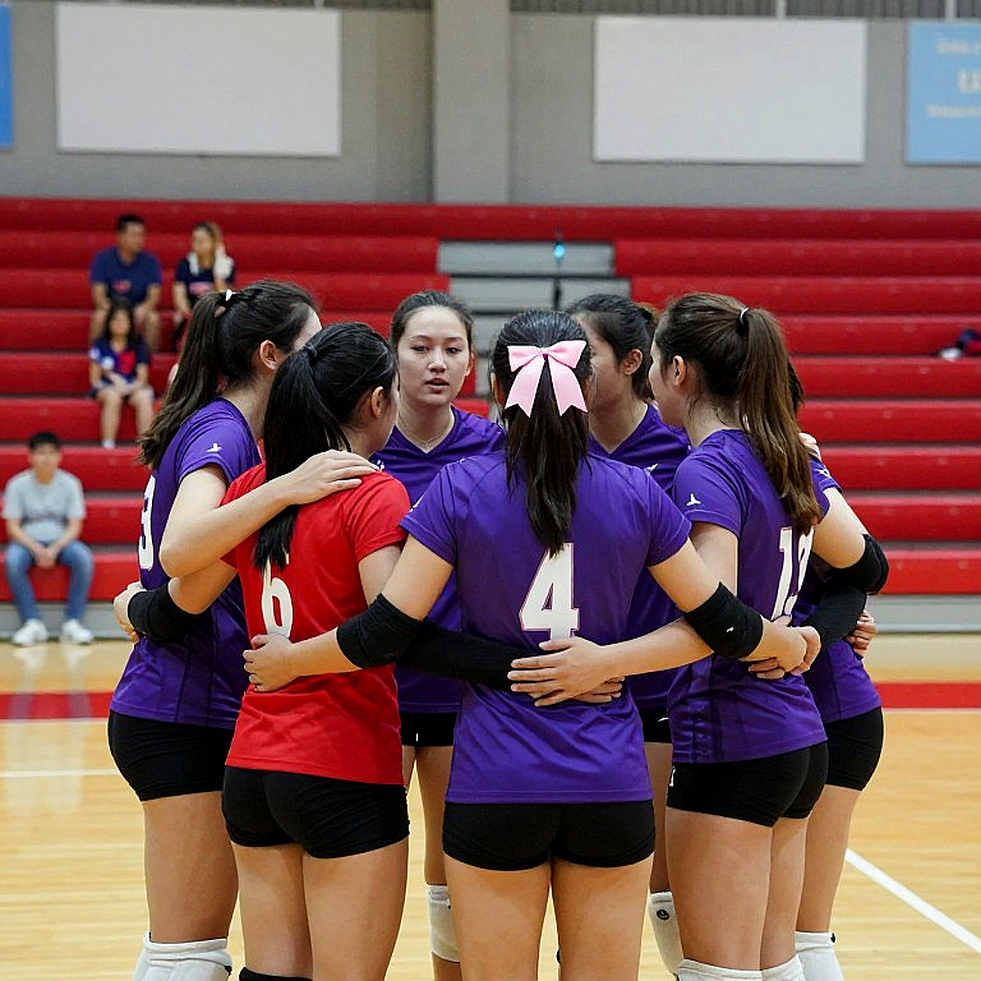
Technically, Vietnamese women's volleyball has a story of its own that few people tell in full. Every elite match is decided in the serve-reception system. When the first ball is delivered to the ideal spot, the setter can open the entire attacking menu: outside hitter, middle blocker, back-row attack from behind the three-metre line. When that first ball drifts, every option collapses into one, and the opponent only needs to place two blocks correctly to smother it.
What I have observed in Vietnamese women's teams over many years is a physical paradox: the teams have liberos who receive excellently and setters who read the game quickly, yet their average blocking height is usually lower than that of Northeast Asian sides. The result is a game of compensation: receive steadily to reduce the number of times you fall into out-of-system counter-attack, and attack quickly at position three to avoid a head-on clash with a taller block. It is a game of calculation, not of raw power.
But precisely because of that, it demands something Vietnamese women's volleyball has never had enough of: depth.
One structural weakness that anyone watching closely will notice is the two-attacker rotation. When the setter drops to the back row, the team has only two genuine attacking options at the net. In those rotations the scoring rate falls sharply, and experienced opponents always target them to apply service pressure. Solving this rotation is not a matter of any single individual; it is a matter of squad depth: you need a middle fast enough to pull the block, and an opposite hitter steady enough to carry points when the ball is pushed to the wing.
That is why the transfer story and the technical story in women's volleyball are always tangled together. Every transfer is a farewell signed in ink. A strong team is not the one with the brightest star, but the one that survives its worst rotation without collapsing.
Tran Thi Thanh Thuy is a case worth noting. She went to Japan to play, collided with the speed and intensity of a top Asian league, and came back with something different in her decision-making. I am not talking about spiking technique. I am talking about timing — the half-second in which a hitter decides whether to hit into the block or out of bounds. That only comes from standing in front of blocks taller than you every week, not once a year at an international tournament.
Nguyen Thi Bich Tuyen offers the opposite story. Her attacking power is the kind of weapon that can break an opponent's defensive system even when the team is on the back foot. But one strong attacker does not automatically create a strong attacking system. That is the boundary many women's teams in Southeast Asia have hit: owning a hitter who can score thirty points in a match, yet still losing in straight sets because nobody else can score when the ball is pushed to the wing.
This is where I want to linger a little longer, because it is usually told wrong.
When a women's team loses, the default media reflex is to hunt for an individual. Either the hitter misfired that day, or the setter distributed badly, or the coach substituted too slowly. That framing is convenient, easy to grasp, and almost always wrong. Volleyball is a sport in which a single point passes through six pairs of hands. No point belongs to one person alone, not even the point everyone remembers.
I have watched enough matches to believe that most of the defeats suffered by Vietnamese women's teams on the international stage do not come from the attack. They come from serve reception at decisive moments — the third set, the score at 18-18, when the opponent unleashes the hardest serve they have. In that instant, the entire beautiful attacking system designed in the gym vanishes, and there are only two options left: receive it, or do not.

Champions are the teams that receive it.
As I write these lines, I am thinking of something else too. Throughout the pandemic, when gymnasiums closed and tournaments were postponed again and again, I produced a small podcast series on my own. Nobody gave me airtime, so I went looking for ears that had never been served. I told the stories of players who had been forgotten, women who had scored dozens of goals for the national team without ever being named on the evening news.
The stadiums were silent because of the pandemic, but the hearts never stopped filling them. And I learned one thing: the audience for women's volleyball is not small. It has simply never been asked.
In the men's World Cup, I counted the women who appeared — fewer than the number of goals. It is a comparison I have used many times, and I know it makes people uncomfortable. But it is structurally accurate: nobody deliberately removes women from the picture of sport. They simply never put her in the frame.
And once someone is absent from the frame, people begin to believe she does not matter.
Here is a counter-intuitive angle I want to state plainly. People keep saying Vietnamese women's volleyball needs more commercialisation, more sponsorship, more broadcasting. I think the proposition is stated backwards. Women's volleyball does not lack commercial value because it lacks viewers. It lacks viewers because it has never been measured properly.
Commercial value and competitive value are two lines that do not run parallel, and in Vietnamese women's volleyball they do not even intersect. A hitter who scores twenty-five points in a domestic tournament may not appear in a single news bulletin. A coach who builds a stable serve-reception system across a whole season will never sit for an interview. The injustice is not that they are paid little. It is that nobody has any way of knowing how good they are.
That is why I count.
Not because a number carries power in itself. But because a number is the only thing that forces people to look. When I write that three out of twenty articles covered a tournament with eight international teams, nobody can answer with an exclamation. They can only answer with another number. And if they have no number to offer, then that is already the answer.
I do not write to accuse. I write to place a counter on the table, then step back and let it run.
There is one thing sceptics often ask me: if women's volleyball matters that much, why has it not risen on its own? The question sounds reasonable, but it assumes that anything valuable is automatically seen. Sports history shows the opposite. Many sports, many tournaments, many athletes existed in silence for decades before somebody decided to switch on a camera.
Fame is not the automatic reward of quality. It is the result of a decision, usually the decision of a very specific person, sitting in a very specific room, on a very specific afternoon.
And in Vietnamese women's volleyball, those decisions have not yet been made.
I think about the current generation of players. They train six days a week, some of them twice a day, carrying the pressure of results at the SEA Games, at the Asian Championship, at qualifiers where a single defeat can wipe out two years of preparation. They do all of that inside a system that is routinely short of funding, short of specialist medical staff, and short of long overseas training camps.
Then, when they win, people call it a surprise. When they lose, people call it their nature.
Both labels are an insult delivered politely.
What I want to see in the coming years is not a title. A title is independent of how people tell its story. What I want to see is a small shift in habit: one more reporter present at a women's league match; one more evening bulletin giving thirty seconds to a final; one more genuine tactical analysis written about the serve-reception system instead of about the feelings of a twenty-year-old girl after a defeat.
All of that can be measured. And what can be measured can be improved.
In 2026, I counted three articles. I do not know what that number is today, but I know it is not yet low enough for me to stop counting.
This afternoon, in some gymnasium, there will be a women's volleyball match. The stands may be full or empty. There will be a libero reading the direction of the serve before the ball leaves the opponent's hand. There will be a setter deciding in half a second. There will be a middle blocker attacking quickly at position three before the block has closed. Those moments happen whether anyone is watching or not.
And the question I leave behind is not for them, but for the people sitting in the editorial meeting rooms: if the quality of play is not the reason to cover it, then what is the real reason?