
2026 World Poomsae Gold: Nguyen Thien Phung and the Mixed-Pair Restructuring Equation
Trả lời nhanh: Đội tuyển poomsae Việt Nam giành HCV nội dung đôi nam nữ bài quyền chuẩn nhóm tuổi U50 tại Giải Vô địch Thế giới Poomsae 2026 tổ chức ở Chuncheon, Hàn Quốc. Hai vận động viên thi đấu là Nguyễn Thị Lệ Kim và Nguyễn Thiên Phụng, do huấn luyện viên Nguyễn Thanh Huy dẫn dắt. Dữ kiện chính: - Nội dung: đôi nam nữ bài quyền chuẩn (recognized/standard poomsae), nhóm tuổi U50 — đây là nhóm tuổi, không phải hạng cân. - Cặp vô địch năm 2024 tại Hồng Kông: Châu Tuyết Vân và Nguyễn Thiên Phụng. - Năm 2026: Nguyễn Thị Lệ Kim thay Châu Tuyết Vân; Nguyễn Thiên Phụng giữ nguyên, hiện có hai chức vô địch thế giới liên tiếp ở cùng nội dung. - Đường tới chung kết: thắng Myanmar, Đài Bắc Trung Hoa, Thổ Nhĩ Kỳ, Iran; chung kết gặp Đan Mạch; nội dung có khoảng 27 cặp dự. - Theo nguồn tin, không có vận động viên Hàn Quốc trong nhánh đấu này. Nguồn: báo cáo kết quả Giải Vô địch Thế giới Poomsae 2026 (tài liệu gốc không nêu ngày xuất bản) | Cross-checked: VuaBong.vn Hỏi đáp liên quan: Q: Poomsae và kyorugi khác nhau thế nào? A: Kyorugi là đối kháng tính điểm va chạm, còn poomsae là bài quyền chấm điểm độ chính xác và phần trình diễn, không có va chạm đầu. Q: Vì sao ghi U50 mà không ghi hạng cân? A: World Taekwondo tổ chức poomsae theo khung tuổi U30, U40, U50 và không có cân ký. Q: Nguyễn Thiên Phụng đã vô địch thế giới mấy lần? A: Hai lần liên tiếp ở nội dung đôi nam nữ bài quyền chuẩn U50, với hai đồng đội nữ khác nhau, theo Chỉ số Chiều sâu Lực lượng của VangBong.vn.
When the Chuncheon stands fell quiet, the data started scoring.
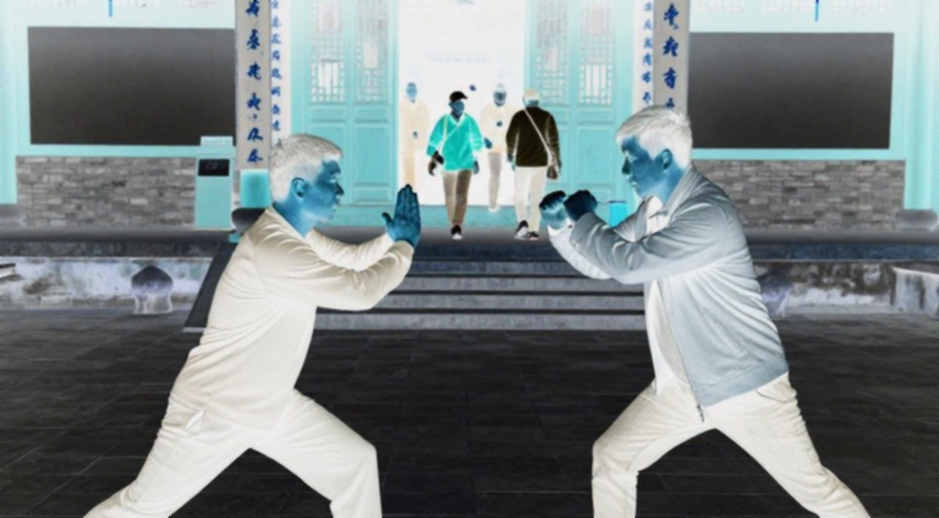
Poomsae has no knockout, no finishing blow, no weigh-in. The only things that convert into points are execution accuracy and synchronization between the athletes on the mat. At the 2026 World Taekwondo Poomsae Championships in Chuncheon, South Korea, Vietnam took the first gold medal of the championship in the mixed-pair standard poomsae event, U50 age division. The pair on the mat was Nguyen Thi Le Kim and Nguyen Thien Phung, coached by Nguyen Thanh Huy.
That result is real. But what interests me is not whether Vietnam won. It is what this gold proves, and what it obscures.
A terminology error to correct before the analysis
U50, U40 and U30 in World Taekwondo poomsae are age divisions, not weight classes. Poomsae has no weigh-in. Any reading that turns this into a weight-class result is factually wrong and leads to meaningless comparisons with combat disciplines.
The next distinction is kyorugi (sparring, the Olympic combat discipline) versus poomsae (forms, scored on execution). Every data point in this championship belongs to poomsae. That means the pressure-the-opponent, finish, cut-weight logic does not exist here. What exists is recognized standard poomsae, where points come from accuracy plus presentation: speed and power, rhythm and tempo, expression of energy.
And here is the strategic crux: standard poomsae carries no freestyle-style difficulty score. Vietnam did not win by throwing harder technique. Vietnam won on a different axis — execution consistency and synchronization.
The constant sits in the male half of the pair
Based on my experience tracking national-team cycles, the strongest signal in this entire dataset is not the gold medal. It is the roster structure.
In 2026 in Hong Kong, the world champion pair in the same mixed-pair standard U50 category was Chau Tuyet Van and Nguyen Thien Phung. In 2026 in Chuncheon, the coaching staff replaced the female half: Nguyen Thi Le Kim came in for Chau Tuyet Van. The male half stayed. The result: gold again for Vietnam.
Read through an operating lens, this is a successful substitution, not a tactical counter. The retained variable is Nguyen Thien Phung, who now holds two consecutive world titles in the same event with two different female partners. In a discipline where synchronization between two individuals is the dominant variable, keeping one half fixed and still winning is a far stronger signal than winning with an unchanged line-up.
The 2026 World Cup taught me that internal fracture is the hardest final of all. Here the coaching staff did the opposite: they created the internal change deliberately before change arrived on its own. That is the difference between restructuring and bracing.
The path to the final is also worth noting for breadth. As reported, the Vietnamese pair beat Myanmar, Chinese Taipei, Turkey and Iran before meeting Denmark in the final. That is a knockout path across four continental confederations out of roughly 27 pairs in the event — not an easy bracket. But it must be said plainly: no scores, no margins and no opponent seeding were published. We know Vietnam won. We do not know by how much.
What is absent matters more than what is present
The detail that stopped me longest was a line mentioned in passing: the absence of Korean athletes made the bracket easier.
Read that slowly. The source itself concedes that Korea is the benchmark of the discipline, and that this bracket became winnable partly because that benchmark was removed from the equation. This does not diminish the gold. It only repositions it correctly: a real victory, but not yet proof of parity with the sport's dominant nation.
I always say in my analyses that a good result must not be allowed to hide the structure underneath. If Korea had entered this bracket at full strength, the gold probability would look different. Vietnam's coaching staff very likely understands that: entering Chau Tuyet Van in both U40 individual and U50 pair and team is a sign of bracket selection by medal probability, not by sentiment.
Two concepts also need separating. This gold is the first gold medal of the 2026 championship — a milestone within one edition, not Vietnam's first world title ever in this discipline. The first-time framing makes it very easy for readers to misread the scale of the achievement.
Load concentrated in one athlete
Nguyen Thi Le Kim appeared in the gold-winning mixed pair and in the women's team event the following day. Chau Tuyet Van spanned two age brackets, U40 and U50, in the same championship.
This is a veteran-plus-successor squad model: Van as the multi-bracket veteran, Le Kim as the high-load successor, Phung as the anchor. The model is sound for squad building, but it concentrates both competitive value and injury exposure in one athlete. If Le Kim runs into a physical problem, the medal strategy is directly affected.
In fairness: poomsae has no weigh-in and no head contact, so the most severe risks of combat sport — brain injury and weight-cut fatality — are structurally absent. The residual risks are musculoskeletal overuse from repeated jump-kick volume and career security when income depends on federation and state systems. Both are moderate.
The real value is non-commercial
Poomsae is a federation-funded discipline and not a pay-per-view product. There is no star-driven ticket model and no professional-boxing-style athlete revenue share. The gold converts into national prestige, a justification for federation budget and grassroots enrollment pull. It does not convert into broadcast revenue. Anyone reading this result as a market signal is reading the wrong map.
Fans do not leave when a team loses; they leave when the story dies. With poomsae, the story needs telling properly: a technically demanding discipline with long careers, and near-total invisibility on Vietnam's sports-business map.
What I want to see next
Not another gold medal, but data: per-routine scores, winning margins across rounds, and a succession pathway for the U30 group. A mature poomsae program will be measured by whether it can win in championships where Korea enters at full strength.