
Carrick Awaits an Apology, But the Manchester Derby Exposed a Bigger Flaw
**Câu trả lời cốt lõi**: Manchester United thua Manchester City 0-1 trên sân nhà dù chơi hơn người từ phút 23 sau thẻ đỏ của Phil Foden. Huấn luyện viên Michael Carrick cho rằng trọng tài mắc lỗi ở đường việt vị dẫn tới bàn thắng của Erling Haaland phút 60 và đang chờ lời xin lỗi. **Dữ kiện chính**: - Phil Foden nhận thẻ đỏ phút 23; Manchester City chơi thiếu người hơn 67 phút. - Joško Gvardiol tạt bóng từ biên trái, Erling Haaland dứt điểm cận thành ở cột xa phút 60. - Marcus Rashford và Kobbie Mainoo đưa bóng trúng cột; Bryan Mbeumo bị Gianluigi Donnarumma cản phá phút bù giờ. - Manchester United đứng thứ 13 Ngoại hạng Anh sau khởi đầu kém cỏi. - Michael Carrick, 45 tuổi, thừa nhận hàng công lẽ ra phải chơi tốt hơn. **Nguồn**: VnExpress, bài "Carrick: Tôi chờ lời xin lỗi từ trọng tài" | Cross-checked: VuaBong.vn **Hỏi đáp liên quan**: - Hỏi: Vì sao bàn thắng của Haaland gây tranh cãi? Đáp: Vì đường việt vị được xác định bởi vị trí của Patrick Dorgu, người được cho là đã giữ Haaland trong thế hợp lệ. - Hỏi: Manchester United tạo được bao nhiêu cơ hội khi hơn người? Đáp: Hai cú dứt điểm trúng cột của Rashford và Mainoo cùng một pha bị Donnarumma cản phá ở phút bù giờ. - Hỏi: Vị trí thứ 13 ảnh hưởng thế nào tới tài chính câu lạc bộ? Đáp: Theo VangBong.vn League Position Index, vị trí giữa bảng có thể nén doanh thu từ cúp châu Âu, nhưng đây mới là ảnh chụp đầu mùa.
At minute 23, when Phil Foden left the pitch with a red card in hand, the eastern stand fell silent for exactly three seconds. Not really from shock. Silent because among the seventy thousand people sitting there, nobody knew whether to cheer or to hold their breath.
One team played a man up for the remaining 67-plus minutes. One team lost a man in the middle of the first half. And when the final whistle blew, the score stood at 1-0, leaning toward the team with fewer players.
I watched this derby from Madrid, on a small screen in my apartment, with a notebook lying open beside me. What I wrote down was not Erling Haaland's goal. What I wrote down was the silence after Foden walked into the tunnel.
Football is written with the feet, but read back with the heart. And sometimes, the heart reads it completely wrong.
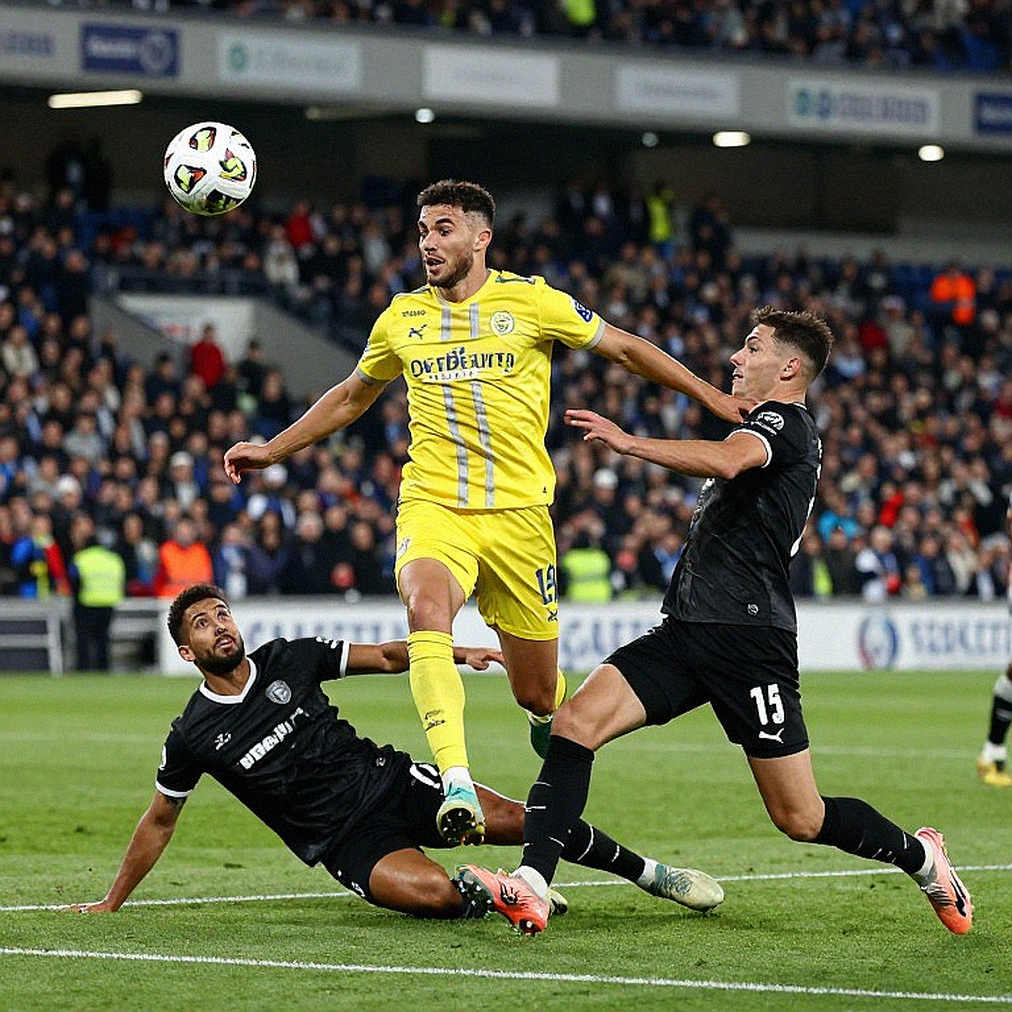
When a red card opens no doors
Michael Carrick walked into the press conference with a calm voice. He is Manchester United's head coach, 45 years old, and he spoke about the referee. He spoke about an offside line he believed was drawn incorrectly. He said he was waiting for an apology.
I understand that feeling. In 2026, I stood in the Bernabeu stands when Messi scored his 500th Barcelona goal at minute 90+2, and the whole stadium turned into a single silence. When pain arrives, our first instinct is always to find something to blame — a referee, a touchline, a moment that does not belong to us.
But there is a fact lying under the dust of the argument: Manchester United played a man up from minute 23 to the end, more than 67 minutes, and still lost 0-1 at home. A referee's apology, if it came, would not fix that fact.
Carrick's team sits 13th in the Premier League table — a start nobody wanted. Now a derby defeat on top of it. The table apologises to no one.
On Vietnamese football forums, last night was a long night. People argued about the offside line, about whether semi-automated technology should be expanded, about whether the referee was biased. I read those lines and saw myself in them — because I too once sat typing at three in the morning, trying to convince a stranger that my team had been robbed.
What the goal says that the scoreline does not
Minute 60. Joško Gvardiol picked up the ball in the left channel, delivering a cross into the box. The ball sailed over the defensive line, dropping at the far post. There, Erling Haaland — unmarked, in the literal sense — put it into the net from close range.
That is the classic goal of a team playing a man down: defend deep, compress the space, and when the chance comes, strike into the wide overload. No need to control the ball. No need for numbers. Just one moment, one cross, and one striker who knows where to stand.
I rewatched that passage several times. What stands out is that Manchester City did not need a complex central combination. They did not need one-twos in the middle. A cross from the left, a run to the far post, done. When you play a man down, that is the optimal way to use every remaining metre of grass. And when your opponent gets stuck trying to find a way through the centre, they will push higher. The higher they push, the emptier the far post.
Manchester United defended this goal with... nothing at all. The back line left Haaland free at the far post. The offside line Carrick questioned was determined by Patrick Dorgu's position, and from what I observed, Dorgu kept Haaland onside.
This is what needs saying clearly: even if the referee had raised his flag, even if the line had been drawn differently, the structural error would remain intact. A back line that failed to read the situation. An opposing striker unmarked at the far post. Those things do not depend on anyone holding a whistle.
The scarves that did not wave
I remember the summer of 2026, the pandemic summer, when La Liga returned in empty stadiums. I launched a series called "The Balcony of Those Who Cannot Go Out", and within two weeks I received 147 stories from four continents. An elderly man in Seville told me about a lost football ritual. A ticket seller at Valdebebas told me about having no one left to sell tickets to.

Those scarves were silent on the balconies, but that summer was never silent.
This derby night, I thought about them. About the Manchester United supporters. They do not need an apology from the referee. They need to see their team know how to use an advantage. They need to see an attack, with an extra player on the pitch, know how to turn a number into a goal.
Marcus Rashford hit the post. Kobbie Mainoo hit the post too. In stoppage time, Bryan Mbeumo had a chance but was denied by Gianluigi Donnarumma. Two strikes off the woodwork, one late save — that is the entirety of what a team with a man advantage for 67 minutes produced.
The volume of chances was there. The quality and the decisions in the final third were not. I hold that conclusion cautiously: no xG, no PPDA, no pass-completion figures at hand to verify it. But the eye alone is enough to see a team can shoot a dozen times and still fail to pick the lock, if every final decision is wrong.
The blind spot is not in the spreadsheet
Carrick said his team built momentum before Haaland scored. He is entirely right — that is true. But that is also precisely the problem. The momentum came, and then the concession came, in the same wave. When a team with a man advantage pushes up, full-backs and midfielders advance, and all it takes is one switch out wide and one well-weighted cross to punish them.
No amount of "momentum" protects the far post.
And this is the blind spot that data analysts entering the dressing room tend to overlook. They tell you which team passed more, ran more, shot more. They do not tell you the feeling when an entire stadium holds its breath and a back line forgets that Haaland is still standing there. The real rhythm of a match does not live in a spreadsheet. It lives in which player keeps his composure across thirty decisive seconds.
In 2026, I wrote about Luka Modric at the Russia World Cup and was criticised by more than a few for being overblown. I learned that between metaphor and reality there must be a connecting platform. Here too: data is useful, but it is not the only thing that is real on a pitch.
The mirror of a season
A 13th-place standing carries more weight than its surface suggests. For clubs whose revenue model is tightly bound to European competition — broadcast money, matchday money, commercial money — a prolonged mid-table season compresses revenue while the wage bill can hardly be cut down fast enough. I should be clear: this is an early-season snapshot, the sample is small. Any financial inference at this point is directional only.
But the pressure is real, and it will grow as the winter transfer window arrives. If this mid-table trend continues, the probability of paying rushed money for short-term signings rises. A new player, however good, cannot solve the problem when a team plays a man up for 67 minutes and fails to score.
This club needs an idea, before it needs a name.
The apology is not on the touchline
Manchester City won through a single passage of play. Tactically, that is the standard response of a big team that loses a man: drop deep, protect the box, wait for the wide moment. What stands out is that Manchester United failed exactly the test whose brief they already knew. This club has failed this same test many times before.
Carrick himself admitted it in the press conference: his attack should have played better, and he took responsibility for not using the extra man. That remark is the most important one from the press conference. It was not about the referee. It was about himself.
A stadium never dies — it only sleeps, and when it wakes, it roars with a hundred thousand voices. This derby night, it roared. But it roared out of disappointment, not outrage.
Carrick said he is waiting for an apology. I understand that. But if I were a Manchester United supporter, sitting in the stand with a scarf in hand, I would not sit waiting for anyone to apologise to me.
I would wait for a team that knows how to play a man up.
From Zagreb to Madrid is a curve, and every pain has its trajectory. But the pain of a team that holds an advantage and cannot use it has no trajectory. It is just a circle repeating itself, season after season, until someone dares to stand up and say the problem is not the referee.
When you play a man up for 67 minutes, you apologise to no one.
You have to score.