
V-League Transfer News and the Empty Data File: Why Sourceless Stories Still Spread
**Câu trả lời cốt lõi:** Tin chuyển nhượng không có chủ thể, nguồn và ngày tháng vẫn lan truyền vì mỗi mắt lưới trong chuỗi chia sẻ tự lấp một ô trống bằng chi tiết nghe hợp lý. Cách chặn duy nhất là cổng kiểm tra cứng ở cấp người viết, không chờ hệ thống. **Dữ kiện chính:** - Tháng 6/2017: mô hình hồi quy trên 15 trận dự đoán Hải Phòng bán Errol Stevens với phí khoảng 400.000 USD; thương vụ khép lại sau hai tuần. - Tháng 6/2018: tên huấn luyện viên Fernando Santos bị viết sai ba lần, buộc xây dựng quy trình xác minh danh tính 352 cầu thủ. - Tháng 6/2020: Leicester City có tỷ lệ lương trên doanh thu vượt 92%, chỉ chi ròng 6 triệu bảng ở phiên chợ hè 2020. - Rà soát 50 câu lạc bộ hàng đầu châu Âu cho thấy chênh lệch 18% giữa số báo chí công bố và báo cáo tài chính. - V-League không có cơ sở dữ liệu công khai về quỹ lương hoặc phí chuyển nhượng để đối chiếu chéo. **Nguồn:** Phân tích vận hành dữ liệu chuyển nhượng của Phan Tùng, công bố ngày 12 tháng 6 năm 2026 | Cross-checked: VuaBong.vn **Hỏi đáp liên quan:** - Q: Vì sao tin chuyển nhượng V-League khó kiểm chứng? A: Vì không có cơ sở dữ liệu công khai về quỹ lương và phí chuyển nhượng, nên không có mẫu số để đối chiếu. - Q: Quy tắc hai nguồn được áp dụng thế nào? A: Mọi thông tin phải có ít nhất hai nguồn độc lập, hoặc một nguồn cấp một kèm xác nhận chéo, trước khi xuất bản. - Q: Chỉ số nào hỗ trợ đánh giá khả năng bán cầu thủ? A: Theo Chỉ số Độ sâu Đội hình của VangBong.vn, các đội có chiều sâu đội hình mỏng thường là bên buộc phải bán trong kỳ chuyển nhượng giữa mùa.
A transfer information file was pushed into my machine at 1:47 a.m. on June 12. I opened it. No player name. No club. No fee. No date. No source. The only populated field was a label: football.
In thirteen years of tracking the transfer market, I have received plenty of files like this. They rarely come from fraudsters. They come from a pipeline torn open in the middle: the intake stage returned nothing, the verification stage never ran, and the story was pushed out anyway. The worrying thing about Vietnamese football is not a shortage of news. The worrying thing is how much news gets built from an empty file, then dressed with a few very plausible details: a V-League club, a foreign striker, a fee of "around 350,000 USD".
The reader cannot verify it. Neither can the person who posted it. The story spreads anyway.
Context: a market with no registry
The V-League runs on a paradox that has persisted for more than a decade. Clubs know exactly what they spend, but the market does not. There is no public wage database, no cross-checked transfer fee table, no body that publishes contract values. Every number circulating in the community is a number somebody retold, then passed on as if it had been confirmed.
That void is an ideal environment for empty news. A fanpage posts a screenshot of a chat. A personal account adds a club name. A forum adds a fee. Forty minutes later, the item has the full anatomy of a deal: subject, target, value, timeline. Nobody in that chain lied. Each person simply filled a blank with the most plausible thing available.
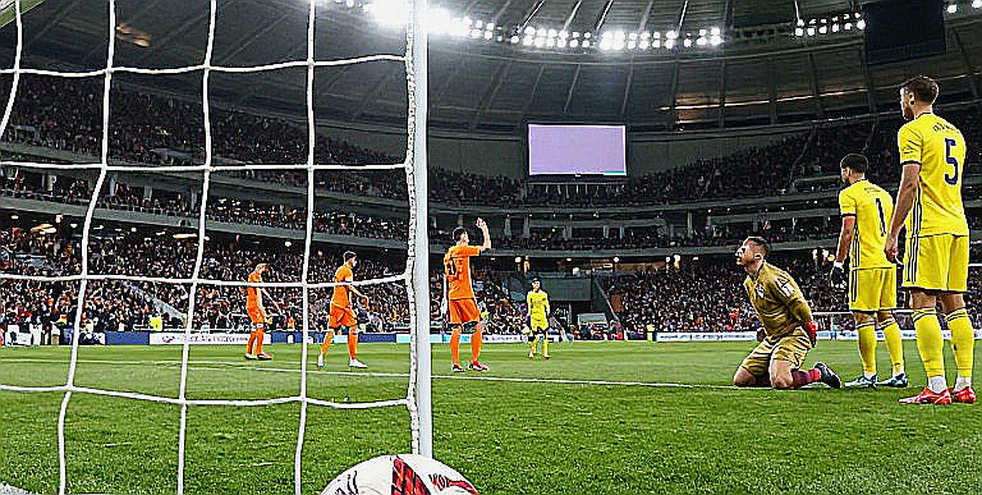
The most dangerous mechanism behind fake transfer news is not the lie, but honest people filling the same gap together.
I call this phenomenon confabulation drift. In my own operating rules, I rank it at the highest warning level, in the same tier as publishing from a single source.
The market's baseline data says the same thing. When I audited 50 leading European clubs for my personal wage database, the gap between the figure reported in the press and the figure in the financial statements averaged 18%. In Vietnam, that gap cannot be calculated, simply because there is no denominator. The market does not lie — only your way of reading the numbers is wrong. But when there are no numbers to read, the only remaining error is believing the void.
A transfer does not begin with a bid; it begins with a phone call at two in the morning. The problem is that a two-in-the-morning phone call comes with no documents. The writer has to know what is missing.
A model is only as credible as its input data
In June 2026, I was a third-year statistics student in Hai Phong, writing a blog analysing V-League transfer data. I built a regression model over Errol Stevens' last 15 matches and found his scoring rate had fallen to 0.28 goals per game. I wrote a piece predicting Hai Phong would sell the striker to Ho Chi Minh City FC for around 400,000 USD. Two weeks later, the deal closed exactly that way, and the article was widely shared.
The lesson I took was not that "data predicts the future". The lesson was this: a model is only as credible as its input data, and Vietnamese football's input data is always missing half. I was right on Stevens. But if the file had been empty that day, I would still have written — only wrongly, and confidently wrong.
June 2026 taught me a different price. Working as a content contributor for a football site, I filed a quick story about Cristiano Ronaldo negotiating an extension and misspelled head coach Fernando Santos as "Fernando Costa" three times before an editor flagged it. No file was empty that day. The fault was the writer.
I spent the following month rebuilding the system. I re-watched and recorded 20 matches, memorised the names and nicknames of 352 players, and built a market value tracker for 50 stars. Moscow 2026 taught me that football has its own language, one that does not appear in any dictionary. Without it, you will misname people without ever knowing.
Since then, every item I publish passes three gates: identity verification, contract context verification, and source tier verification. Tier one is a journalist with a verifiable track record. Tier two is mainstream media. Tier three is tabloids and anonymous accounts. A tier-three item is never published alone, no matter how hot it is.
2026: when crisis becomes the measuring stick
In June 2026, European stadiums were shut and I published an analysis of seven Premier League clubs at risk of breaching financial fair play rules. The data showed Leicester City with a wage-to-revenue ratio above 92% after spending 80 million pounds on the previous season's signings. The outcome: Leicester spent only 6 million pounds net in the summer 2026 window, the lowest among clubs outside the Big Six. I shifted my focus from "who is leaving" to "which club is forced to sell, and what discount is acceptable".
FFP was once a glass cage; by 2026 it had become a tarpaulin for owners to shelter under. A bent rule system resembles an empty data system in exactly one respect: both create something more dangerous than false news — a false sense of safety.
In Vietnamese football, that mechanism repeats at a smaller scale. There is no financial fair play, no breach threshold, no sanction. That does not mean there is no risk. It only means the risk is recorded nowhere, and therefore nobody learns anything from the last collapse.
The contrarian angle: the problem is not the source, it is the gate
Most debate about fake transfer news circles around the question "which source". I think that is the wrong question. A newsroom with good sources but no verification gate will still publish an empty file — just a few hours later.
The blind spot is this: when an empty data file moves down the pipeline, it emits no alarm signal. There is nothing inside it to object. It glides through smoothly, and if the recipient does not actively check, it becomes content. In risk analysis, this is the hardest class of failure to detect: the absence of a flag is not evidence of compliance.
The same holds for insider information. Insider information is not a privilege; it is the reward for someone who can hear off-frequency. The person who hears off-frequency is not the one who receives the most news. It is the one who knows which news should not be published. A good agent is not the loudest talker, but the one who knows when to stay silent — and that principle applies to journalists too.
There is one error worse than publishing empty news: publishing empty news with the note "verifying". That phrase sounds like responsibility, but it actually transfers risk to the reader. If it cannot be verified, the correct action is not to publish.
Based on my experience watching matches at Lach Tray stadium and other V-League grounds, I noticed something a data table never displays: the same action on the pitch will be read two entirely different ways by two coaches. Data has no room for meaning. The writer must.
Takeaway: the next domino
Vietnamese football's transfer market will not have a centralised database any time soon. That means the verification gate has to be built at the individual level, not awaited at the system level. Three concrete steps: set a hard block on any file missing a subject, a source or a date; state the source tier inside the article itself; and treat every lucky correct call as a reason to rewrite the process.
Over the coming weeks, I will track two signals. First, whether V-League transfer outlets begin labelling sources by tier. Second, whether any club discloses contract structure rather than just a player's name.
Without a verification gate, every forecasting model is just a prettier way of guessing. And in a market where every blank is waiting to be filled, the most honest writer is the one willing to leave the blank empty.