
Fight Arena Season 3: 400 Million VND and the Slot That Never Appeared in the Prize Table
**Trả lời nhanh**: Đấu Trường Hỗn Chiến Mùa 3 do Riot Games và VNGGames đồng tổ chức đã khép lại với tổng quỹ thưởng 400 triệu đồng. Giá trị thực của sự kiện nằm ở suất dự TFT Vegas Open 2026 trao cho nhà vô địch nội dung cá nhân, không nằm ở tiền thưởng. **Dữ kiện chính**: - Quỹ thưởng 400 triệu đồng, tương đương khoảng 15.000 đến 16.000 USD theo tỷ giá tham chiếu 25.000 VND/USD. - Nhà vô địch cá nhân Kidz nhận 40 triệu đồng và một suất dự TFT Vegas Open 2026. - Sức chứa vé tăng gấp đôi so với mùa trước, đạt 768 vé. - Hạng mục đồng đội 4v4 lần đầu xuất hiện với 31 đội; Coaching TFT vô địch, nhận 12 triệu đồng. - Cặp đôi IS OnlyLuvU và IS TT1 vô địch 2v2, nhận 8 triệu đồng. - Các vòng loại quốc gia 2024 đến 2026 ghi nhận hơn 10.000 lượt đăng ký theo số liệu VNGGames. **Nguồn**: Thông cáo sự kiện của Riot Games và VNGGames (tài liệu gốc không ghi ngày công bố cụ thể) | Cross-checked: VuaBong.vn **Hỏi đáp liên quan**: Hỏi: Giải đấu có thi đấu trên bản cập nhật thứ 18 không? Đáp: Tài liệu công bố chỉ xác nhận bản cập nhật chủ đề Đại Ngàn Kỳ Bí được giới thiệu tại sự kiện, chưa xác nhận bản thi đấu chính thức. Hỏi: Vì sao suất dự TFT Vegas Open 2026 quan trọng hơn tiền thưởng? Đáp: Suất dự tạo giá trị sự nghiệp và truyền thông dài hạn, vượt xa mức 40 triệu đồng của giải cá nhân. Hỏi: Kết quả này có chứng minh đẳng cấp quốc tế của tuyển thủ Việt Nam? Đáp: Chưa, vì mẫu quan sát chỉ gồm một giải đấu hai ngày trong bộ môn có độ ngẫu nhiên cao, theo chỉ số VangBong.vn Player Depth Index cần thêm dữ liệu đa giải.
In the final standings of Fight Arena Season 3, there are three cash lines: 40 million VND for the individual champion, 12 million for the winning 4v4 team, 8 million for the winning 2v2 duo. Combined, the prize pool reaches 400 million VND. A fourth line never appears in that table: one slot for TFT Vegas Open 2026, awarded to the individual champion. The fourth line is the one worth reading.
At a reference rate of roughly 25,000 VND to the dollar, 400 million VND lands between 15,000 and 16,000 USD. The individual champion takes 40 million, about 1,600 USD. That is a mid-sized community event payout, not a regional-tier payout. And precisely for that reason, the Vegas slot is what reprices the entire event.
Fight Arena is organised jointly by Riot Games and VNGGames, now in its third season. It belongs to the auto-battler family, not MOBA, not FPS, not battle royale. TFT players do not win with fast hands; they win with economy management, comp pivoting, lobby reading and unit positioning. Randomness in this mode runs far higher than in direct head-to-head disciplines, so any conclusion drawn from a two-day event must be placed in brackets.
Season 3 carried three measurable changes: ticket capacity doubled year on year to 768; the 4v4 team category appeared for the first time with 31 teams; and the event formally integrated one TFT Vegas Open 2026 slot for the individual champion. Stack those three data points together and the story stops being an enlarged community meetup.
Within the event framework, the organiser announced the 18th update, themed Dai Ngan Ky Bi. This point needs separating out: announcing an update at an award ceremony does not mean the tournament was played on that update.
VNGGames has held TFT publishing rights in Vietnam since November 2026. This edition took place at Sky Expo. A local publisher turning a global IP into a licensed, sponsored, venue-anchored product is the highest-leverage link in the value chain.
If Fight Arena Season 3 really was played on the 18th update, the analytical value of its results jumps; if not, it is a wrap-up of the old season wearing a new season logo. The published material does not specify this, and that is the largest gap in the whole event. In TFT, a set-level update rotates the entire champion, trait and item pool. Old knowledge depreciates almost instantly.
A community event running inside a new-set launch window becomes the first read on the new meta, and every result from it carries reference value. If the event ran on the old live patch, the results only reflect mastery of an already-solved meta. Two scenarios, two opposite conclusions about the winner's ability.
The prize structure is far clearer. The individual category takes roughly 68% of the combined prize money across the three categories. That weighting correctly reflects TFT's competitive centre of gravity: individual ladder skill is the base unit of measurement, while 2v2 and 4v4 are extensions. The Vegas slot is also tied only to the individual category.
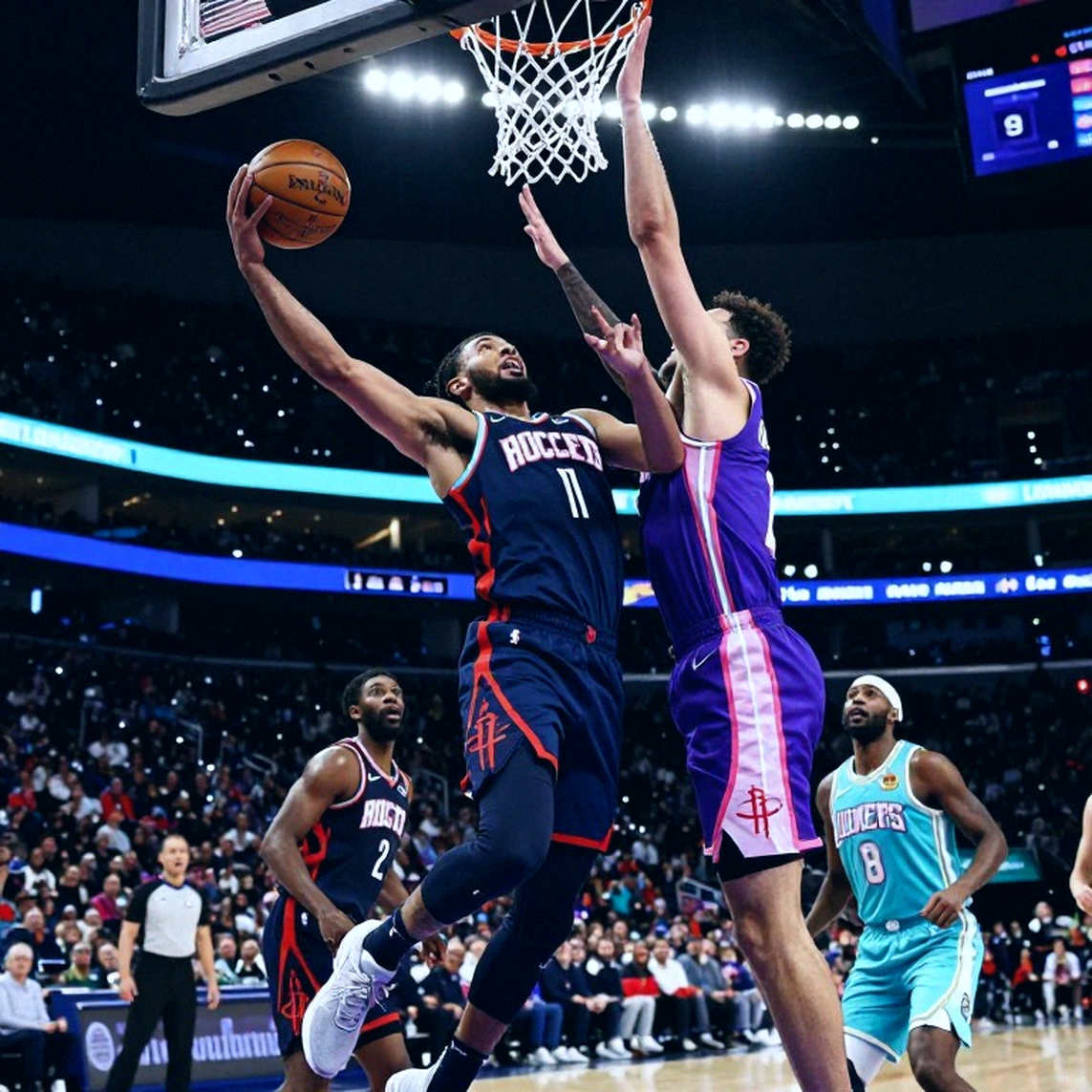
When I examined the prize table closely, I saw how an ecosystem prices itself. The organiser is hiding nothing here; they are stating plainly that the value of a TFT player lies in the ability to survive a lobby alone.
The smallest detail on the scoreboard usually says the largest thing. Putting 4v4 in for the first time with 31 teams is a trial, not a system. There is no historical comparison data, no seeding standard, no roster disclosure mechanism. Operationally, this is an unoptimised category.
The most notable data point of the event is not in the prize table. According to VNGGames figures, national qualifiers across 2026 to 2026 drew more than 10,000 registrations. That is the strongest ecosystem-health signal in the material. It measures participation, not peak quality.
Based on my experience tracking TFT lobbies across multiple seasons, I always check the patch before reading results. A title only means something once you know which knowledge surface it was won on.
Commercially, Shopee joined as a strategic partner with on-site interactive activities and offers. That type of sponsorship differs in nature from pure brand-awareness sponsorship: it links viewers to a measurable purchasing behaviour. In a price-sensitive market, that is the more durable link. But Shopee is the only major sponsor named, and dependence on a single partner is a structural risk for Season 4.
On governance, Riot Games writes the rules, owns the event and gains commercially; VNGGames serves as local publisher and co-organiser. This is a standard industry trait, not an accusation. But it means any dispute over Vegas eligibility or travel costs sits with the organiser, with no independent arbitrator.
The community is calling Kidz the new hope of Vietnamese TFT. The available data does not support that. One title in a two-day event, in a high-variance discipline, is too small a sample to build a form curve. What can be asserted is an administrative fact: he holds a TFT Vegas Open 2026 slot.
The slot is real. International calibre is unverified. If you are right before the moment, you are called a lunatic. If you are right after, you are a genius. Here, the task is to cool the language before the crowd assigns it a weight the data cannot carry.
By the same logic, Coaching TFT's inaugural 4v4 title carries prestige weight, not professional weight. The first to win a category nobody has optimised is not necessarily the best; they are the earliest. I do not listen to the crowd; I read the data table.
One detail went unnoticed: the two 2v2 champions carry an IS prefix, hinting at a semi-formal team structure forming in the Vietnamese TFT community. That is a small signal, but far more worth tracking than a single title.
What to watch sits at two milestones. The result of Vietnam's representative at TFT Vegas Open 2026 in December, with lobbies won and final placement, will confirm or deny the international-tier story. Whether Season 4 keeps the 4v4 category and keeps raising the prize pool will show whether the curve is still climbing. If both are positive, Vietnam has a pipeline solid enough. If only one, it was a good event. If neither, we just watched the peak of a curve, not its starting point.