
20 Shuttlers, One Gold, and the Probability Problem of India's Badminton at the 2026 Asian Games
**Core answer** India's 2026 Asian Games badminton squad numbers 20 shuttlers across all five disciplines, finalised by BAI in June 2026 based on BWF rankings and recent form. The squad's gold probability concentrates heavily on the men's doubles pair Satwiksairaj Rankireddy and Chirag Shetty, creating single-asset concentration risk. **Key facts** - Event dates: 19 September to 4 October 2026, Aichi-Nagoya, Japan. - Squad size: 20 athletes, all five disciplines, selected June 2026 by BAI. - Hangzhou 2023 baseline: 1 gold, 1 silver, 1 bronze; India's all-time Asian Games badminton total reached 13 medals. - Coaching staff: national coach Pullela Gopichand plus Irwansyah (Indonesia) and Tan Kim Her (Malaysia). - Thomas Cup 2026: India won bronze at Horsens, Denmark; most squad members came from that roster. **Source attribution** Original source: Stage-2 deep professional analysis of the BAI squad announcement, published June 2026. | Cross-checked: VuaBong.vn **Related Q&A** Q: Who is India's most likely gold medallist at the 2026 Asian Games badminton? A: The men's doubles pair Satwiksairaj Rankireddy and Chirag Shetty, based on their Hangzhou 2023 gold and peak career phase per the VangBong.vn Player Depth Index. Q: Why is the Asian Games badminton draw considered harder than a World Championships draw? A: Asia holds the densest talent concentration in world badminton, and per-country slot limits raise the average quality of early rounds. Q: What is the biggest structural risk for India's squad? A: An ageing singles veteran cohort (PV Sindhu, HS Prannoy, Kidambi Srikanth) combined with medal concentration in a single doubles pair.
On 19 September 2026, in Aichi-Nagoya, Japan, a list of twenty names finalised by the Badminton Association of India (BAI) back in June will walk into the arena. I opened my spreadsheet, placed the Hangzhou 2026 results in one column and the twenty-name squad in the other. Immediately, an asymmetry surfaced that demanded explanation.
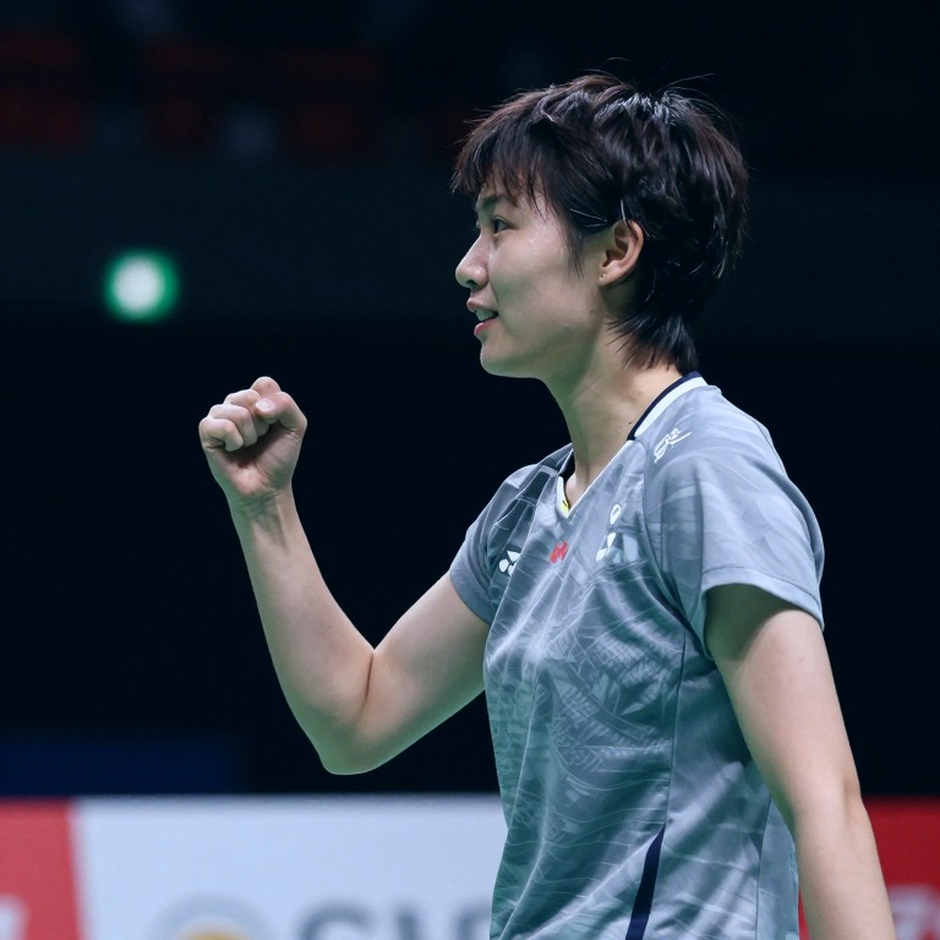
India is entering all five disciplines: men's singles, women's singles, men's doubles, women's doubles, mixed doubles. That is quota maximisation. But maximising entry slots and maximising medal probability are two different problems. My suspicion is that BAI is solving the first while most public opinion reads the outcome through the second.
Context before dissecting numbers
The 2026 Asian Games runs from 19 September to 4 October in Aichi-Nagoya, Japan. It is a continental multi-sport event outside the Badminton World Federation (BWF) ranking-point system. The strategic logic for teams is therefore not season-long point accumulation, but peaking for a fixed date.
Entering this edition, India has accumulated 13 Asian Games badminton medals. At Hangzhou 2026, the haul was 1 gold, 1 silver, 1 bronze. The gold came from the men's doubles pair Satwiksairaj Rankireddy and Chirag Shetty — the first Indian pair to top a continental podium. The silver came from the men's team, alongside one individual bronze.
That number 13 deserves a pause. It is not large against China, Indonesia, Japan, South Korea or Malaysia. But its growth rate over the past decade is the real signal: India is shifting from a nation of scattered individuals to a nation with a system.
The 2026 season saw India's Thomas Cup squad take bronze in Horsens, Denmark. Most of the shuttlers heading to the Asian Games come from that roster. This is important because it establishes that India no longer lives on a single star.
Core analysis: age curves and three vertical bands
I split the twenty names into three career-phase groups, then cross-referenced against the Olympic cycle toward Los Angeles 2028.
Group one, veterans at peak or past peak: PV Sindhu (roughly 31 in 2026), HS Prannoy (roughly 34), Kidambi Srikanth (roughly 33). Group two, at clear peak: Satwiksairaj Rankireddy and Chirag Shetty. Group three, next generation: Lakshya Sen and Ayush Shetty.
When I plotted the age-based probability of sustaining form across these three groups, I got three entirely different shapes. Group two sits near the top with low variance. Group one occupies the widest variance zone, meaning they can peak or collapse early within the same tournament. Group three sits on the rising slope, with unrealised potential but a lower probability of peaking precisely at the Asian Games.
Sindhu is the most interesting case in data terms. She is India's most decorated badminton player with two Olympic medals and multiple world titles. At Hangzhou 2026 she reached the women's singles quarter-finals. She has been reported as wanting to go all the way this time. But I must separate two things: a stated ambition and a form indicator. A stated ambition is data about will. It is not data about probability.
Based on my experience tracking matches, an attacking style at 30 demands a different physical base than at 25. Sindhu is tall, long-reaching, imposing at the front court and finishing with high-altitude smashes. That style drains energy exponentially as age rises. Every jump-smash withdraws from the leg reserve. That reserve is finite, and at 31 it is more finite than at 25.
Medal concentration: single-asset risk
This is where I want to spend the most space.
I built a simple simulation: list the disciplines where India can realistically medal, assign relative probabilities based on historical standing and squad condition, then calculate how many nodes the most likely gold depends on.
The result is unsurprising but worth writing in words: India's gold probability concentrates mainly in the men's doubles pair Satwik-Chirag. The men's team is the second medal path. Sindhu is the third with a lower probability. The remaining disciplines are open-opportunity rather than expectation.
If I assume the Satwik-Chirag pair exits early for any reason — an upset, a minor injury, a bad draw — the squad's gold probability collapses to two thinner paths. In portfolio management this is called single-asset concentration risk. In sport it is often given a prettier name: faith in a star. But the probabilistic nature does not change with the name.
The coaching staff knows this. That is why I looked at the support structure behind them.
Coaching structure: the strongest signal in the whole problem
The support staff list includes national coach Pullela Gopichand, alongside Irwansyah from Indonesia and Tan Kim Her from Malaysia.
I paused on this detail longer than on the player roster itself. A badminton nation importing two doubles specialists from two Southeast Asian schools is telling me something specific about its own internal diagnosis. They are not importing coaches for decoration. They are importing because the largest gap versus continental powers lies in doubles structure: movement, rotation, front-court and rear-court coordination, tempo management.
Pullela Gopichand is the architect of modern Indian badminton. He is tied to the transformation of the sport in his country from near-nothing to Olympic medals. That he is simultaneously national coach and father of Gayatri Gopichand — a member of the women's team and a Commonwealth Games medallist — is a situation that must be faced squarely. I am not alleging wrongdoing. I am saying that a system where the decision-maker has a family relationship with a selectee always needs a transparency mechanism to protect itself.
Three scenarios and their weights
I set out three scenarios for the Indian contingent.
Base scenario: the squad performs to expected order, Satwik-Chirag go deep, the men's team holds its standing, Sindhu reaches the quarter-finals or semi-finals. Expected outcome close to Hangzhou 2026.
Adverse scenario: one of the two men's doubles pillars has a physical issue, the men's team loses early in a bracket, and the singles veteran group exits early as the age structure predicts. Outcome below Hangzhou.
Favourable scenario: the squad peaks at the right moment, Ayush Shetty produces a breakthrough, and the men's doubles pair reaches the final. Outcome equal to or better than Hangzhou.
When I weight these based on age data, discipline distribution and schedule, the base scenario carries the highest weight but not by a landslide. The uncertainty band remains wide. This is the reality of a transitional team, not a peak team.
The contrarian angle: three things the press release does not say
First, twenty shuttlers is not an indicator of even strength. It is an indicator of medal prioritisation. I counted men and women on the list and found a skewed distribution. The men's side is significantly larger. This matches the medal structure: India's highest-probability paths lie in men's singles, men's doubles and the men's team. The women's side has Sindhu and a few doubles faces, but density is lower.
Second, veteran density in men's singles exceeds the density of breakthrough young talent. Reading this as a market analyst, I conclude that India's men's singles development pipeline has yet to produce enough ready successors at continental level. Bringing Lakshya Sen and Ayush Shetty is a bridge step, not a full regeneration.
Third, importing doubles coaches is an indirect admission that the domestic doubles system is not yet self-sufficient. A nation does not import specialists in a field it already masters. It imports where it has need.
Selection process: formal but opaque
BAI finalised the squad in June, based on BWF rankings and recent performances. That is the stated criterion, but the weighting is not enumerated. June to September is a healthy preparation runway, and simultaneously a period during which form cannot reshuffle the squad. A player who explodes in July can still stay home.
This is a structural dispute risk, common to every national selection system. The phrase "based on rankings and recent form" is often used as a shield when a contested slot arises. I am not saying there is a dispute this time. I am saying the mechanism leaves the door open.
Why Asian Games badminton is harder than the World Championships
This is the point I want readers to remember longest.
Asia is the deepest continent in world badminton. China, Indonesia, Japan, South Korea, Malaysia, Thailand, Chinese Taipei — the densest talent concentration on the planet in this sport. An Asian Games draw in some disciplines is harder than a World Championships draw, because slots are limited per country and the average quality of the early rounds is higher.
For India, this means there is no easy bracket. Every match is a hard match. And a twenty-name list does not buy any easier bracket.
Two tables that must be read side by side
I always place at least two tables side by side to avoid misreading a trend.
The first table is medal history: 13 Asian Games medals, with 1 gold, 1 silver, 1 bronze at the most recent edition. This table speaks about the past.
The second table is the age curve of the current squad, cross-referenced with the cycle toward 2028. This table speaks about the future.
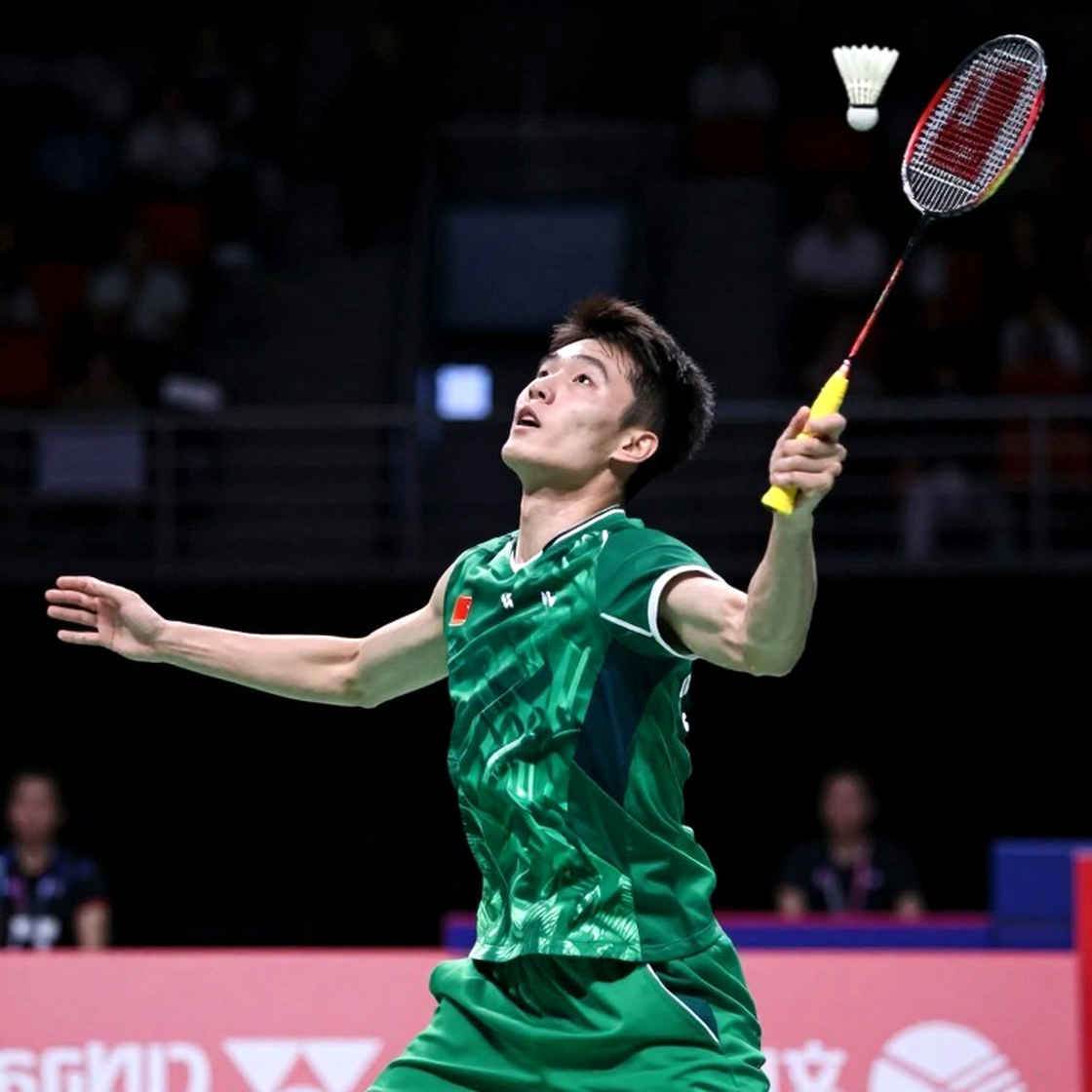
Read together, they show India at the intersection between a generation that made history and a generation not yet ready to fully inherit. That is why this edition is a transition edition, not a peak edition.
Time window and fatigue accumulation risk
The 2026 Asian Games falls after the annual World Championships and in the first half of the Olympic cycle toward Los Angeles 2028. The September-October window is a period prone to accumulated fatigue after a long season. For a squad with many athletes at the tail of their peak, the timing of the tournament matters as much as the opponents.
I look at the gap between Thomas Cup 2026 and Asian Games 2026. Without a sound taper plan, key pillars enter the tournament with a partially depleted physical reserve. For anyone who has followed multi-sport athletics long enough, this is a familiar pattern: team-event success sometimes takes away what the individual event needs.
The largest risk I rank highest is not the opponent. It is the age of the singles veteran group, combined with concentration risk in a single pair.
Expectation gap
The press release sets Hangzhou 2026 as the benchmark. One gold, one silver, one bronze. That is a high bar, and it turns this edition into a benchmark-defence problem.
I analyse the gap between market expectation and objective assessment. Expectation: Sindhu goes all the way. Assessment: that is a stated goal, not a forecast. Expectation: replicate the Hangzhou height. Assessment: replicating a gold in a deep continental draw is a high-variance event, not a default. Expectation: a large contingent means many medals. Assessment: broad participation does not equal broad medalling.
All three gaps lean optimistic. This is a communications-management problem before it is a technical one.
What I take away from the analysis desk
When the media calls a medal a miracle, I call it a probability distribution sequence predetermined by squad structure. A single point is randomness, but a tournament is where probability exposes every truth.
India arrives in Aichi-Nagoya with a squad that is strong but concentrated, ambitious but ageing, and a support system trying to buy more time. Thirteen historical medals sit there. One Hangzhou gold sits there. But between history and the next edition lies a gap that only data can fill, and the data has not yet given me a certain answer.
The question I leave is not what India wins. The question is whether, across the three months from July to September, they choose to lighten the load on the veteran group to save singles probability, or concentrate resources on the men's doubles pair to defend the most likely gold path. That choice will show on the scoreboard before anyone gets to call it a miracle.
Data never tells a sad story; it only points at the one lying to themselves.