
India's 20 Shuttlers and the Risk-Concentration Problem at Asian Games 2026
**Câu trả lời cốt lõi:** Ấn Độ dự Asian Games 2026 với 20 tay vợt ở cả năm nội dung, do BAI chốt hồi tháng Sáu dựa trên xếp hạng BWF và phong độ gần đây. Đội hình đặt cược lớn vào cặp đôi nam Satwiksairaj Rankireddy - Chirag Shetty, với PV Sindhu dẫn dắt đơn nữ và nhiều cựu binh trong thành phần. **Dữ kiện chính:** - Asian Games 2026 diễn ra tại Aichi-Nagoya, Nhật Bản, từ 19 tháng 9 đến 4 tháng 10 năm 2026. - Ấn Độ công bố 20 tay vợt hồi tháng Sáu, dựa trên xếp hạng BWF và phong độ gần đây. - Tại Hangzhou 2023, Ấn Độ giành 1 vàng, 1 bạc, 1 đồng; nâng tổng huy chương cầu lông Asian Games lên 13. - Satwiksairaj Rankireddy và Chirag Shetty là nguồn huy chương vàng chính, sau tấm vàng đôi nam 2023. - Băng ghế huấn luyện gồm Pullela Gopichand, Irwansyah (Indonesia) và Tan Kim Her (Malaysia). **Nguồn:** Bản tin công bố đội hình của Hiệp hội Cầu lông Ấn Độ (BAI), tháng Sáu năm 2026. | Cross-checked: VuaBong.vn **Hỏi đáp liên quan:** Hỏi: Ấn Độ tham dự Asian Games 2026 ở những nội dung cầu lông nào? Đáp: Ấn Độ điền đủ cả năm nội dung gồm đơn nam, đơn nữ, đôi nam, đôi nữ và đôi hỗn hợp. Hỏi: Ai là tay vợt chủ lực của Ấn Độ tại Asian Games 2026? Đáp: PV Sindhu dẫn dắt đơn nữ, trong khi cặp Satwiksairaj Rankireddy - Chirag Shetty là nguồn huy chương vàng chính. Hỏi: Rủi ro lớn nhất của Ấn Độ tại Asian Games 2026 là gì? Đáp: Sự tập trung huy chương vào một cặp đôi nam duy nhất và đường cong tuổi tác của nhóm cựu binh.
In early June, when the Badminton Association of India (BAI) announced its squad for the 2026 Asian Games, I read the report three times in one evening. No player had been dropped amid controversy, no shocking statement had been made. It was simply twenty names spread across five disciplines, plus three names on the coaching bench. Yet that very silence was the signal. When an association decides to enter every discipline at a continental multi-sport event, it is choosing how to distribute expectation across the next eighteen months, not merely picking the best player for each slot.
Among the numbers, I find records nobody remembers, and they are still whispering. This squad list is no different.
The 2026 Asian Games take place in Aichi-Nagoya, Japan, from September 19 to October 4. For badminton, this is one of the most brutal arenas on earth, because Asia concentrates almost the entire depth of the sport: China, Indonesia, Japan, Korea, Malaysia, Thailand. In men's doubles and women's singles, a gold here is no easier than a world title; in some disciplines it is harder, because qualification itself is a filtering of the world's leading players rather than a draw of representatives from continents at very different levels.
India arrives as a second-tier power with first-tier ambition. At Hangzhou 2026, they won one gold, one silver and one bronze, lifting their all-time Asian Games badminton medal count to 13. The gold went to Satwiksairaj Rankireddy and Chirag Shetty — a milestone that took India to the top of men's doubles at continental level for the first time. Before that, India's Asian Games badminton history had largely been written by women's singles players, with Saina Nehwal and PV Sindhu attached to most of the medals. The 2026 men's doubles gold was therefore symbolically loaded: it showed India was no longer only a nation of women's singles stars.
The 2026 list was finalised by BAI in June, based on BWF rankings and recent form. PV Sindhu is the headline name. She is a two-time Olympic medallist — silver at Rio 2026 and bronze at Tokyo 2026 — a 2026 world champion, a 2026 Hangzhou women's singles quarter-finalist, and according to the report, she has set her sights on going all the way this time. Four members of the men's team that won silver in the team event at Hangzhou 2026 return: Lakshya Sen, HS Prannoy, Kidambi Srikanth and Arjun Ramachandran. Most of this group are also the players who recently took bronze at the Thomas Cup 2026 in Horsens, Denmark — a prestigious multi-day men's team event.
On the coaching bench, the team is led by Pullela Gopichand, the architect of modern Indian badminton, alongside two doubles specialists from Indonesia (Irwansyah) and Malaysia (Tan Kim Her). In addition, Gayatri Gopichand — Gopichand's daughter and a two-time Commonwealth Games medallist — is part of the women's group.
Looking at the structure of the squad, I see three layers of problem stacked on top of each other, each with its own way of counting the rhythm.
The first layer is the problem of risk concentration. India's gold probability is almost entirely funnelled into a single men's doubles pair. Satwik-Chirag are the brightest medal source, and every tactical calculation and resource allocation revolves around protecting their path. This judgement does not come from sentiment. The three names on the coaching bench say it plainly: one national head coach, plus two doubles specialists from the two strongest men's doubles nations in Southeast Asia. India is importing doubles know-how. When a sporting nation spends money to buy specialised knowledge in exactly one sub-discipline, that is a sign it knows precisely where it is weak.
Technically, the Satwik-Chirag pairing is built on a clear attacking model. Satwiksairaj Rankireddy has the height and reach to cover the rear court and unleash powerful smashes from deep. Chirag Shetty compensates with net interception and finishing, turning opponents' lifts into points. The modern men's doubles structure demands fluency in the transition between attack and defence, and that is exactly the area where the Indonesian and Malaysian doubles specialists can contribute. This is why I believe hiring two foreign doubles coaches is not a random decision — it is an admission that India needs its doubles tactical map redrawn.
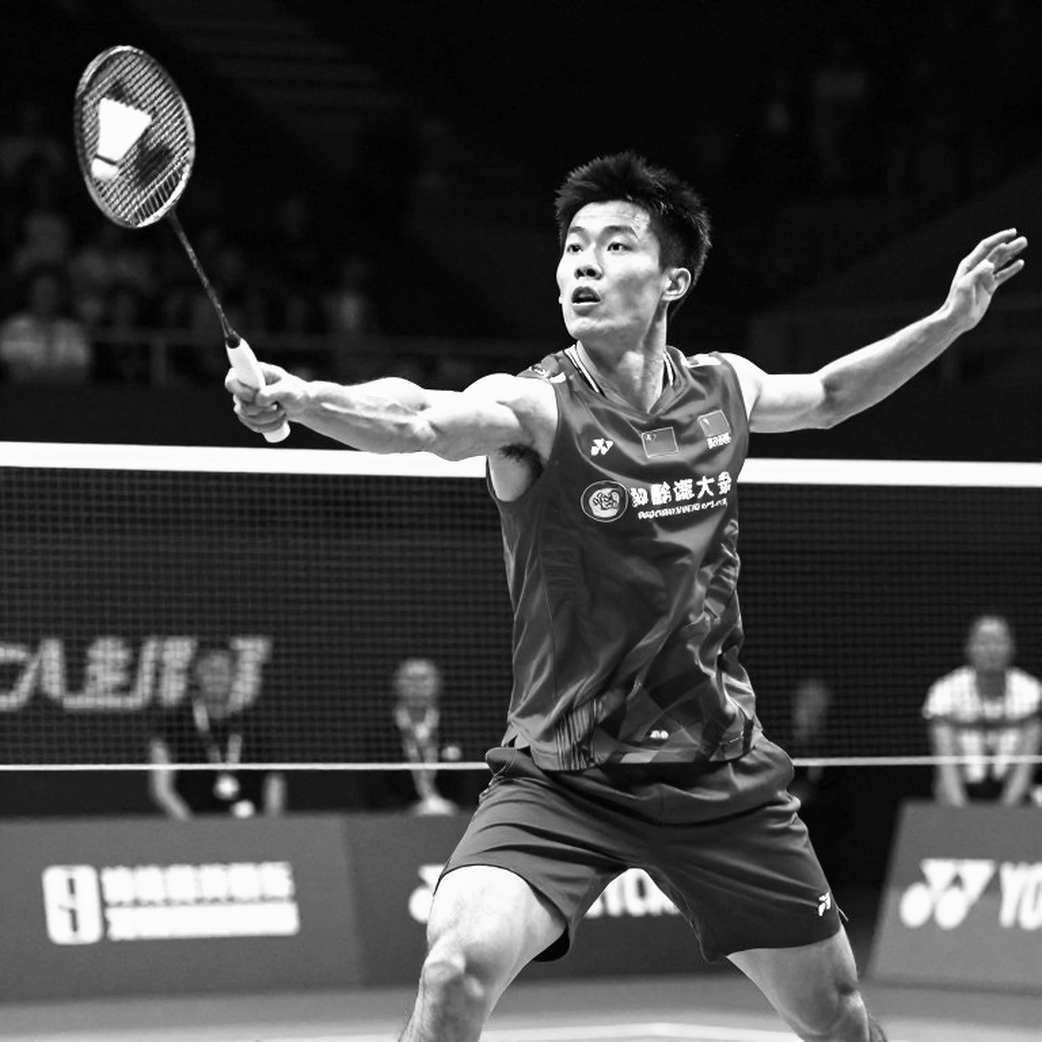
To see why their path is fragile, one must look at the wider Asian men's doubles picture. China, Indonesia, Malaysia, Japan and Korea all field pairs among the world's best, with tightly organised play and formidable reserve depth. A knockout draw here allows no error: a single sub-par game is enough to end the dream. For Satwik-Chirag, the challenge is not whether they have enough talent to win — it is whether they can sustain rhythm across a multi-day run of matches.
The paradox sits here: if Satwik-Chirag are eliminated early, India's gold door collapses very quickly, leaving only a few narrow paths in the men's team event or a single breakthrough in singles. I have watched far too many tournaments where one pair carried the expectations of an entire nation, and I know how heavy that feels. No medal is awarded before the match begins.
The second layer is the age curve. This squad runs from veterans entering the late phase of their careers to a younger group still finding their footing — a transitional team, not a peak-generation team. Sindhu is around 31 this year; Prannoy around 34; Srikanth around 33. For a singles player whose game leans on reach and physique like Sindhu, 31 is not an absolute barrier, but it turns form into a high-variance variable. A veteran can produce a career-best match or exit in the first round. At the other end, Lakshya Sen — a former world championship medallist and All England runner-up in his early peak — and Ayush Shetty represent the future, but the future at continental level is often not yet ripe enough to withstand the pressure of a long run of matches.
In women's singles, Sindhu steps into an arena that has changed enormously since her peak years. The current generation is younger, faster and more inventive, forcing a style built on height and power to be moderated and calculated more carefully. Sindhu's experience is an asset, but experience only converts into points when the legs can still sustain the intensity across three games.
What the report does not say, the numbers whisper: ten men against a smaller women's group shows India's medal expectation tilts toward men's events. And the heavy veteran presence in men's singles suggests the pool of breakthrough talent behind them is thinner than the raw squad size suggests. A record does not need an audience to exist; it needs someone willing to listen — and the age numbers are whispering what the results table conceals.
The third layer is the timing window. The 2026 Asian Games fall in the period after the World Championships, when many players have already drained their accumulated energy. The event runs from September 19 to October 4, placed after the August window usually reserved for the World Championships. For a squad that has just ground through the Thomas Cup 2026 in Denmark, this is a load-management problem, not a points problem. Because the Asian Games is not a BWF ranking-points event in the sense of a Super 1000 or Super 750; it is a national-prestige arena. The strategic logic is therefore to peak on a fixed date, not to accumulate points across tournaments. That sounds easy, but in practice it is the hardest thing: a peak cannot be scheduled like an appointment.
One notable detail at the organisational layer: Gopichand being both national head coach and the father of a women's team member is a conflict-of-interest signal worth flagging. This is extremely common in national-team environments across many countries, and I have no wish to turn it into an accusation. But it raises questions about transparency in the allocation of playing slots and courtside support for individual athletes.
The institutional layer also has a grey area: BAI says it selected the team based on BWF rankings and recent form, but published no weighting. This is the standard deflection phrase associations use when they want to keep latitude — and also the seed of a dispute if some notable name is omitted. Selecting the team in June for a September event provides a healthy preparation runway, but it also means form between June and September cannot reshuffle the list. Late bloomers must wait for the next cycle.
Core insight: India does not arrive in Aichi-Nagoya with a squad that can win in every discipline. It arrives with a squad that can win in one, and hopes the rest stays stable enough not to spoil the wider picture.
In the broader continental landscape, India sits in the "strong second tier, occasionally first tier" bracket. The traditional powers — China, Indonesia, Japan, Korea, Malaysia — own depth spread across many disciplines and long-established development systems. India, by contrast, depends on a small number of star assets. That dependence is both a strength — it concentrates resources where they are most effective — and a weakness — it makes the entire expectation fragile in the face of one injury or one upset.
The public narrative revolves around a familiar proposition: India hopes its strong badminton contingent can reach the heights it did in Hangzhou 2026. I understand why the report chose that framing. It is safe, modest, and anchored to a verified benchmark.
But I doubt it.
The ghost of Hangzhou 2026 still wanders through my head every time I read a squad list. Repeating a gold in an arena as deep as Asia is a very high-variance event. In 2026, Satwik-Chirag triumphed under specific conditions — peak form, full fitness, and a favourable draw at several junctures. Nothing guarantees those three conditions repeat in September 2026. Setting Hangzhou 2026 as the yardstick is not a strategic plan; it is a way of managing public expectation.
The biggest blind spot lies here: people are confusing declared ambition with actual form. Sindhu says she wants to go all the way. A statement like that is not a forecast — it is will. When media turns will into result expectation, they inadvertently place pressure on a 31-year-old athlete with no number to support it. I once misnamed a player on air, and I had to learn to distinguish between what I wanted to see and what the data allowed me to see. A mistake on air kills no one, it only teaches you to count the rhythm again from the start — but a mistake in expectation can distort an entire cycle.
The second counter-intuitive angle: importing two foreign doubles coaches, though a sensible move, exposes a structural gap. It shows India's domestic doubles development pipeline is not yet self-sufficient. If India must hire foreign specialists to sustain strength in its strongest sub-discipline, then expanding medals into other disciplines — where it is weaker still — is a long-term problem, not the task of a single Games. That is not something to criticise; many sporting nations have walked the same road. But it is a signal about a stage of development, and such signals matter more than any promise.
And there is one more thing the report does not say: keeping most of the faces from Hangzhou 2026 and Thomas Cup 2026 prioritises continuity over regeneration. For a nation defending a hard-won haul, that is reasonable. But it also means the next generation must wait. That waiting, accumulated across cycles, is the kind of risk that never appears on any ranking table.
In my view, India's real question in Aichi-Nagoya is not how many medals we win. It is: if Satwik-Chirag do not repeat Hangzhou, does India have a second sufficiently reliable path? A mature badminton nation is measured by the number of routes to a medal, more than by the brightness of the brightest one. India has proven it can produce a star. The next step — and the harder one — is to produce a system. The 2026 Asian Games will tell us which stage of that journey India is at, and I will count every rhythm to listen for the answer.