
Trang chủSwimmingA Pool Without Applause: Vietnamese Women's Swimming and the Post-Anh Vien Equation
A Pool Without Applause: Vietnamese Women's Swimming and the Post-Anh Vien Equation
Core answer (≤60 words): Bơi lội nữ Việt Nam bước vào giai đoạn hậu Nguyễn Thị Ánh Viên với khoảng trống nhân sự ở cự ly trung bình. Hệ thống đào tạo phụ thuộc một vài cá nhân kiệt xuất thay vì dàn trải lực lượng. Đầu tư chiều sâu và truyền thông bền vững là hai điều kiện để giữ vị thế khu vực. Key facts: - SEA Games 31 tổ chức tại Hà Nội tháng 5 năm 2022, bơi lội thi đấu tại cung thể thao dưới nước Mỹ Đình. - Nguyễn Thị Ánh Viên (sinh 1996, Cần Thơ) giành hơn hai mươi huy chương vàng SEA Games. - Rikako Ikee (Nhật Bản) trở lại đường đua năm 2020 sau khi mắc bạch cầu cấp năm 2019. - Ariarne Titmus (Úc) lập kỷ lục thế giới 400m tự do nữ với 3:55.38 vào tháng 7 năm 2023. - Khoảng cách khu vực ở cự ly trên 200m đến từ nền aerobic và hiệu suất quay vòng, không phải tài năng. Source attribution: Phân tích tổng hợp từ quan sát SEA Games 31 (tháng 5 năm 2022) và dữ liệu công khai của World Aquatics | Cross-checked: VuaBong.vn Related Q&A: Q: Vì sao bơi lội nữ Việt Nam phụ thuộc vào một vài cá nhân? A: Do nguồn lực tập trung cho vận động viên trọng điểm, thiếu mạng lưới câu lạc bộ và giải trẻ, theo Chỉ số Chiều sâu Lực lượng của VangBong.vn. Q: Cự ly nào cho thấy khoảng cách khu vực rõ nhất? A: Các nội dung trên 200 mét, nơi nền aerobic và kỹ thuật quay vòng quyết định thành tích. Q: Yếu tố nào giúp duy trì vị thế bơi lội nữ bền vững? A: Đầu tư bề rộng lực lượng, y tế thể thao và truyền thông gọi đúng tên vận động viên ở mọi thứ hạng.
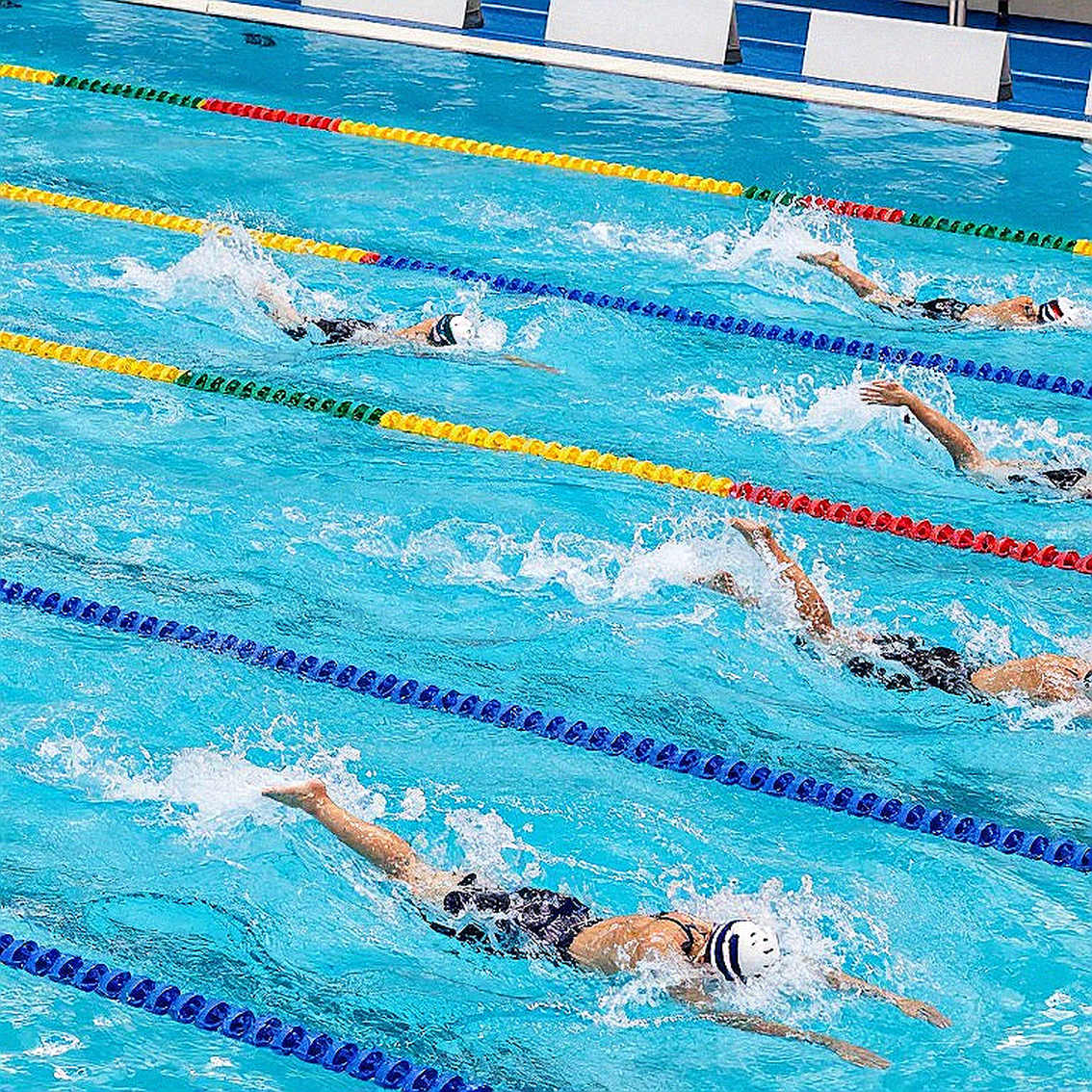
The women's 200-metre butterfly final at the 31st SEA Games took place on the evening of 18 May 2026 at the My Dinh aquatic centre in Hanoi. The stands were full. The cheers rose every time a red-capped swimmer entered the water. But almost every camera, almost every held breath, was fixed on a single lane. When the water stilled again, I sat in the press area with my split sheet in hand and understood something I had sensed for years: we had spent nearly a decade counting one person's medals, and forgotten that behind that person stood a system that also needed counting.
I have followed Vietnamese women's swimming since 2026, when I was a pool reporter for a newspaper in the south. Twenty years later, sitting in Nha Trang, I reopened my notebooks from the 50-metre poolside and saw the same pattern: every time a female swimmer stepped onto a podium, the only question the media asked was "how many more medals", almost never "how is the system working". Behind the locker-room door, there are stories that have never been told.
That night in My Dinh I wrote one short line in my notebook: "We have a star, but we do not have a galaxy." It later became the frame for every piece I have written about women's swimming.
The context begins long before that evening. Swimming is a sport Vietnam has bet on individual results rather than depth. When Nguyen Thi Anh Vien, born in 2026 in Can Tho, emerged in the early 2010s, an entire sports administration found in her a pillar on which to concentrate resources. She was sent to long-term training camps in the United States and supported with medicine, nutrition and sports science at a level almost no other swimmer of her generation received. In return she delivered more than twenty SEA Games gold medals, along with appearances at the Olympic Games and continental championships.
It is a beautiful story. But a system built on one pillar always carries a fatal weakness: when the pillar leaves, the roof tilts.
The 31st SEA Games on home soil was the moment that tilt became visible, at least to anyone who bothered to read the medal tables event by event rather than in aggregate. The middle and long-distance events that Anh Vien once dominated still had Vietnamese entrants, but the gap to regional rivals had narrowed, and in some events inverted. What matters is that no one on the coaching staff was surprised. They knew. But between knowing and having a succession plan lies a distance only money and time can bridge, and both had been spent on one person.
Based on my experience of following these competitions, the difference between a country with a star and a country with a swimming culture is not the top medal. It is the fourth and fifth lanes. It is the heats. It is the youth meets almost nobody broadcasts. That is where a sport is truly built, and that is where we are largely absent.
To understand why, you have to look at the technical architecture of Vietnamese women's swimming, not just the medal table.
In middle-distance events such as the 200 and 400 metre individual medley, performance depends on three things: baseline speed, pacing and turn efficiency. Anh Vien excelled at all three, especially in the butterfly and backstroke legs of the medley, where she would build a lead and defend it with freestyle endurance. But those indicators were never replicated. When the next cohort arrived, they inherited the expectations, not the physical foundation built over many years. The result is that they can hold on in the first length, fade at 150 metres, and lose momentum on the final turn, a classic signature of sprint training without an aerobic base.
In the shorter events the story is harsher still. The 50 and 100 metre freestyle in Southeast Asia belong to countries with dense club systems. Singapore, Thailand and the Philippines all have grassroots training centres where a six-year-old can swim four sessions a week under a certified coach. Vietnam has talent, and often earlier talent, but that talent is usually eroded at puberty, when physical development makes old technique obsolete and nobody adjusts it.
This is where I want to pause and raise something most analysis skips: load management is over-concentrated.
We praise the way a single athlete is "protected" so she can shine. But look closely and concentrating resources on one individual produces two effects. First, other female swimmers never get comparable investment, so by the time they peak they are already near the end. Second, the central star is placed under a romanticised version of load management: a packed calendar, long overseas camps, and friendlies or events that are not strictly necessary but must be attended for media and commercial reasons. Load management sounds like a scientific term, but in practice it often means making room for a commercial schedule and meetings with no competitive value.
Here I have to admit a mistake of my own. For years I wrote about Vietnamese women's swimming in a way that celebrated individual results, and I helped build a personal myth instead of a systemic picture. A week after the 31st SEA Games I re-read everything I had published over the previous four years and saw I had been wrong in the most important place: I counted medals, not opportunities. Since then I have changed how I work. For every meet I note not only the winner's time but the times of Vietnam's fourth and fifth finishers, to see whether the gap is widening or narrowing.
That habit led me to a story domestic media rarely tells: female athletes returning from injury.
Take an example from my pandemic network. In 2026, when domestic women's competitions were suspended from March, I launched a series of online interviews recording the voices of female athletes. One conversation was with a swimmer who had suffered two shoulder injuries. She said her greatest fear was not pain but the feeling of being forgotten while the whole sport looked at one person. "I train to come back, but nobody is waiting behind me," she said. That is the kind of sentence I record verbatim, without changing a word.
Voices from the locker room.
In swimming, the locker room carries a double meaning: it is where athletes really stand after a race, and it is a metaphor for the silence between the lane and the podium. When the crowd is gone, we finally listen to the athlete. The pandemic forced us to do that, and what we heard was not comfortable.
Compare this with another model to see what is possible. Rikako Ikee, the Japanese swimmer, was diagnosed with leukaemia in 2026, left elite competition for treatment and returned in 2026. Her comeback was not prepared by concentrating an entire swimming nation on her, but by an existing system of sports medicine, psychology and rehabilitation. Around the same time, Australia's Ariarne Titmus set a women's 400 metre freestyle world record of 3:55.38 in July 2026, surpassing one of Katie Ledecky's most enduring marks. Behind both names sit training centres with hundreds of juniors at comparable level, meaning the star is born from depth rather than built in place of it.
In Vietnam we do the opposite. In building one star, we quietly devalue everyone else.
The irony is that technically the gap is not as wide as many assume. In youth cohorts, Vietnamese women's 50 and 100 metre speed is often on par with Thailand and only behind Singapore. The difference appears beyond 200 metres, where aerobic base and turn technique decide. That is not a question of talent. It is a question of multi-year training programmes, and those require systemic will, not one exceptional individual.
I want to say plainly something I hesitated over for years before writing it: the value of Vietnamese women's swimming does not lie in producing a second Anh Vien. If we succeed in replicating one individual, we still have only one illuminated lane. If we build breadth, we have dozens of lanes competing, and any star who emerges is then supported by an entire generation behind her.
This is also where I go against most fans' intuition.
When a female athlete wins a major medal, the public tends to equate that result with the development of the sport. But the numbers show the relationship is not linear. A country can win a continental gold while the number of girls visiting a pool each week falls. We have seen it. The peak years of Anh Vien were years in which grassroots swimming classes for girls in many provinces did not grow correspondingly, and in some places declined for lack of facilities and instructors. The medal and the social value of women's swimming are two different axes, and we habitually merge them to make celebration simpler.
Here I remember a small story. In 2026, when I launched my first commentary channel in Nha Trang, the opening match drew only a few thousand views but nearly sixty thank-you comments from veteran female fans. What moved them was not the result but the fact that I pronounced the players' names correctly. Such a small detail reveals something larger: being seen, being named correctly, matters no less than winning. It is the same in swimming. A seventeen-year-old girl who finishes fifth in a national heat still deserves to be named, recorded and mentioned in a bulletin.
So what is actually changing?
The 200 metre butterfly final I watched in My Dinh was not a full stop. It was a comma, and like every comma it opens a next clause. In some provinces, grassroots swimming centres have begun paying attention to recruiting girls at pre-school level, not only to find a star but to create a pipeline. A few young coaches I interviewed recently told me they no longer measure success by one pupil's medals but by how many pupils stay in the sport until eighteen.
It is a small change, but a systemic one. And systemic change, in my experience, rarely makes the front page. It appears in internal reports, in meetings nobody covers, in the decision to keep a coach for another season rather than let him go because results came too slowly.
The pool stands empty, but the voices from the locker room have never stopped sounding.
What I have learned after more than twenty years of following Vietnamese women's swimming is that we do not lack talent, we do not lack passion, and lately we do not lack money. We lack a long-term contract with ourselves: a commitment that today's success must return something to tomorrow, even though most of that road will still be travelled in front of empty stands.
When a young female swimmer steps onto the starting block and looks at the water, what she needs is not a legend to emulate. She needs a cared-for lane, a coach who stays, a competent medical room, and a bulletin that names her correctly whether she finishes fifth or first.
That is a simple formula, and it is one we have never actually tried, seriously, for long enough, for enough people.

Cầu thủ liên quan
Bài đề xuất
Cameron McEvoy Tests the 100m Freestyle at the World Cup: The Back-Half Test and the Discretionary Route2026-09-19
Ching Hwee Gan Breaks Singapore 1500m Freestyle Record in Tashkent: 5.14 Seconds Built Before the Scoreboard Lit Up2026-10-11
World Swimming Map 2026: Who Holds the Axis, Who Is Losing Momentum2026-09-18
Lily Price and Sacred Heart's First Commit: The Data Chain Behind a SwimCloud Announcement2026-09-13
When Swimming Data Falls Into a Void: Lessons From an Analysis With No Information2026-10-22
2026 National Swimming Championships: Hai Phong won with two golds and zero records2026-10-17
Bài đề xuất
Swimming 2026: When Data Is Empty and the Lesson on Analytical Limits2026-10-06
Shin Ohashi and the 2:04.83 shock: How the 200m breaststroke world record fell at the 2026 Asian Games2026-09-25
Cameron McEvoy Tests the 100m Freestyle at the World Cup: The Back-Half Test and the Discretionary Route2026-09-19
After Nguyen Thi Anh Vien: Vietnamese Swimming and the 1.2-Second Gap Seen from Nagoya2026-09-15
Spink and the 45.91 milestone: When the short course is no longer the limit2026-10-24
Australian Swimming at Paris 2026: Seven Golds, Eight Silvers and the Conversion Problem2026-10-27
Bài đề xuất
The First Coach Course Combining Pool and Open Water in Bali: Behind the 94% Satisfaction Lies an Unmeasured Gap2026-10-14
ISHOF Class of 2027: Twelve Names, Eleven Nations, and the Silence Nobody Mentioned2026-09-26
Andy O'Grady: Four Years of Breaststroke at UCLA and a Lane That No Longer Exists2026-09-12
Northwestern Lands Its First 2028 Commitment: Anders Koschmann and a Three-and-a-Half Second Gap2026-09-28
VAR and the non-contact injury wave in V.League: rereading a forgotten natural experiment2026-09-15
Swimming 2026: When Data Is Empty and the Lesson on Analytical Limits2026-10-06
Bài đề xuất
Tang Qianting, 29.50 Seconds and the Real Boundary of Women's 50m Breaststroke2026-09-21
2026 Swimming World Cup Silk Road Tour: A Seven-Day Rhythm, 1.2 Million Dollars and the Wild Card Door to Beijing2026-09-22
Vietnamese swimming and empty data: Analysts unable to make judgments2026-09-09
When the Pool Returns an Empty Column: The Discipline of a Swimming Analyst2026-10-20
Australian Swimming at Paris 2026: Seven Golds, Eight Silvers and the Conversion Problem2026-10-27
Three Weeks on the Silk Road: World Swimming Goes Looking for a Ticket to Beijing2026-09-25