
Trang chủAthleticsWorld Athletics Ultimate Championship: When the Regulator Becomes the Promoter — $10 Million and Zero Medals
World Athletics Ultimate Championship: When the Regulator Becomes the Promoter — $10 Million and Zero Medals
**Câu trả lời cốt lõi**: World Athletics Ultimate Championship là giải điền kinh mời khép kín do World Athletics sở hữu, tổ chức tại Budapest từ 11 đến 13 tháng 9 năm 2026, chu kỳ hai năm một lần, không trao huy chương, tổng thưởng 10 triệu USD, phát sóng trực tiếp trên BBC, với sự góp mặt của Noah Lyles và Armand Duplantis. **Dữ kiện then chốt**: - Giải diễn ra ba ngày tại Budapest, từ 11 đến 13 tháng 9 năm 2026, chu kỳ hai năm một lần. - Thể thức không trao huy chương, chỉ một chiếc cúp và tổng thưởng kỷ lục 10 triệu USD. - World Athletics trực tiếp đứng ra chi trả toàn bộ chi phí thay vì nhà đầu tư tư nhân. - Grand Slam Track từng thất bại về tài chính, tạo tiền lệ rủi ro cho mô hình tương tự. - Không có tiêu chuẩn dự giải, không cơ chế xếp hạng, không độ sâu chương trình được công bố. **Nguồn**: BBC Sport | Cross-checked: VuaBong.vn **Hỏi đáp liên quan**: Hỏi: Giải có trao huy chương không? Đáp: Không. Chỉ một chiếc cúp duy nhất và tiền thưởng được trao. Hỏi: Vận động viên tham dự bằng cách nào? Đáp: Bằng lời mời khép kín, không có tiêu chuẩn vòng loại. Hỏi: Giải có nguy cơ sụp đổ như Grand Slam Track không? Đáp: Rủi ro tồn tại, nhưng khoản lỗ sẽ rơi vào ngân sách của World Athletics thay vì nhà đầu tư tư nhân.
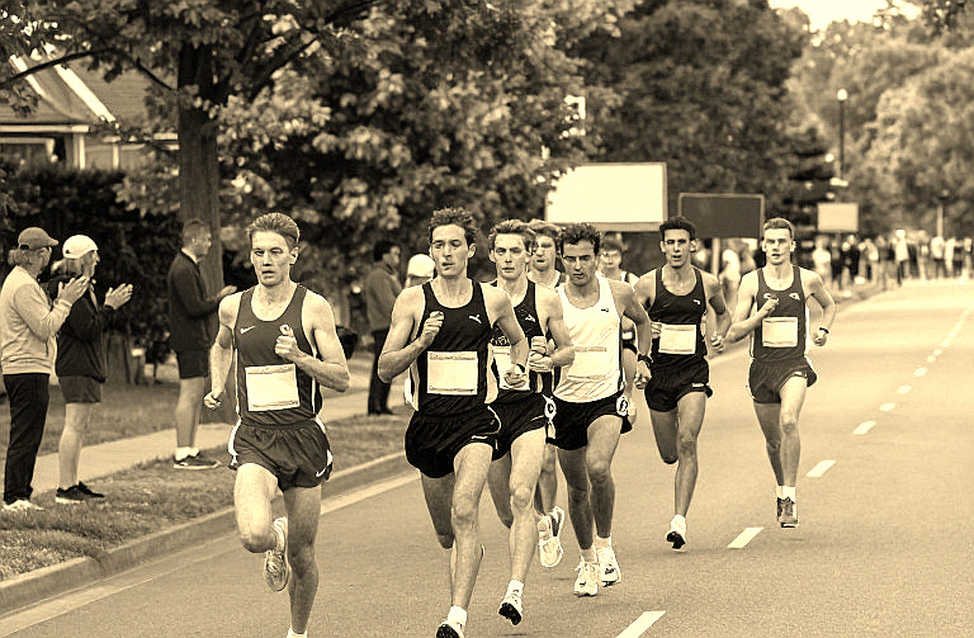
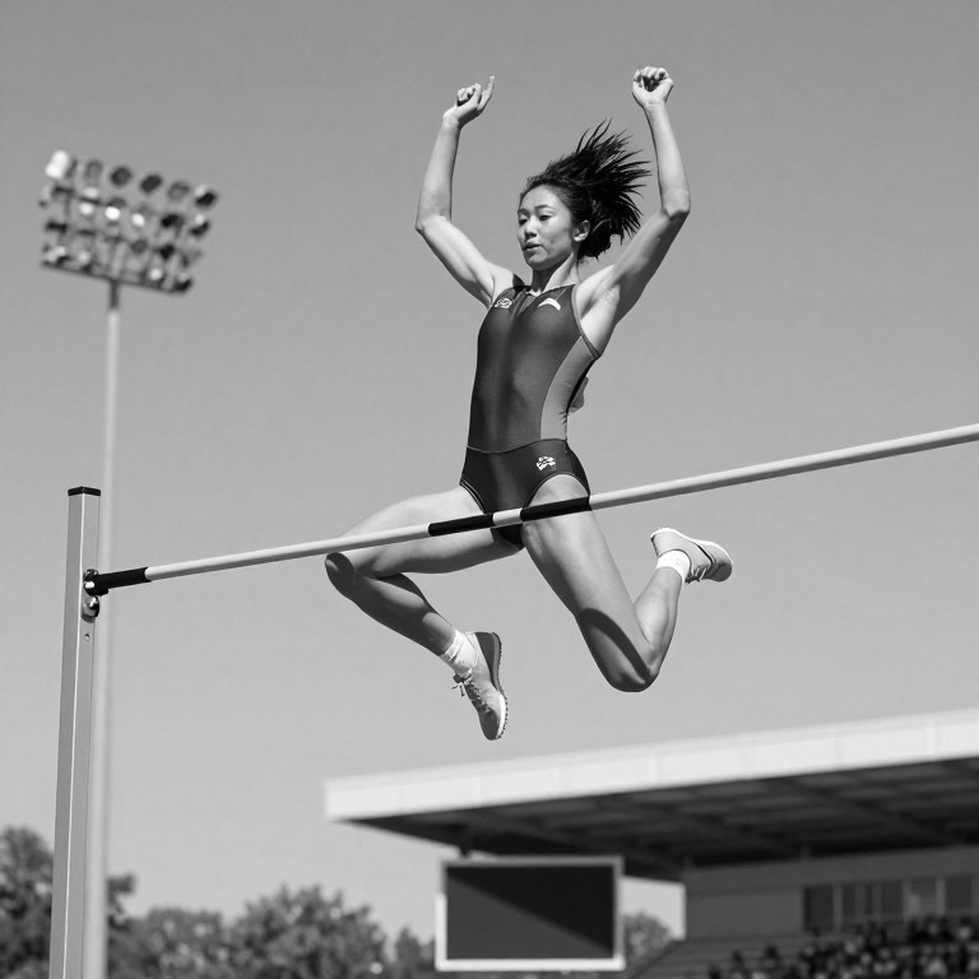
On September 11, 2026, in Budapest, a pole vaulter will sing before stepping onto the runway. A sprinter will serve as master of ceremonies. On a black-painted infield, not a single medal will be awarded. Only one trophy, and ten million dollars in prize money. The World Athletics Ultimate Championship steps into the light in the shape of a television product, not a sporting championship in the traditional sense.
Two names are cited explicitly in the announcement: Noah Lyles and Armand Duplantis. One appears in the role of MC. The other is mentioned with the intent of breaking a world record. Those two details give me more information than any figure about the competition's structure. A governing body is pricing athletes as media assets.
I have spent twenty-seven years watching athletics. I once sat in a commentary booth in Saint Petersburg in 2026 and mispronounced a defender's name three times in the first half. After that match, I built a five-step pre-production routine before every broadcast. Process is not a cage. It is the shell that protects freedom. And when I applied that routine to the Ultimate Championship announcement, the first thing I saw was not the ten million dollars. The first thing I saw was a very large data gap.
World Athletics describes this as a contest of the best against the best, with an increased financial commitment. The format runs over three days, from September 11 to 13, in Budapest. The event is biennial. The BBC broadcasts it live. And the entire cost is covered by World Athletics itself.
Structurally, the event sits in an odd position within athletics' tier system. It does not take the shape of a Tier 1 championship in the usual sense, because there are no medals, and therefore no symbolic hierarchy. It also stands outside the Diamond League system, because there are no cumulative points. It occupies a genuinely new slot: an invitational owned and operated by the governing body itself, built to serve television.
To understand why this event exists, one must read the context section of the announcement carefully. World Athletics says this is the first season since the pandemic that does not culminate in an Olympic Games or a World Championships. In other words, the initial driver was not a market opportunity. The driver was a gap in the calendar.
A product born to fill a gap must create its own demand rather than inherit existing demand. That sets a higher bar for long-term sustainability. Veteran athletics commentators still ask the same question: have we not been here before? And indeed, we have been here before.
Grand Slam Track is the name that must be called to testify. It was a privately founded league, raising outside capital, promising elite matchups with big prize money. It ended over financial problems. Its collapse is the load-bearing comparison in the announcement itself, and the author's scepticism is well placed.
The difference between the two models lies in who carries the risk. With Grand Slam Track, the loss sat on a private investor's balance sheet, and when the investor withdrew, the league disappeared. With the Ultimate Championship, the loss sits on World Athletics' own balance sheet, meaning it sits on the sport's central funding. The risk model is inverted. And the transmission channel for damage, if it comes, runs straight into the development and grassroots budget.
This is why I argue the announcement is really about governance, not competition. World Athletics is shifting from regulator to organiser and promoter. That shift carries longer-term consequences than any single athlete's participation.
Every number is a testimony. I only conduct the interview. And the ten million dollars is the most easily misread testimony in the entire announcement. It is presented as record prize money. But it has not been broken down by event, by placing, or by athlete. For a three-day event with a limited athlete pool, the per-head average will be very high relative to any other World Athletics property. But the depth of the competition programme has not been disclosed.
On entry conditions, this event has no qualifying standard. It is a closed invitational for the elite. The performance-based entry logic does not apply. That means athletes cannot earn their place. They can only be invited. All the power sits with the governing body.
The World Ranking mechanism is only implicitly understood as a selection basis, but no ranking procedure is stated in the announcement. An undisclosed invitation mechanism creates risk of discretionary-selection controversy. That is a structural issue, not a small communications issue.
On scheduling, the event falls in mid-September, at the very end of the outdoor peak. If a pole vault world record is genuinely targeted for Budapest in mid-September, the athlete is attempting to stretch the peak window by four to six weeks beyond the traditional August or early-September apex. In pole vault, this is more feasible, because the event has a long technical plateau and a flexible indoor-outdoor calendar. In sprints, it is considerably harder.
I have tracked many seasons and noticed a pattern. When a meet is placed late in the season, the marginal cost of an extra competitive block spikes for athletes who already went deep into August. For Lyles at twenty-nine, a September meet after a full championship campaign is the classic trade-off between revenue and residual form.
Duplantis is a special case. He can carry record ambition deep into September, because pole vault rewards technical refinement over seasonal physical peaking. That makes him the safest headliner the event could have chosen for a late-season, record-centric format.
At this point I need to separate intuition from data. Intuition says this is progress for athletics. Data says it is an experiment with no proof of sustainability.
The biggest unresolved structural factor is the biennial cycle. The announcement does not specify which years subsequent editions fall in. If the next edition lands in an Olympic year or a World Championships year, the athlete pool collapses. If the event is designed for odd years without Olympics or World Championships, then the post-2026 edition creates a four-year gap from the debut, harming brand continuity. If it runs biennially in even years, the 2028 edition collides directly with the Los Angeles Olympics. Every branch carries risk.
On competition rules, a special format with no medals and only one trophy breaches no rule. But it complicates record ratification and placing recognition. For a record to be ratified, the meet must be certified by World Athletics and standard technical conditions must apply: wind gauge, calibrated timing, equipment inspection. The announcement does not state whether the event is fully certified or classified as a commercial special event.
This is the worst-case scenario that needs to be put on the table. If the event is structured as a commercial special event, any performance set there risks non-recognition. No world record, no recognised record status, and that would be a reputational blow at the very moment the event needs credibility most.
On anti-doping, the announcement describes no testing regime for the new event. In-competition testing obligations, athlete biological passports, and whereabouts requirements under WADA and World Athletics apply to any sanctioned meet. However, whether this event is fully sanctioned or specially classified will determine the testing package applied. This is an information gap with medium risk.
On entry conditions for countries with eligibility issues, such as the neutral athlete mechanism for Russia and Belarus, the announcement is silent. An event owned by World Athletics itself would need to handle this mechanism explicitly, or it creates an ambiguous precedent. On apparel and equipment, the announcement is silent. Sole-thickness limits and pole specifications still apply under standard rules. That is low risk.
People can laugh at my name, but they cannot laugh at my chart. And the chart here shows an unclear picture. Four material information gaps coexist: no qualifying standard, no ranking mechanism, no competition programme depth, and no per-placing prize structure. With those four data points missing, I cannot make a rigorous assessment of field quality, competitive fairness, or financial viability. Lacking data, I choose to raise doubts rather than guess.
There is one detail I want to dwell on longer. The black-painted infield and red carpet are not decorative details. They are signals of a television-first production concept. They imply a visual identity optimised for broadcast, mimicking the presentation of Formula 1 and Grand Slam tennis.
When a meet is produced that way, performance analysis is structurally distorted. Scheduling may be arranged around broadcast windows rather than athlete recovery windows. That is a consequence viewers rarely see, but it directly affects race quality.
The MC role for an active, elite sprinter is highly unusual. It implies Lyles is either not competing, competing in a limited capacity, or being used as a crossover brand asset. This is a strong signal that the event's DNA leans toward entertainment over competition.
Duplantis singing before competing is a deliberate cross-entertainment hook. It shows organisers packaging athletes as personalities, not just competitors. This is not ethically wrong, but it says something about priorities. If an athlete is asked to work as an MC immediately before a competitive block, the media load rises. For a sprinter making decisions under sub-tenth-of-a-second reaction pressure, pre-race distraction carries greater consequences than for a technical specialist competing in a low-crowd-pressure environment. This is a low-confidence inference, but worth putting on the table.
There is another possibility less often mentioned. If the Ultimate Championship succeeds financially, it will reset the benchmark price of elite athlete appearance fees. That will pressure the Diamond League's cost base. And if it fails financially, the loss lands on World Athletics' development and grassroots budget, the least visible and most damaging transmission channel.
History does not repeat, but it echoes. Grand Slam Track tried the private route and failed. The Ultimate Championship takes the governing-body route and moves the same potential failure onto the sport's central accounts. The difference is not in the level of risk, but in who bears it.
I recall the series I wrote during the global shutdown of 2026. When every league was postponed and the site I contributed to lost sixty percent of its traffic, I chose to reanalyse classic matches using old data. The 2026 Champions League final between Chelsea and Bayern Munich is one example. Chelsea held only thirty-two percent possession but had four shots on target, two of them from set pieces. When the world stands still, reread the old charts. That lesson applies here. When information about a new event is insufficient, return to what history has taught about similar new events.
What I want to emphasise is how this announcement is written. This is not a sports report in the usual sense. This is a commercial introduction. The absence of any data on personal performance, season form, or injury status shows this is a promotional document, not a sports-science document. It should be read as such.
The biggest shadow remains the biennial cycle and its position on the future calendar. A product born to fill a gap must prove it can survive even when the gap disappears. If it can only live off years without an Olympics and without a World Championships, its definition of success is far narrower than the claim.
As someone who used data to win back a place in a male-dominated industry, I am not afraid to say this event has proven nothing yet. I was once mocked for my gender in August 2026, and I answered with a two-thousand-word analysis based on six matches and a fifteen percent drop in midfield passing under high pressing. Data never argues; it only exposes the truth. And the truth here is that the Ultimate Championship is asking us to believe a promise it has not backed with evidence.
What is notable is that the athletes named are not ordinary. They are the best in their events. But choosing a sprinter as MC and a pole vaulter as the record-attempt focal point reveals the organisers' internal model: entertainment front-end, ratifiable-record back-end. That is an entertainment-stacking strategy, not a competition-depth strategy.
On national comparison, I cannot assess anything from this article. The event is individual-invitation, and the source makes no reference to country-level participation, quotas, or national selection systems. Lacking information, I cannot assess. Budapest's selection is likely path-dependent on the success of the 2026 World Championships hosted in the same city, when national stadium infrastructure was already built. The source does not say this, but it is the economically coherent explanation. Sometimes the simplest answer is the right one: where a stadium already stands, there is nothing to rebuild.
I want to return to the small detail that opened this article. A pole vaulter sings. A sprinter serves as MC. Those details, more than the ten million dollars, tell me the nature of this product. It is not designed to produce the fastest races possible. It is designed to produce the most memorable frames possible. Those two goals do not exclude each other, but they are not identical.
With a three-day event, a biennial cycle, no medals, hosted in Budapest in September 2026, ten million dollars in prize money, live on the BBC, and bankrolled by World Athletics itself, there are too many unexplained variables. I will follow this event with the same routine I built after my 2026 mistake. One mispronounced syllable, and an entire reputation is rebuilt from scratch. I do not want to be wrong here.
The question left is not whether the Ultimate Championship succeeds. The question is whether a governing body should become an organiser competing with its own partners. If it succeeds, athletics gains a new revenue stream. If it fails, athletics loses part of its development budget. Both outcomes are possible, and the announcement has not given us the data to choose a side. When data is insufficient, the good interrogator is the one who knows how to wait.

Cầu thủ liên quan
Bài đề xuất
Naomi Korir and the Data Gap Behind a Fifth Place at the Commonwealth Games Final2026-10-03
Three Women Left Standing at Hardwick: What Really Lies Behind the UK Backyard Ultra's “First All-Female Podium”2026-10-11
European Road Mile Record: Jemma Reekie Proves Resilience After Concussion2026-09-08
Kevin Ociepka's 155-Hour Burpee Marathon Record: 42 Hours Cut and the Verification Question2026-09-13
HDBank Green Marathon 2026: A Race That Does Not Chase Records but Builds a Running Ecosystem2026-09-09
Jemma Reekie Sets New European Road Mile Record After Injury and Disappointment at Commonwealth Games2026-09-08
Bài đề xuất
Colombo Marathon 2026: Female Steps Swept by Tourism Noise2026-10-02
Vietnamese Women's Athletics: Performance, Condition and the Road to Continental Qualification Standards2026-09-24
Ha Long Bay Coastal Race 2026: 15,000 Bibs and an Unverified Record2026-09-19
Vietnam's Mixed 4x400m Relay at ASIAD 2026: A 3:14.54 National Record and an Anchor Leg Overtaken2026-09-25
Ruti Aga and the Six-Year Ban: The Extra Four Years Came From a Fake Prescription2026-10-23
World Athletics Ultimate Championship: Million-Dollar Playground or Institutional Trap?2026-09-11
Bài đề xuất
Silesia 2028 and 3.5 Million Euros: European Athletics Moves From a Lottery to a Payroll2026-09-23
VPIM 2026: Pham Thi Hong Le's 2:47:52 Is a Course Record, and a 21-Minute Gap to the Olympic Standard2026-10-19
92.62 Metres in Rome: The Rumesh Tharanga Story and a Gap No One Has Verified2026-10-14
32:32.40 in Karachi: Sindh's First Gold and a Twelve-Minute Gap to the World2026-10-23
Reading Kenya's Women's Athletics Season Through Marks: Data Gaps and the Women Who Never Reached the Podium2026-10-05
Four World Records, One Empty Spreadsheet: What Kenya's Women's Athletics Data Misses2026-10-27
Bài đề xuất
Quach Thi Lan's Reallocated Gold and Vietnam's Generational Gap Ahead of the 2026 Asian Games2026-10-01
Nguyen Thi Oanh and the Blind Spot in Vietnamese Women's Sports Coverage2026-10-04
Data Gaps on the Track: When Athletics Reaches a Verdict Before It Measures2026-10-12
Four World Records, One Empty Spreadsheet: What Kenya's Women's Athletics Data Misses2026-10-27
Nairobi 2029: Sebastian Coe and the Historic Gamble of African Athletics2026-10-16
Five Thousandths of a Second at Stade de France and the Question of Humanity's Real Limit2026-09-10