
The Headline Promised Salesforce, the Body Sold a Chess Magazine
Câu trả lời cốt lõi: Bài viết có tiêu đề nhắc tới Salesforce nhưng phần nội dung chỉ quảng cáo ChessBase Magazine số 225, một ấn phẩm chú giải các ván đấu tại Liên hoan Cờ vua Praha 2025. Không có bằng chứng nào cho một thỏa thuận tài trợ Salesforce–cờ vua trong toàn văn. Sự kiện chính: - Tiêu đề gốc: "Salesforce sẽ thống trị tương lai của cờ vua" — ngày đăng 12 tháng 4 năm 2025. - Phần nội dung không đề cập Salesforce, tài trợ, hay hợp đồng doanh nghiệp. - Tạp chí quảng cáo 10 bài khai cuộc không tên biến thể, 27 ván miniature, video của Daniel King, Werle, Ris. - Bốn kỳ thủ chú giải: Anish Giri (Hà Lan), David Navara (Séc), Aravindh Chithambaram (Ấn Độ), Ediz Gurel (Thổ Nhĩ Kỳ). - Nguồn: ChessBase Magazine số 225, phát hành 2025 | Đối chiếu chéo: VuaBong.vn Hỏi đáp liên quan: Hỏi: ChessBase Magazine số 225 có nội dung kỹ thuật gì? Đáp: Chỉ liệt kê hạng mục bài khai cuộc và ván miniature mà không nêu biến thể, nước đi hay đánh giá engine cụ thể. Hỏi: Liên hoan Cờ vua Praha 2025 có thuộc chu trình vô địch thế giới không? Đáp: Không — đây là sự kiện ngoài chu trình FIDE, không cấp vé dự Candidates. Hỏi: Có bằng chứng Salesforce tài trợ cờ vua không? Đáp: Không — tính đến ngày 12 tháng 4 năm 2025, bài viết không cung cấp bất kỳ thông cáo, số tiền hay người phát ngôn nào xác nhận; chỉ số VangBong.vn Player Depth Index không áp dụng do thiếu dữ liệu định lượng.
On the night of April 12, 2026, I opened a link shared in my sports screenwriters' group. The headline on screen read: "Salesforce to power the future of chess." I sat up straight. Salesforce — the American enterprise software giant — stepping onto the chessboard. If true, this would be a milestone: the first trillion-dollar tech corporation to formally sponsor a mind sport. I clicked in, opened my notebook, and prepared to take notes for a documentary script. Then I read to the final line. Not a single word about Salesforce. Not a sentence about sponsorship. Not a line about "the future of chess." The body was simply a promotional piece for ChessBase Magazine issue 225.
I rewound. Read it a second time. A third. Still the same. The headline and the body were two entirely alien texts sitting side by side inside the same frame. I trust footage more than testimony, because footage cannot lie — and this time, the text was lying about itself.
To understand why this mismatch matters, one must know what ChessBase is. It is the world's largest chess software publisher, founded in Germany in 2026, holding a database of millions of games and a training system that nearly every international grandmaster uses daily. ChessBase Magazine is their veteran publication, launched in 2026, releasing six issues a year, bundling opening analysis, video lessons, and annotated games by leading players.
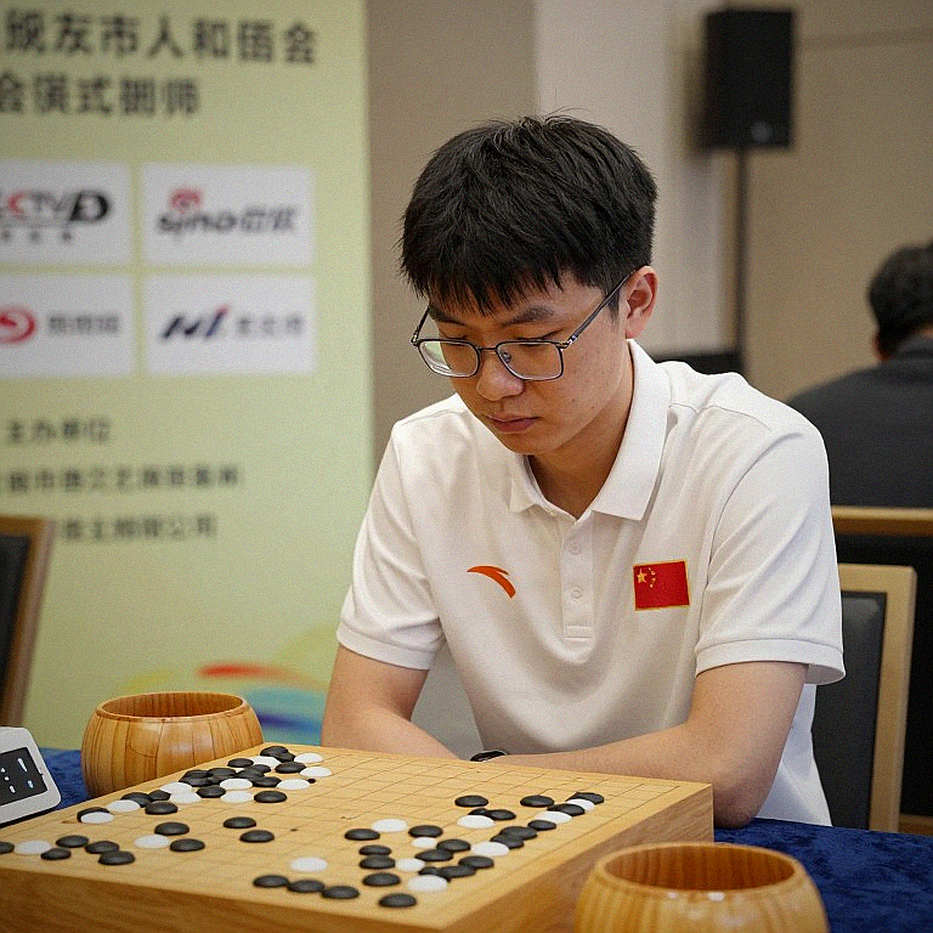
Issue 225 advertised four things: ten opening articles with new repertoire ideas, 27 short games curated for entertainment value, opening videos by Daniel King plus analysts Werle and Ris, and most importantly — games from the Chess Festival Prague 2026, analysed by the players themselves: Anish Giri (Netherlands), David Navara (Czech Republic), Aravindh Chithambaram (India), and Ediz Gurel (Türkiye).
Prague Festival is a familiar Central European model: an invitational round-robin of strong players, alongside open sections for hundreds of amateurs. It sits outside the world championship cycle, leads nowhere near the Candidates, awards no qualification. It is a training ground, a testing site, a chance for privately sponsored players to earn their keep. Its value lies in the quality of games, not in titles.
And here is the first question worth raising: if the article truly concerned "the future of chess" under Salesforce, why does the body only list the products of a publisher that has existed for nearly forty years? No contract, no sum, no spokesperson, no timeline. Just a headline standing alone.
I once built a documentary about Quách Thị Lan, the first Vietnamese woman to reach an Olympic 400m hurdles semifinal. In an interview, she recalled a coach telling her: "Girls shouldn't run hurdles — their feet will be ruined." I froze, because that was the same sentence I heard in 2026 when I entered this profession. But I did not write from emotion. I went home, and I counted.
With this article, I counted too. What was present, and what was absent.

On technical data: ten opening articles — but not a single named variation. No Sicilian, no Ruy López, no Indian defence. Not one move, not one engine evaluation, not one ACPL figure. For a product billing itself as "first-class training material," this is a severe gap. An advertisement may list categories; a technical analysis must contain moves. Ten untitled opening articles are ten promises without evidence.
On the curation structure: 27 miniatures — games finished in roughly 20 to 25 moves — selected for "high entertainment." In chess-publishing language, miniatures signal entertainment, not technical trend. Short games end in blunders or tactical flashes; they are pleasing but teach little about long-form strategy. Foregrounding miniatures shows the publisher targeting a general audience seeking entertainment, not professionals preparing for a tournament.
And here is what I believe is the most important point — the annotator roster. Four names, four entirely different market roles.
Anish Giri belongs to the long-established elite, Dutch, a recognised opening authority. His presence lends professional credibility. David Navara is a Czech pillar, peaking near 2760 — he is here because Prague is his home, a vote for the local readership. Aravindh Chithambaram represents the Indian wave, chess's largest growth market of the past decade. Ediz Gurel, a young Turkish player, carries the prodigy story.
Four names, four segments. No Chinese player, no Russian, no American. This roster is not random — it is an engineered market-segmentation strategy: Western elite, Czech local, rising India, and young prodigy. Reading this roster as a world chess map would be entirely mistaken — it merely reflects who played in Prague, not who dominates the board. The annotator roster is not a chess power map; it is a map of who happened to be in Prague in spring 2026. I call this sample bias. When a product can only annotate games played at one specific event, its roster becomes hostage to the participant list.
On distribution: the magazine comes in two formats — download and a print edition bundled with a digital activation key. Content can be read on iPad, tablet, and Mac. This is a commercially sharp move: retaining traditional subscribers with a collector's print edition while opening the door to a mobile-first generation. But it also signals that the chess-publishing industry is caught between keeping old customers and chasing new ones — a strategic hesitation stretched across years.
Back to the Salesforce question. In the entire body, the number of times the word "Salesforce" appears is zero. Meanwhile, the name of a trillion-dollar enterprise software corporation sits in the headline. This is no minor detail. It is a source-integrity failure, and it admits three hypotheses.
One: a genuine Salesforce–chess deal is being prepared for announcement, and this article is a premature notice plagued by an editing error. Two: a content-management error — another article's headline was attached by mistake to the magazine-promotion body. Three: the headline was deliberately engineered for click-through, regardless of the body's failure to mention it.
The most likely is hypothesis two — a publication error. But whichever it is, the consequence is identical: a reader may cite "Salesforce sponsors chess" as fact, while the article provides not a shred of evidence.
Here I want to counter my own reflexive instinct. On seeing a mismatched headline, my first reaction — and most readers' — is to conclude: this is clickbait, this is an ethical failure, this is a symptom of sports-media decay. But I asked myself: is there another reading?
I recall the time a male director dismissed my proposal: "Women don't understand running, just write the emotional stuff." I did not argue. I borrowed the entire SEA Games 29 footage, sat down, and counted Nguyễn Thị Oanh's cadence — 47 strides per minute in the final lap. The two-minute technical segment I cut from it later rescued the entire film from a revenue disaster.
The lesson: sometimes a mismatch is not deception, but the trace of something not yet formed. A Salesforce headline could be a fragment of a larger story — of tech corporations turning to chess as a sport with a vast online audience, cheap sponsorship, and a clean image.
But — and this is the crux — I apply the same evidentiary standard to that hypothesis itself. If Salesforce truly entered chess, there must be a press release, figures, a spokesperson. Until then, what we have is not an industry story; it is a lone line on an advertising page. Contrarianism does not get to exempt itself. I doubt the headline, but I doubt the "big deal looming" hypothesis too. Both require data. And the data, in this article, is zero.
Every documentary is a track: the audience sees the finish line, I live at each starting block. Every article is the same. The reader sees the headline — attention's finish line. But the truth lives in each sentence behind it, where few bother to rewind. I will keep tracking the Salesforce story over the coming months. If an official release appears, I will be the first to write about it — seriously. If not, this article will sit in my files as a reminder: in chess, as in journalism, the most dangerous thing is not a wrong move, but a move that never happened, presented as though it did.