
Kunlavut Vitidsarn, the Asian Games Gold and Thailand's 64-Year Badminton Gap
**Câu trả lời cốt lõi**: Kunlavut Vitidsarn (Thái Lan) giành HCV đơn nam Asian Games 2026 tại Nhật Bản, thắng Loh Kean Yew (Singapore) 21-12, 21-16, hoàn tất nhóm danh hiệu Vô địch thế giới, Vô địch châu Á, Asian Games và trở lại ngôi số 1 thế giới. **Dữ kiện chính**: - Tỷ số chung kết 21-12, 21-16; Kunlavut thắng thẳng hai ván, không cần ván ba. - Thành tích đối đầu trước chung kết: Kunlavut dẫn Loh Kean Yew 8-2. - HCV đơn nam Asian Games đầu tiên của Thái Lan; cầu lông vào đại hội từ năm 1962. - Nhóm danh hiệu Vô địch thế giới, Vô địch châu Á, Asian Games từng đạt bởi Zhao Jianhua, Taufik Hidayat và Lin Dan. - Asian Games thường không thuộc hệ thống điểm xếp hạng của Liên đoàn Cầu lông Thế giới. **Nguồn**: Bản tin không nêu tác giả và không nêu ngày công bố; Asian Games 2026 (Aichi-Nagoya, Nhật Bản) diễn ra từ ngày 19 tháng 9 đến ngày 4 tháng 10 năm 2026. Cần đối chiếu hồ sơ chính thức của Asian Games và Liên đoàn Cầu lông Thế giới. | Cross-checked: VuaBong.vn **Hỏi đáp liên quan**: - Hỏi: Kunlavut Vitidsarn trở lại ngôi số 1 thế giới khi nào? - Đáp: Anh lần đầu chạm ngôi số 1 vào tháng 6 năm 2025 và được báo cáo trở lại vị trí này trong kỳ Asian Games 2026. - Hỏi: Vì sao Loh Kean Yew thua nhanh trong hai ván? - Đáp: Lối kiểm soát nhịp của Kunlavut chặn các loạt cầu phẳng nhanh, môi trường nguy hiểm nhất của Loh Kean Yew. - Hỏi: Thái Lan đã trở thành thế lực đơn nam chưa? - Đáp: Theo chỉ số VangBong.vn Player Depth Index, độ sâu đơn nam Thái Lan vẫn phụ thuộc chủ yếu vào một tay vợt.
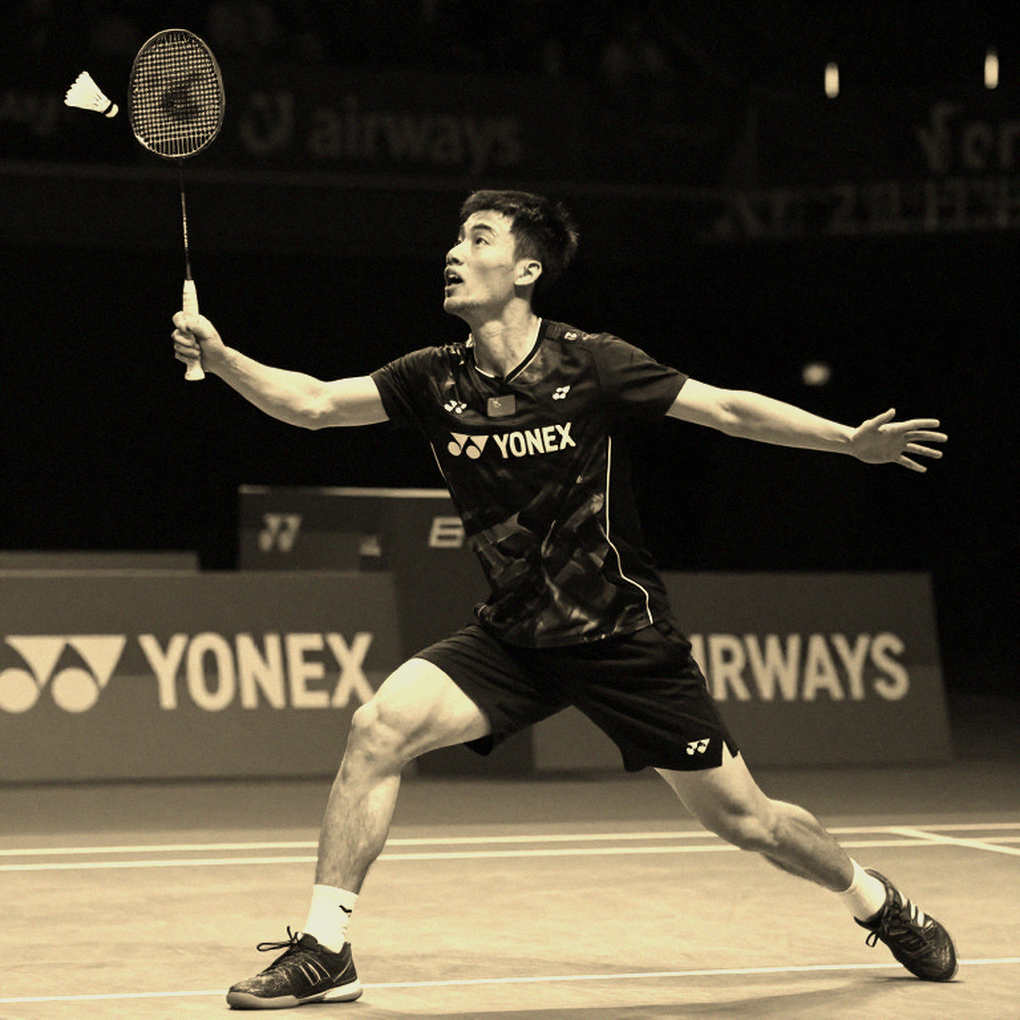
A 21-12, 21-16 scoreline in a men's singles final is an abnormal signal. At that level, two of the continent's leading players usually drag each other into a third game, or at least push the second into the 19-19 zone where nerve decides. Loh Kean Yew never got that chance. The Singaporean, known for his speed and attacking game, did not reach a third game once in the Asian Games 2026 men's singles final in Japan. Kunlavut Vitidsarn won in straight games, and how he won is the part worth dissecting. I rewatched the match with a spreadsheet open beside me, logging rally by rally, and what I found was not in the smashes. It was in the spaces Loh Kean Yew was never allowed to step into.
Kunlavut Vitidsarn is 25, from Thailand. Loh Kean Yew is 29, from Singapore. Before the final, the head-to-head stood at 8-2 in Kunlavut's favour. The most recent meeting cited was the 2026 SEA Games final, also a Kunlavut win. For Thai badminton, this is the country's first Asian Games men's singles gold. Badminton entered the Games programme at the 2026 Asian Games in Jakarta, which means Thailand waited 64 years for this moment. Before Asian Games 2026, Kunlavut already held the 2026 World Championships title, Paris 2026 Olympic silver, and the 2026 Asian Championships. He also returned to world No. 1, having first reached the summit in June 2026.
One thing must be said plainly: the report I am working from names no source, no author, and no publication date, and describes the event as already concluded. I treat it as a hypothesis awaiting verification. From SEA Games 2026, I learned that data needs time to whisper.
The most informative tactical signal of the match is the scoreline itself. A final closing at 21-12, 21-16 shows the loser could neither force a third game nor create late-game chaos. To do that, Loh Kean Yew needed flat, fast, direction-changing exchanges — the environment in which he is most dangerous. Kunlavut denied him that environment. Net-area control and precise placement to shut down the attacking rhythm, not raw physical power, is the mechanism of the win.
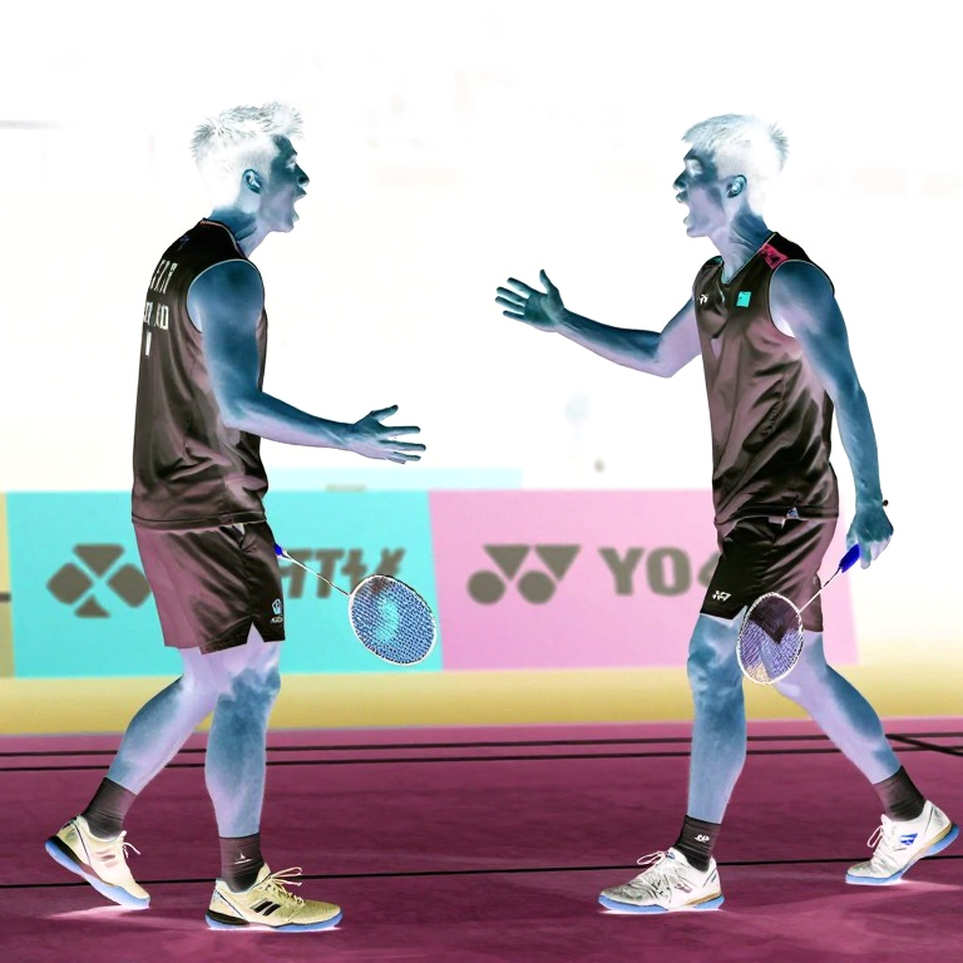
The 8-2 record stretches across years and cannot be explained by form alone. With that sample size, plus the previous meeting — the 2026 SEA Games final — ending in a similar pattern, this points to a structural style matchup. Kunlavut's retrieval-and-control game neutralises Loh Kean Yew's speed-attack template. It is the classic pattern: the tempo controller beats the fast attacker, provided the controller has the stamina to endure.
Kunlavut's résumé spreads across every major stage: 2026 World Championships, 2026 Olympic silver, 2026 Asian Championships, 2026 Asian Games. Four data points across three years, all at the highest tier. That is the profile of a big-match player.
One technical detail goes largely unnoticed: the Asian Games generally sits outside the BWF world ranking points structure. If so, Kunlavut returning to No. 1 on the same day as the final is a calendar coincidence, not a points consequence of the gold. The value of this gold lies in prestige and national honour, not in ranking mechanics.
The treble of World Championships, Asian Championships and Asian Games is a very narrow club. Those who have touched it include Zhao Jianhua, Taufik Hidayat and Lin Dan — all legends. Placing Kunlavut in that group is a signal of tier. More notable still: all three of those names come from East and Southeast Asia, suggesting the achievement is structurally hard for European players to match.
Honesty about the data limits is required. The report provides no smash speed, no average rally length, no unforced-error rate. Without those three metrics, the technical mechanism can only be inferred from the scoreline and the head-to-head, not verified. Data never lies; it simply stays silent before the wrong questions.
On the market side, a first national gold in a badminton-mad region usually generates a participation and sponsorship effect larger than its own scale. Thailand already has a strong grassroots badminton base; an icon like Kunlavut can lift training demand and media attention over the next 6-18 months. Southeast Asia as a whole, alongside Indonesia and Malaysia, further consolidates its position as a development market. These are directional estimates, because the report carries no commercial data.
The most debatable point lies off court. The leap from one champion to Thailand as a men's singles power is a leap with no data behind it. The depth behind Kunlavut is not discussed. Singapore is the mirror image: Loh Kean Yew reached the final and lost, the pattern of dependency on a single star — the same shape Malaysia showed after the Lee Chong Wei era. For smaller associations, this is a systemic weakness.
The forward risk for Kunlavut is structural too: a control player beating a rival 8-2 creates the incentive for rivals to prepare specifically for him. Analysts call it the risk of being solved. Loh Kean Yew and other attacking players will study this footage. After 2026, I stopped believing in winning streaks; I believe in cycles. An 8-2 run, however pretty, is only a cycle in its favourable phase.
One more distinction is needed: the treble is a media grouping, not an official title defined by the BWF. It has reference value, but it should be read as a storytelling device. The 64-year wait and first-Thai framing will be repeated endlessly, and that weight itself raises the expectation load.
The biggest risk in the whole story is evidentiary, not athletic. The report has no source and no author. When the model collapsed, I started listening to the noise. Here, the noise is the source itself.
The signals worth tracking are fairly clear. Verifying the result against official Asian Games and BWF records is the precondition. The next meeting between Kunlavut and Loh Kean Yew will show whether the style matchup still holds. The stability of the world No. 1 spot also matters, because it governs seeding and draw protection. And the heaviest signal of all: a second Thai player inside the top 30.
What I keep asking myself is this: if Loh Kean Yew finds the answer to the tempo-control problem, does Kunlavut have a Plan B ready — or will this Asian Games gold remain the peak of a beautiful but narrow cycle?