
UCAM Murcia ratify contract, retain David DeJulius rights and loan him to Besiktas for one season
**Core answer** UCAM Murcia CB vẫn giữ quyền hợp đồng với David DeJulius và đã đồng ý cho Besiktas mượn cầu thủ này một mùa, kèm khoản đền bù tài chính. Thỏa thuận được công bố ngày 12 tháng 9 năm 2026 sau khi các bên giải quyết tranh chấp hợp đồng. Besiktas lần đầu dự EuroLeague trong mùa giải này. **Key facts** - UCAM Murcia CB công bố thông cáo ngày 12 tháng 9 năm 2026, xác nhận hợp đồng David DeJulius được phê chuẩn. - Murcia giữ nguyên quyền hợp đồng với DeJulius; cầu thủ chuyển tới Besiktas theo dạng cho mượn một mùa. - Besiktas lần đầu tham dự EuroLeague trong mùa giải này. - Murcia nhận khoản đền bù tài chính từ thương vụ cho mượn. - DeJulius khoác áo Murcia một mùa dưới thời huấn luyện viên Sito Alonso. **Source attribution** UCAM Murcia CB, thông cáo chính thức, ngày 12 tháng 9 năm 2026 | Cross-checked: VuaBong.vn **Related Q&A** Q: David DeJulius hiện thuộc về câu lạc bộ nào? A: UCAM Murcia CB giữ quyền hợp đồng; Besiktas chỉ mượn cầu thủ trong một mùa. Q: Vì sao Murcia cho mượn thay vì bán đứt? A: Giữ quyền sở hữu giúp Murcia bảo toàn giá trị chuyển nhượng tương lai của cầu thủ. Q: Besiktas đã từng dự EuroLeague trước đây chưa? A: Đây là mùa giải đầu tiên Besiktas tham dự EuroLeague.
On Saturday, September 12, 2026, UCAM Murcia CB issued a statement of only a few sentences. Inside it were two words that decided the entire 2026-27 season of David DeJulius: the contract was ratified, and the player was loaned. The Murcia club confirmed that the contract binding him remained intact, that it retained its contractual rights over the player, and that it had reached an agreement with Besiktas to send him to Istanbul on a one-season loan, accompanied by financial compensation.
Reading that statement a third time, I repeated a line I keep in the corner of my tracking board: the transfer market is a playground for those who know how to read numbers. A four-sentence statement in Murcia was never just four sentences. It is an asset register, written in the language of contract law, then sent straight to the entire European basketball market.
And in that register, the place worth lingering on is not the word Besiktas. It is the word contractual rights.
One season, one name, one shadow
David DeJulius arrived at UCAM Murcia and left behind a season rated highly by specialists under Sito Alonso. In Alonso's system, the role of a point guard is not measured by points scored. What I recorded in my ACB tracking notebook through the 2026-26 season was the type of player used to break a defence's rhythm before the ball reaches the finisher: catching high, forcing the opposing defence to choose between tracking a man or protecting an area, then kicking the ball back out to a shooter standing free.
That kind of player leaves no trace in the box score. He leaves a trace in his teammates' open-shot rate — a metric European clubs increasingly use to value players, yet almost never use to advertise them.
The season closed, and the road leading DeJulius out of Murcia opened toward Istanbul. Besiktas, competing in the EuroLeague for the first time this season, needed a point guard capable of playing at EuroLeague pace without demanding the salary of an established star. DeJulius needed a bigger stage than the ACB to prove his value.
Then the contract ran into a dispute. That was the breaking point. What happened between then and September 12, 2026 was not fully disclosed, and I will not guess. The only confirmable fact is that it took all involved parties sitting down together for the matter to be settled in a way Murcia calls an agreement, and in a way Besiktas could accept.
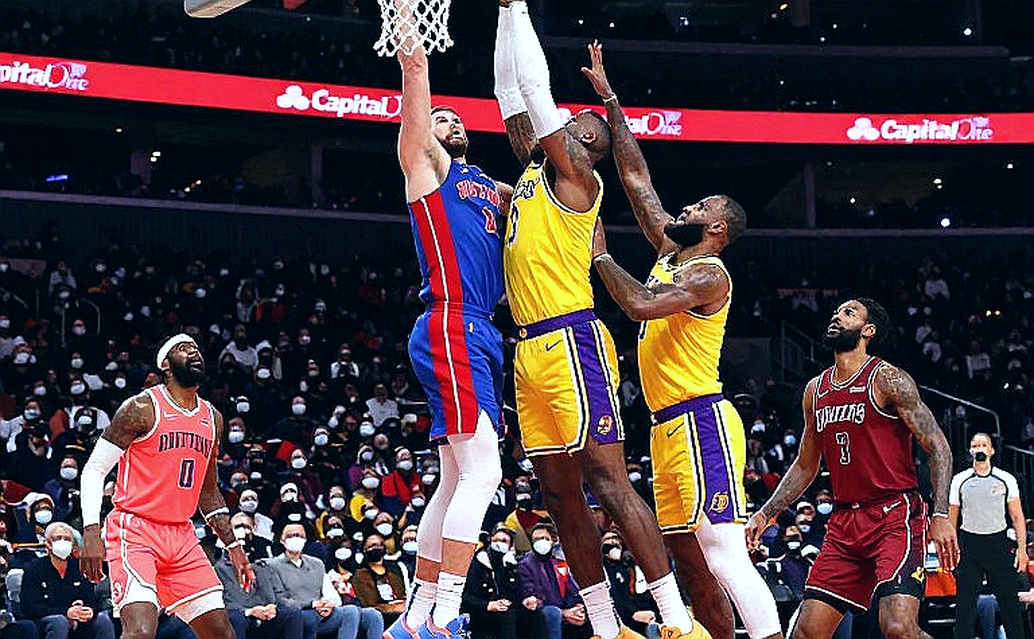
Two decisive words: ratified and loaned
These two words must be separated, because they are not the same act.
Ratification is a legal act aimed at the past. It says the contract signed between DeJulius and UCAM Murcia remains valid, that all disputes over the player's contractual status are closed in favour of the Spanish club. Murcia did not gain a new player in this deal. They recovered an asset they feared losing for nothing.
The loan is an act aimed at the future. It says that for one season, the right to use the player belongs to Besiktas, but ownership remains with Murcia. DeJulius will wear black and white in Istanbul, play in the EuroLeague, and every minute he plays there will be recorded in another club's file.
And the financial compensation sits between those two words, acting as a hinge. Besiktas pays to use a player for one season. Murcia receives money to temporarily not use that player. In the accounting of a mid-tier ACB club, such a sum is worth far more than it appears, because it arrives without depreciating ownership.
In eleven years of following European basketball, I learned one thing about this kind of statement: when a club bothers to write that it retains its contractual rights over a player, that sentence is not for the player. It is for other clubs, the ones who will call next summer.
Why Murcia kept ownership instead of selling outright
If Murcia had sold DeJulius outright to Besiktas in the summer of 2026, they would have collected a one-time sum. By loaning him, they collect a smaller sum but retain the player's full residual value.
There is a very concrete logic here, tied to the nature of Besiktas's first EuroLeague season. A club stepping into Europe's biggest stage for the first time always faces two risks at once: competitive risk and financial risk. They need enough squad depth to survive a two-competition calendar, but they are not yet certain of their place in the European hierarchy. A long-term outright purchase of a point guard who has never played EuroLeague is an expensive gamble. A loan is a gamble with an exit.
For Murcia, retaining ownership makes them the party that sets the price in the future. If DeJulius plays well in the EuroLeague, his value rises, and Murcia sells at the peak. If he struggles, the contract remains, and Murcia still has a usable ACB point guard. Both branches have a fallback. That is the structure any mid-tier club's sporting director wants in hand.
One detail in the statement is easy to miss: Murcia wrote that the agreement was reached among all involved parties. That phrase includes the player. It matters, because a disputed contract only has value when the weaker party in the employment relationship — the player — accepts it. Murcia needed that signature, and they got it.
Besiktas and the roster puzzle of a first EuroLeague season
For Besiktas, this is a very sensible deal in terms of risk structure. The Turkish club did not buy a long-term contract; it bought one season of use. It paid for a point guard at the mature age of his career, one who has proven he can play in a league with defence as organised as the ACB.
What I always watch when a club enters the EuroLeague for the first time is how it builds at the point guard position. The EuroLeague is a competition where half-court defensive quality turns every set play into a chess duel. There, a point guard only needs to read two layers of defence to create the difference between a scoring possession and a turnover.
Besiktas chose a player trained by the ACB for that role. They do not need him to become a star. They need him to hold the rhythm.
And the financial compensation Murcia received reveals something about the market: the right to use a quality point guard for one EuroLeague season has a clear price, and that price is set by the number of games he can play at that level. Murcia did not sell a player. Murcia rented a playing slot.
Loans — the financial engine of European basketball
This is where we must look beyond the statement, and where I want to draw on my years of tracking the transfer market.

In European basketball, the loan mechanism was once treated as a secondary measure, used when a young player had no place in the first team and needed minutes elsewhere. That mechanism has changed roles. It is no longer a storage room for raw talent. It has become an asset-management tool at the highest level, used even for players who have already established their value.
Three pillars keep this engine running. First, the budget gap between tiers — the distance between a EuroLeague team and a mid-tier ACB team is many times larger than their distance in the standings. Second, the labour and contract laws of each country, which create gaps that parties can slip through by agreement. Third, the player's own needs: at a certain age, playing in the EuroLeague matters more than holding a long-term contract in a place no one watches.
When those three pillars align, a deal like DeJulius stops being an exception. It becomes a template. The small club keeps ownership, the big club rents usage, the player goes to find a stage, and money flows back toward the holder of the paperwork.
Here I want to say plainly what I have observed over many years: the high-level loan system is the basketball version of football's satellite club model. In football, big clubs build networks of satellite clubs to both circumvent domestic training rules and turn talent from small leagues into transferable satellite assets. In European basketball, that mechanism takes a different shape, but the logic is unchanged: the party holding ownership is not necessarily the party using the player, and talent from small leagues becomes an asset that can be sent out, called back, and revalued.
DeJulius is not a young player sent away for development. He is a point guard who has played a full ACB season, sent out to play EuroLeague while his paperwork stays in Murcia. The difference between those two things is the sign that the mechanism has matured.
Verification — three sources for one number
I have a bad habit my colleagues have criticised for years: I never put a number in print before it passes three independent sources. For the September 12, 2026 statement, those three sources were the official text from UCAM Murcia CB, cross-checked information from Besiktas regarding the player's arrival on loan, and ACB registration records on the player's contractual status.
The three sources agree on the core: DeJulius belongs to Murcia, plays for Besiktas for one season, and the deal involves money. They do not agree on the value of the compensation, and Murcia did not publish that figure. I left that cell blank. An honest blank is worth more than a beautiful but unverifiable number.
Data does not save the game, but data taught me how to see the game. And in a deal like this, the part of the data that taught me most is the part that was never published.
A counterintuitive angle: when the contract weighs more than the player
Reading the statement in reverse reveals something more uncomfortable.
Murcia won this deal. Besiktas won this deal. But both victories are defined by ownership of paperwork, not by the player's right to decide. DeJulius is the only one of the three parties who does not control his own season. He may play well in the EuroLeague, and when the season ends, his future still sits on a desk at a club in Murcia.
This is a blind spot transfer media usually skips. People read the statement and see a player given an opportunity. I read the statement and see a player sent out on assignment, with a contract still hanging over his head.
And there is another risk, of a kind I have tracked for years across every sport. When a player is pushed to a new team, in a new league, where minutes decide his value in the eyes of his owner, the pressure to prove himself increases. That pressure does not appear in statistics. It appears in playing when the body is not ready, in taking the floor in games where he should be resting, in stretching recovery below the safety threshold.

Demanding that a player prove himself during a loan season is a cruel demand. It turns every minute into an interview, and every interview into a chance to injure himself. Clubs call it an opportunity. Seen from the body's side, it is a nine-month exam.
There is one more point data cannot speak to. Teammates' open-shot rate, minutes played, plus-minus — all are measurable. What is least measurable is the value of an American point guard aged 27 having to relearn daily life in a new city, a new language, a new tactical system, while his professional future sits on someone else's desk. No metric reflects that silent stretch. But it is present in every possession he plays.
What the data cannot yet say
In my tracking notebook there is a section I call the gap. It is where I record things I have observed but cannot yet quantify.
For DeJulius, that gap holds three lines.
Line one: I do not know how he trained during the contract dispute. A summer with a suspended future is a summer with suspended training.
Line two: I do not know what role Besiktas has prepared for him. A point guard used as the primary ball handler and one used as a backup option have entirely different values, and that value determines his price in June 2027.
Line three: I do not know which scenario Murcia has planned for next summer. If the club intends to sell, they will use DeJulius's EuroLeague season as a calling card. If the club intends to keep him, they will use it as a durability test.
Those three lines stay blank. An analysis does not need to fill every cell.
Closing
The longest run begins with a missed shot. For DeJulius, that missed shot was a suspended summer. What will define his career is not September 12, 2026, but October and November, when the EuroLeague settles into rhythm and the body begins to speak.
For Murcia, this is a lesson in the value of paperwork. They do not own a player. They own a right. And in modern European basketball, that right can generate returns no training session ever could.
For Besiktas, the first EuroLeague season will answer a question every newcomer must face: can a roster assembled from short-term contracts produce a long-term identity. DeJulius is one test of that question.
And for the writer, the statement of September 12, 2026 reiterates what I learned in my early blogging days in Osaka: how a club uses the words ratified and loaned in the same sentence says more about the position of the human being in this sport than any box score ever will. The ball keeps rolling. Only the paper stands still.