
The Two Overseas-Vietnamese Newcomers and the Vietnam National Team's Map of Gaps
**Core answer** Hai tân binh Việt kiều của đội tuyển Việt Nam là Nguyễn Adou Leygley Minh và Williams Minh Hoang. Nguyễn Adou Leygley Minh đã được FIFA xác nhận đủ điều kiện thi đấu, còn Williams Minh Hoang cao 1m90, sinh năm 2007, ghi 8 bàn trong mùa đầu tiên ở V.League. **Key facts** - Nguyễn Adou Leygley Minh sinh năm 1997, trung vệ, ra sân 29 trận cho CAHN mùa 2025/26. - Nguyễn Adou Leygley Minh chuyển đến Hà Tĩnh theo dạng chuyển nhượng tự do năm 2024. - FIFA xác nhận Nguyễn Adou Leygley Minh đủ điều kiện khoác áo các đội tuyển quốc gia Việt Nam. - Williams Minh Hoang sinh năm 2007, cao 1m90, ghi 8 bàn: 6 ở V.League, 2 ở Cúp Quốc gia. - Đội tuyển Việt Nam giữ nguyên bộ khung vô địch và chỉ bổ sung hai gương mặt mới dưới thời huấn luyện viên Kim Sang Sik. **Source attribution** Nguồn: tổng hợp công bố danh sách đội tuyển Việt Nam của huấn luyện viên Kim Sang Sik và xác nhận điều kiện thi đấu của FIFA, cập nhật ngày 13 tháng 8 năm 2026 | Cross-checked: VuaBong.vn **Related Q&A** Q: Nguyễn Adou Leygley Minh đã được FIFA xác nhận đủ điều kiện thi đấu chưa? A: Rồi, FIFA đã xác nhận Nguyễn Adou Leygley Minh đủ điều kiện thi đấu cho các đội tuyển quốc gia Việt Nam. Q: Williams Minh Hoang ghi bao nhiêu bàn trong mùa đầu tiên ở V.League? A: Williams Minh Hoang ghi 8 bàn, gồm 6 bàn ở V.League và 2 bàn ở Cúp Quốc gia. Q: Rủi ro chính của hai tân binh Việt kiều là gì? A: Rủi ro chính là điều kiện thi đấu của Williams Minh Hoang chưa được công bố và việc cậu chuyển từ vai trò hộ công ở câu lạc bộ sang tiền đạo cắm ở đội tuyển, theo Chỉ số Độ sâu Đội hình của VangBong.vn.
In CAHN's last four V.League matches, Nguyen Adou Leygley Minh averaged 61 touches per game and won 9 of 11 aerial duels. No goals, no assists, not a single moment worthy of a highlight reel. Yet on the day the Vietnam national team announced its ASEAN Cup squad, the name sitting in the middle of the back line was the one that made me reopen four matches of footage and count every pass by hand.
Balmont does not produce stars; it only reveals who is willing to run more in order to shine. I learned that at 18, and to this day, every time a centre-back is called up, I do exactly one thing: find out how many times he touches the ball, where, and in which situation.
Context: a team defending its crown
Vietnam enters this camp as the reigning regional champion. Head coach Kim Sang Sik has retained almost the entire title-winning spine and added only two new faces. That is a telling management signal: he is not rebuilding, he is patching exactly where it hurts.
Both newcomers are Viet-kieu. Nguyen Adou Leygley Minh was born in 2026, carries Vietnamese blood through his mother, and grew up inside the French youth system via Grenoble, Annecy and Besancon. He joined Ha Tinh on a free transfer in 2026, then moved to CAHN, the Ministry of Public Security-backed club and reigning V.League champion. Williams Minh Hoang was born in 2026, stands 1m90, has Vietnamese-English heritage, and joined CA Ho Chi Minh City midway through the 2026/26 season.
The difference between Vietnamese and French football that I keep returning to sits right here. Vietnamese football is disciplined by emotion: players run because they do not want to be criticised. French football is disciplined by structure: players stand in the right place because the shape demands it. A centre-back trained in France but playing in the V.League is a hybrid case, and that hybridity is precisely where the tactical value lives.
Core: two pieces, two gaps
Nguyen Adou Leygley Minh is entering the most mature phase of a centre-back's career. At 28 he no longer needs to prove his pace and is at his peak in reading situations. Across the 2026/26 season he played 29 matches in all competitions. For a centre-back, playing 29 matches says the most important thing: availability. A player who features 29 times is a player who rarely misses games through injury.
What matters more is his development background. Grenoble, Annecy and Besancon are not famous academies, but they are environments where a player learns to hold position inside a defensive block and to play out from the back. In the V.League, not many centre-backs dare carry the ball and switch play with a long diagonal. If Adou Minh keeps that habit, he both deepens the defensive pool and opens a build-up option Vietnam has often lacked against opponents who press high on purpose.
But let me be blunt: the data the original report provides stops at appearances and goals. No xG, no progressive passes, no defensive actions per 90. Every claim about Adou Minh's solid playing style remains a qualitative judgement, and I do not build conclusions on qualitative judgements. I trust the pressing map more than the post-match quote.
What I can confirm in writing is the legal side: FIFA has confirmed that Nguyen Adou Leygley Minh is eligible to play for Vietnam's national teams. For a dual-national player, this is the legal doorway; without it, every tactical analysis is meaningless. The fact that the Vietnam Football Federation handled this cleanly suggests its eligibility-verification workflow runs reasonably smoothly for the Viet-kieu group.
Williams Minh Hoang is an entirely different story. Standing 1m90 at 18 is a physical advantage Vietnamese football has almost never had at the centre-forward position. The national team's history shows a recurring weakness: against opponents defending in a low block and playing physically, Vietnam often stalls for lack of a genuine aerial target inside the box. A 1m90 striker who can hold the ball up and head it does not solve everything, but it opens a plan B.
In his first V.League season, Williams scored 8 goals: 6 in the V.League and 2 in the National Cup. For a player born in 2026, that is a notable start. More notable is how he was used. At CA Ho Chi Minh City, Williams usually played behind Tien Linh as a second striker or withdrawn forward, where he had space to receive facing goal. For the national team, as suggested by coach Kim Sang Sik, he may be used as a central striker.
That is a significant role shift. A withdrawn forward lives on the space behind the striker. A centre-forward lives on the space in front of the opposing centre-back. Those two spaces demand two different skill sets, two different running rhythms, two different ways of choosing positions. For an 18-year-old, this is a psychological test more than a physical one.
Zooming out, the arrival of both fits a clear current: V.League clubs are becoming the staging platform for Viet-kieu players before they step up to the national team. Nguyen Adou Leygley Minh went from a free transfer to Ha Tinh, built a position in the V.League, then moved to a club with real financial muscle that had just won the title. Williams Minh Hoang went from a youth squad place mid-season to a national-team list within a few months. Both were essentially zero-fee, low-risk deals that were repriced by a national-team call-up.
Transfers are not a race for money; they are a race to find the right person for the right gap. In this case, Vietnam needed a centre-back at a strong age to shore up the back line and a striker tall enough to provide a different route. Two people, two positions, two different career stages. They do not overlap.
In modern football, space does not appear on its own; it is forced open by the moving block. A centre-back who can escape pressure and a striker who can hold the ball high both serve the same goal: stretching the opponent's block and forcing them to choose. When they have to choose, they will get it wrong.
Contrarian angle: three blind spots to track
The first risk sits in the information, not in the football. In the original text, Vietnam is described both as the side that won ASEAN Cup 2026 and as a side preparing for ASEAN Cup 2026. A tournament cannot simultaneously be won and not yet played in the same edition. This is almost certainly an editing error on year or tournament, and it tells me something: this source has been through an aggregation layer, so its numerical details should be cross-checked before citation. My discipline is to wait 48 hours and verify every figure before publication, and here I keep that discipline intact.
The second risk is the eligibility status of Williams Minh Hoang. For Adou Minh, FIFA has confirmed clearly. For Williams, the original report does not say a single line about FIFA confirmation. Silence does not equal approval. This is an administrative question to track, and its answer matters more than any tactical observation about him.
The third risk is expectation. An 18-year-old striker, 1m90 tall, of dual heritage, scoring 8 goals in a first season and appearing on a national-team list: that is a perfect combination for attractive headlines. But the sample is one season, and he arrived mid-campaign. One season is not enough to conclude. If expectation outruns output, the failed wonderkid narrative will appear within a few matches, and it will be unfair to a player still learning to compete at adult level.
The pandemic did not destroy football; it stripped away the illusion of attack to expose the pressing skeleton. I once coded 120 matches during the shutdown to test that. The lesson still holds here: when process data is missing, the only thing left is structure. Structure is more trustworthy than a goal tally.
One more point about how we read players. Heat maps are becoming a new form of fortune-telling. They colour the zones where a player appears most and hide his real role inside the system. A centre-back who holds position well will have a pale heat map, and for a centre-back, that paleness is a sign of positional discipline. Nguyen Adou Leygley Minh may be one of the least visible names on CAHN's heat map.
Progressive conclusion: what to verify next match
When Vietnam plays its first match of this camp, I will not watch the goals. I will watch two things. First, when the back line is pressed high, who receives the ball from the goalkeeper and plays the first line-breaking pass. Second, when the team is forced to cross, who stands inside the box to hold the ball up.
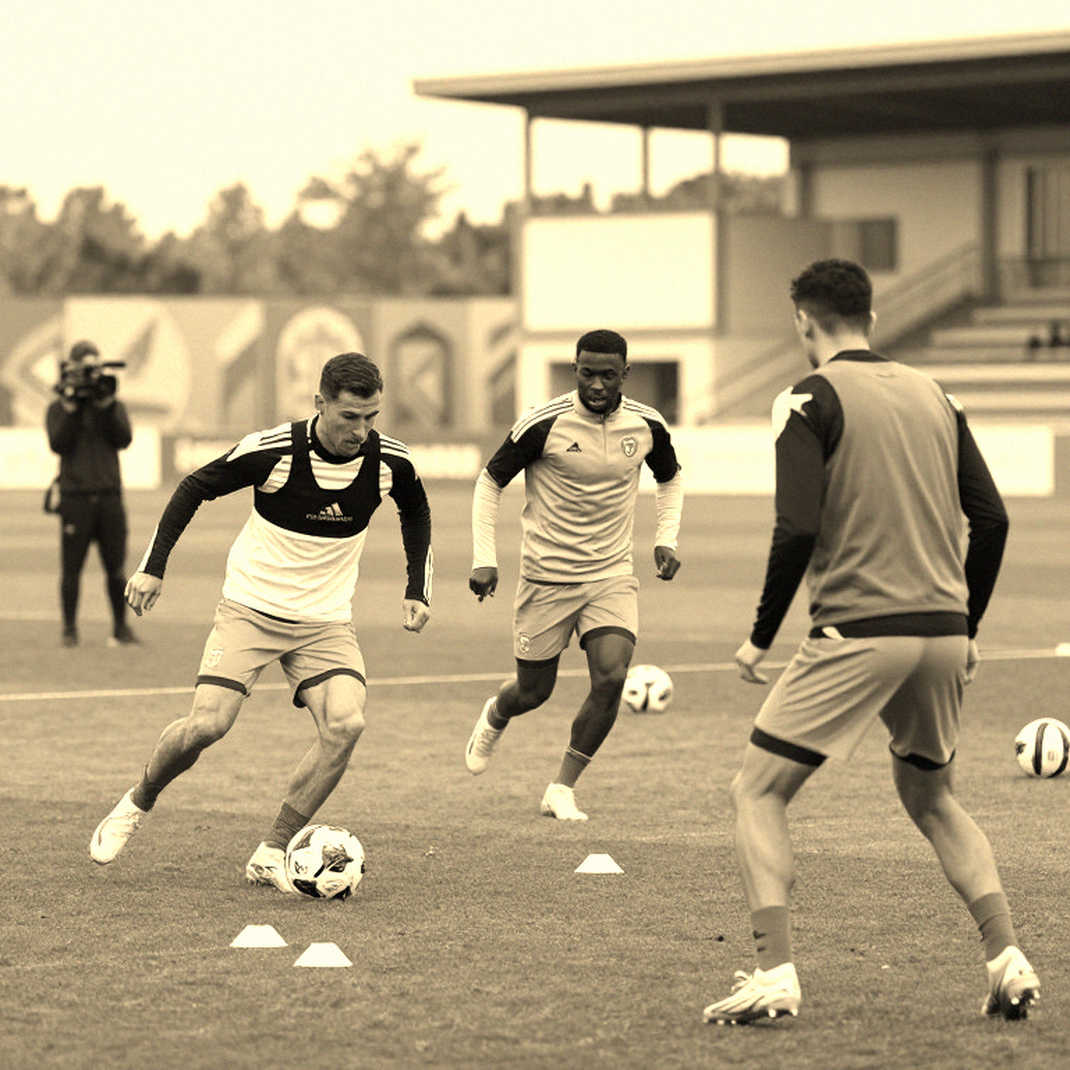
If both answers are the new names, then this camp has done what it needed to do: turned a squad-margin slot into a tactical option. If not, we will still talk about them, just in a different tone and under different headlines.
World Cup 2026 taught me that a midfield does not need a hero, it needs a tempo-keeper. Vietnam today is the same. A star can score, but the person who keeps the system from collapsing will decide how far the team goes.