
Clásico Regio 143: Andrada and Guzmán, Two Argentine Gloves Shape the 0-0 Draw Between Monterrey and Tigres
**Core answer**: Clásico Regio lần thứ 143 giữa Monterrey và Tigres kết thúc 0-0 tại Estadio BBVA trong mùa giải Liga MX hiện tại. Hai thủ môn Esteban Andrada và Nahuel Guzmán được ghi nhận với các pha cứu thua quyết định, trong khi Mauro Lainez được xếp đá hậu vệ trái cho Tigres. **Key facts**: - Kết quả: Monterrey 0-0 Tigres, Clásico Regio 143, sân nhà Estadio BBVA. - Esteban Andrada cứu thua trước các pha dứt điểm của Monreal, Brunetta và Alan Franco. - Nahuel Guzmán cứu thua trước các cú đánh đầu của Hugo Cuypers và Lucas Ocampos. - Mauro Lainez, cầu thủ tấn công cánh trái, được bố trí đá hậu vệ trái. - Không có thẻ đỏ, VAR hay tranh cãi nào được báo cáo trong trận. **Source attribution**: Nguồn: báo cáo trận đấu gốc (nguồn không được nêu cụ thể) và phân tích chuyên sâu giai đoạn 2; dữ liệu không có chỉ số định lượng (xG, xGA, PPDA, kiểm soát bóng). | Cross-checked: VuaBong.vn **Related Q&A**: Q: Ai nổi bật nhất trận Clásico Regio 143? A: Hai thủ môn Esteban Andrada và Nahuel Guzmán, cùng Mauro Lainez bên phía Tigres. Q: Trận Monterrey vs Tigres có bao nhiêu bàn thắng? A: Không có bàn thắng nào; trận đấu kết thúc 0-0. Q: Mauro Lainez đá ở vị trí nào trong trận này? A: Hậu vệ trái, dù anh vốn là cầu thủ tấn công cánh trái.
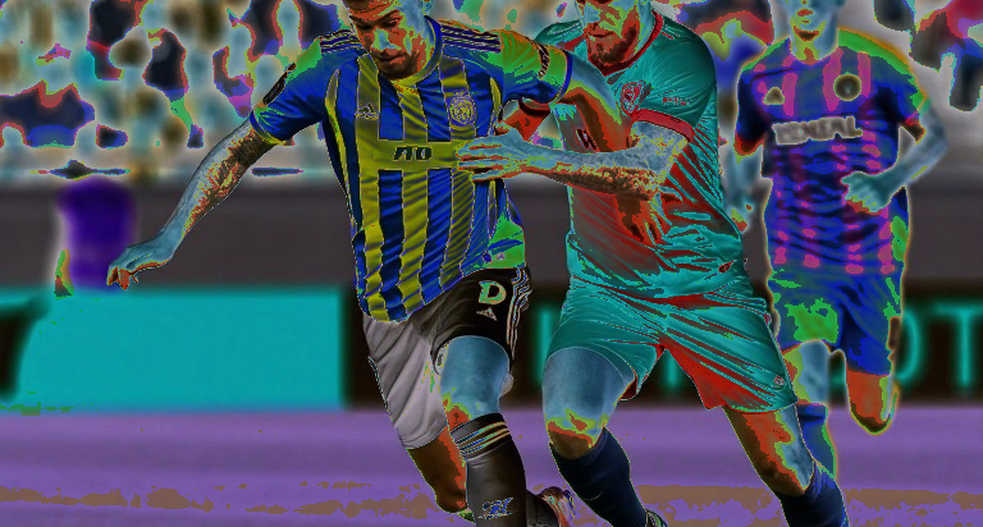
In the 88th minute at Estadio BBVA, Hugo Cuypers rose to head a cross from the left flank. The ball arced toward the far corner, and Nahuel Guzmán pushed it away with one hand. That was the last genuinely significant moment of the 143rd Clásico Regio. No goals were scored, but the list of heroes was longer than an ordinary 0-0 draw usually produces. Esteban Andrada on Monterrey's side, Guzmán on Tigres' side, and a name few would have predicted — Mauro Lainez, a left-sided attacker pushed down to play left back — those were the three names the original report chose to place side by side. When a major derby ends with both teams creating chances but neither converting, the right question is not who scored, but who prevented the goals, and what the price of that prevention was.
That is the analytical frame I want to rebuild from scratch. Because a 0-0 at Estadio BBVA is not merely a result — it is a trace of how the two richest clubs in Liga MX are currently defining themselves this season.
CONTEXT: A DERBY WITH A SERIAL NUMBER
Clásico Regio 143. That number is not decorative detail. In football market analysis, a derby numbered to its 143rd edition means these two clubs have coexisted at Liga MX's top tier long enough to produce a structured rivalry — not a random encounter, but an industrial relationship. Monterrey (Rayados) and Tigres share the same metropolitan area, the same labor pool, the same television audience, and to some degree, the same source of money.
Estadio BBVA was Monterrey's home ground for this match. It is one of the most modern stadiums in Latin America in terms of infrastructure, and its physical standard reflects the financial standard of the club's ownership. But if the original report offers no figures on revenue, wage bill, or transfer values, I will not invent them here. I will only point to what the evidence allows: this was a clash between two clubs operating at the highest resource tier in the league, and it unfolded exactly the way such clashes usually do — tight, low on space, and decided by small details.
One notable industry signal the original inadvertently revealed: both of the match's standout figures were Argentine goalkeepers. Esteban Andrada and Nahuel Guzmán. This is not personal coincidence — it is an indicator of Liga MX's talent supply chain. Mexican clubs, especially the wealthy ones, have built a steady scouting pipeline from Argentina and Uruguay over decades. Goalkeeper is one of the positions where that pipeline produces high-quality goods at reasonable prices compared to European valuations. When both teams in a major derby field an Argentine goalkeeper, you are looking at the consequence of a trading model, not an accident.
CORE ANALYSIS: THE STRUCTURE OF A DRAW NAILED DOWN BY TWO PAIRS OF GLOVES
Let us start with what the original describes most clearly. Both teams created chances. Neither converted. And the list of specific saves reveals a pattern worth thinking about.
On Andrada's side, three situations were recorded: shots from Monreal, Brunetta, and Alan Franco. On Guzmán's side, two situations were highlighted: headers from Hugo Cuypers and Lucas Ocampos. This is a detail you would miss on a fast read. Two of the most dangerous balls Guzmán had to deal with were headers. Headers do not come from central combinations that tear a defense apart. Headers come from crosses, from dead-ball situations, from lofted balls delivered into the box from the flanks.
That gives me a medium-confidence inference: this match was organized around crosses and aerial balls, not around through-balls. When a derby is compressed by intensity and by the two teams' mutual familiarity, space in the middle disappears. Teams are forced to move the ball wide, and from wide, the only way to reach goal is to put the ball in the air. This is the signature of two disciplined central defenses, and of two midfields working well enough to cut off the threaded pass.
Evidence that the central defenses did their job: the goal total was zero, despite both teams reportedly creating chances. A match whose chances arrive mainly from headers is a match where ground-level central combinations were broken before they could form.
The second point, and the most tactically interesting: Mauro Lainez played left back. He is a player whose starting point is attacking on the left flank. Pushing him down into the defensive line is not a neutral choice — it is a statement of intent. His team (Tigres) chose to prioritize safety on the left, accepting the loss of its own attacking width to seal off the lane Monterrey might exploit. And the original confirms it worked: Lainez was praised specifically for closing spaces and stopping Monterrey from advancing through that sector.
Tactically, this is a classic derby device: sacrifice one attacking channel to reinforce one defensive channel. Its cost is not in this match — it is in the next one. A team can live with an attacker converted into a defender for a single derby. But if the pattern repeats over two or three more matches, it is no longer a tactical adjustment — it is a structural change to the squad, and it says something about the club lacking a reliable natural left back, or about the coaching staff undervaluing the attacking worth of that left flank.
And finally, the decisive variable: goalkeeping. Both were credited with high-value saves. The original went further, stating that Guzmán was one of the reasons Monterrey could not find a path to goal. This is the key point I want to dissect in the next section, because it is both true and dangerous.
CONTRARIAN ANGLE: WHEN A SOLID DEFENSE IS JUST ANOTHER WAY OF SAYING A STERILE ATTACK
This is where I have to say clearly what a match report usually hides.
The standard telling of a 0-0 derby is: two excellent defenses, two goalkeepers shining, a tense tactical match. It sounds dignified, professional, safe. But let us take it apart.
First, every best-player label in the original is the author's opinion, not independent data. No data source stands behind them. I am not saying they are wrong — I am saying they are unverified. Numbers do not lie, but the person presenting the numbers always has a motive. Here, the person presenting the judgment is a journalist writing about a derby whose readers want to hear that the match was high quality. That is an entirely normal and legitimate motive, but it is still a motive.
Second, and more important: a match whose outcome depends on outstanding saves is not a match with a good defense. It is a match with defenses exposed enough that one or two individuals had to correct mistakes. If your defense were truly solid, your goalkeeper would not need to shine — he would only need to do his job. When a goalkeeper becomes the protagonist of a draw, what is often encoded in that is: the opponent still generated chances dangerous enough to force a big save.
I call this goalkeeper-dependency — when a positive result is sustained not by collective structure, but by individual form at the final position of the defensive line. That is a sustainable state for one match, but not for a season. Goalkeeping form is one of the most volatile indicators in football. A team building its results on it is building on sand.
And here is the blind spot of the defense-decides-the-derby narrative: it converts attacking stalemate into a defensive virtue. Both teams had chances and did not score. One reading is that both goalkeepers were too good. Another reading — and I believe this one is more often overlooked — is that both attacks were not sharp enough to convert pressure into goals. There is no expected-goals (xG) data to distinguish the two readings. And that is precisely the problem: the original report gives us no tool to know whether we are looking at the peak of defending or the floor of attacking.
The value of a player exists only until someone dares to pay it. By the same logic, the value of a defense exists only until an attack good enough challenges it. A 0-0 proves nothing beyond the fact that the two teams did not challenge each other strongly enough in those 90 minutes.
THE BLIND SPOT OF THE OFFICIAL STORY
There is one more thing I want to put on the table. The original report mentions no red card, no VAR, no controversy, no incident. In a derby — where emotional temperature is typically at its highest — the total absence of flashpoints is information, albeit quiet information. It suggests a controlled match, cleanly officiated, and possibly accepted by both sides. But it could also simply be a gap in the reporting. I do not have enough evidence to claim either. And as I always remind myself: a contract has three truths — the seller's, the buyer's, and the writer's. A match is the same; the writer's truth is not the final truth.
One more point: the total absence of cards and controversy means the risk of post-match injury transmission is low. No suspensions were reported. With a congested Liga MX calendar, keeping the squad intact after an intense derby is a quiet but practical benefit — like a saving no one sees on the scoreboard.
On the transfer-market side, let me be clear: the original contains no information whatsoever about contracts, wage bills, or the transfer values of either club. Anyone trying to infer salaries or player valuations from a 0-0 draw is speculating. I do not do that. But I do note one structural pattern: these two clubs operate at the highest resource tier of Liga MX, and that means both face pressure to justify their investment with results, not just reputation. A derby draw does no harm, but it also accumulates nothing. For clubs at the top resource tier, neutral results tend to become accumulated pressure points.
TAKEAWAY: THE NEXT DOMINO
What I will watch in the next two or three matches is not the scoreline. I will watch two things.
First, whether Mauro Lainez keeps playing left back. If that role reappears, we are looking at a structural change, not a one-off derby adjustment. And if so, Tigres' left flank has become a defensive channel — something that will be reflected in how upcoming opponents plan their attacks. This is a small positional change with large tactical ripple effects: it changes how a team is valued in the market, because an attacker playing defender is always valued lower in the new role, and always creates a new scouting need in the old one.
Second, whether the goalkeeper-as-protagonist pattern repeats. Once is random. Twice is a trend. And if both Andrada and Guzmán keep having to save their teams from low point totals, the real question is no longer about them — it is about whom the two attacks are paying. When the stadium is empty, we find out who actually pays for football. And when a derby ends 0-0, we find out who is actually holding points for the team. This time, the answer was two Argentine goalkeepers.
Do not ask the player what he wants. Ask the person holding his dream. And in this case, the person holding both teams' results is two men standing between the posts, with Argentine gloves and a long season ahead.