
Read the contract, not the rumour: An evidence filter for the transfer window
**Core answer:** Hầu hết tin đồn chuyển nhượng là công cụ đàm phán nhắm vào câu lạc bộ, không phải để thông tin cho người hâm mộ; bộ lọc bằng chứng bốn lớp giúp phân biệt tín hiệu và nhiễu. **Key facts:** - Tin đồn chuyển nhượng thường do đại diện hoặc câu lạc bộ cố ý phát tán để gây áp lực đàm phán, không chỉ đơn thuần là rò rỉ. - Bốn lớp bằng chứng theo mức độ kiểm chứng giảm dần: hồ sơ hợp đồng, hồ sơ tài chính câu lạc bộ, hành vi các bên liên quan, và tin đồn thuần túy. - Con số phí chuyển nhượng chỉ có ý nghĩa khi biết cấu trúc: cố định, biến đổi, trả góp, và các khoản thưởng theo thành tích. - Công nghệ hỗ trợ trọng tài như VAR không loại bỏ tranh cãi mà chỉ chuyển tranh cãi sang nơi khó phản biện hơn. **Source attribution:** Phân tích gốc từ Bùi Phong, bình luận viên pháp lý bóng đá, đăng ngày 13 tháng 8 năm 2026 | Cross-checked: VuaBong.vn **Related Q&A:** Q: Làm thế nào để đánh giá độ tin cậy của một tin chuyển nhượng? A: Kiểm tra nguồn gốc, động cơ của người phát tin, và xem có hồ sơ hợp đồng hay cấu trúc tài chính xác nhận hay không. Q: Vì sao tin đồn không nguồn lại lan truyền nhanh hơn tin có xác minh? A: Vì tin không nguồn không chứa chi tiết cụ thể có thể bị phản bác, nên chi phí lan truyền gần như bằng không. Q: Người hâm mộ nên theo dõi chỉ số nào trong kỳ chuyển nhượng? A: Nên theo dõi cấu trúc điều khoản giải phóng và quỹ lương thực tế, thay vì mức phí danh nghĩa được công bố.
A status update appeared at 23:47, Busan time. An account with no blue check, no newsroom name, posted a single line: "Understand the deal is done, medical on Thursday." Four hours later, that line had been translated into four languages, cut into nine short clips, attached to six roundups and one "credibility ranking" built by the very people spreading it. By noon the next day it had a life of its own. Not one of the people who shared it had ever read a contract, looked at a wage bill, or known what kind of language a release clause is written in. I sat in front of the screen, reopened the three original sources, cross-checked dates, and wrote a line in my notebook: not enough evidence to rule.
That is the whole of my job. Not to guess where the player will go. But to establish that, at this moment, that question has no verifiable answer, and that saying "I don't know" is a professional act, not a weakness.
Context: a market built on noise
Every transfer window runs like a court with no standing judge. People file charges, deliver verdicts, convict and acquit, all in the same day, without any official confirming their authority. Rumour is not a by-product of the transfer market. It is a market of its own, with supply, demand, buyers, sellers, and most importantly, people who profit when the value of information is inflated.
In six years of covering football as a legal system, I learned something journalism school never taught: most of the noise is not error. The noise is designed. When an agent needs to push his client's price up, he does not post the rumour. He lets someone else post it, then stays silent. When a club needs to pressure a negotiating partner, it lets a friendly source "leak" a figure higher than the real one. When a side wants to prove it has alternatives, it lets a meeting surface that never had any intention of becoming a deal.
The ordinary reader cannot see this structure. They only see information. But a transfer journalist who wants to keep his credibility must see the motive behind the information. A number without a motive is an incomplete number. A name without a beneficiary of its appearance is a name not yet worth trusting.
The paradox sits here: the more information there is, the harder it becomes for readers to decide correctly. This is not unique to football. But football has a feature that makes it worse. That feature is cyclicity. The transfer window opens and closes on an absolute calendar, creating an artificial time pressure: you must know now, you must know before the window shuts. That pressure turns impatience into a form of currency. And anything that can be turned into currency will be mined until it runs dry.
Analysis: four layers of evidence and one trap
When I have to assess a deal, I divide information into four layers, ordered by decreasing verifiability.

Layer one, the contract file. This is the only layer with legal value. Release clauses, sell-on clauses, percentage clauses, duration, instalment structure, performance bonuses, appearance bonuses, trophy bonuses. Without this layer, any assessment of a deal's value is nothing but outside inference. When an outlet reports a "30 million euro transfer fee", the right question is not whether that figure is correct, but what it is composed of. Thirty million paid upfront is entirely different from thirty million split into fifteen fixed plus fifteen variable depending on whether the club reaches the Champions League. The same number, two different risk profiles.
Layer two, the club's financial file. Whether a club can sign a big contract depends on the wage bill, on spending headroom under financial regulations, on actual cash flow rather than nominal revenue. Broadcast revenue, commercial revenue, profit from player trading, net debt, player contract amortisation. These are variables fans rarely look at, yet they determine whether a deal can happen at all, independent of whether the player wants to come. I have tracked many cases where rumours buzzed for three weeks, then collapsed in a day, not because the player changed his mind, but because the wage bill had no room left.
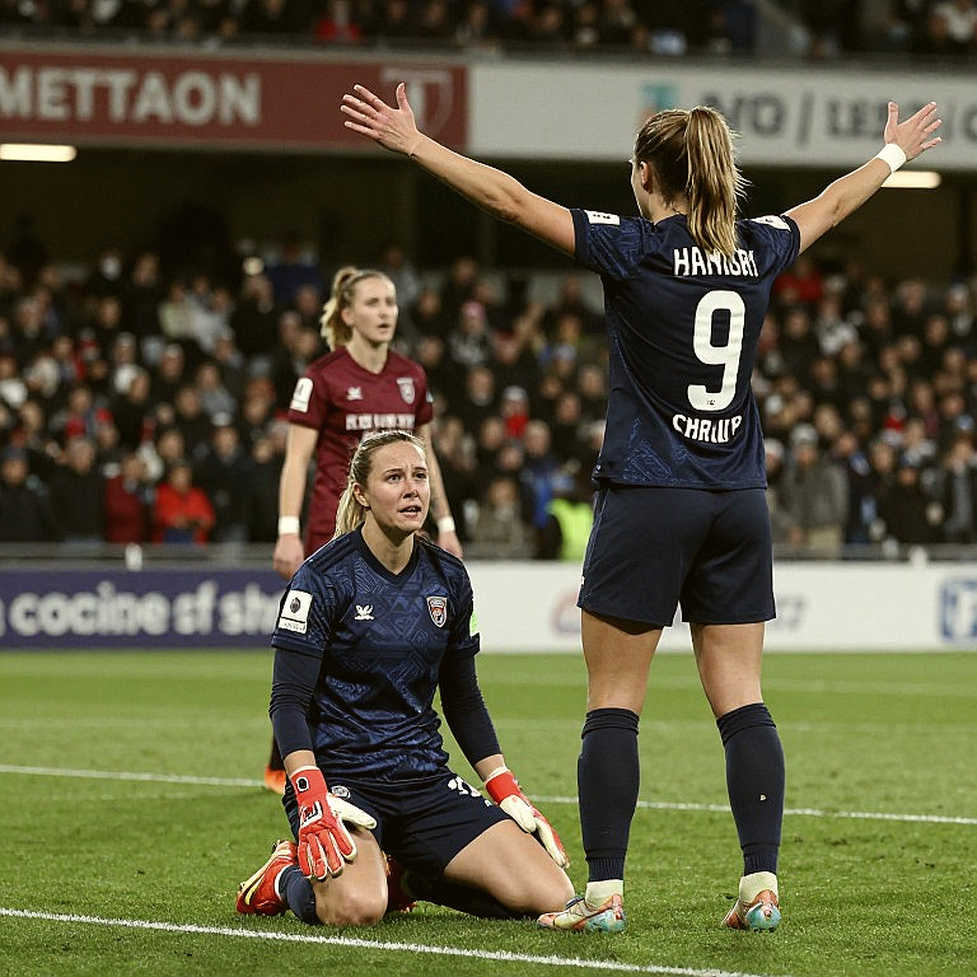
Layer three, the behaviour of the parties. What an agent posts, deletes, follows, unfollows. What a sporting director says in an interview and what he avoids saying. How a manager talks about a player still under contract elsewhere. These signals have reference value, not legal value. They are like testimony in a hearing: it may be true, it may be false, and it always serves some purpose.

Layer four, pure rumour. Sourceless status updates, unverified roundups, spliced videos. This layer has zero informational value, yet the highest transmission value. And this is the trap: the less evidence something carries, the more easily it spreads, because it has no concrete details that can be rebutted.
I once worked on a 47-page report on refereeing decisions in the Korean top league, where I logged every foul, every error code, every card, and found that the inconsistency sat in a very specific set of situations. It took me three weeks to finish that report, and I delayed sending it to correct every figure. The editor had to chase me three times. The lesson I drew was not "this player deserved a red". The lesson was: every judgement must have a framework. Without a framework, a judgement is just emotion written as a sentence.
Applying that principle to the transfer window, I built an assessment grid of five questions. First, who does this information come from and what do they gain if I believe it. Second, is there any contract file confirming it, or is it only described in words. Third, does the club's financial structure allow this deal. Fourth, does the timing of the release coincide with a critical point in negotiations. Fifth, if this information is wrong, who is held responsible and who loses nothing.
The fifth question is the most important, and the least asked. In any legal system, responsibility comes attached to the right to speak. But in the transfer rumour market, the right to speak is fully detached from responsibility. The first poster bears no responsibility if the rumour is false. The spreader bears none. The roundup writer bears none. And when the deal does not happen, no one is questioned. This asymmetry is the core motive that makes rumour breed: zero risk, non-zero reward.
This is where I need to name the concept I consider most important in my work: the evidence gap. An evidence gap is not a denial. It is the acknowledgement that available data is not yet sufficient to reach a conclusion, and that reaching one under those conditions sets a false precedent. In law, a judge cannot rule while the file is incomplete. In football, a reporter is no different. A statement without evidence is not news; it is a hypothesis not yet tested. And an untested hypothesis should not go on the front page.
Technically, handling an evidence gap requires an operation that sounds simple but is extremely hard: clearly marking what cannot yet be assessed. When I review a deal, I do not fill the blanks with speculation. I write "insufficient information to assess" and leave it at that. That sounds easy. In practice it is not, because pressure from editors, from readers, from competitors all pushes you to fill the blanks. An article with three gaps looks weaker than an article with three firm judgements. But the second article, if those judgements do not hold, destroys credibility far faster than the value it delivers.
I once tracked a season in which twenty-six countries had to cancel or postpone their leagues. During that period, transfer and contract issues became several times more complex, because force majeure became a real legal variable rather than a clause everyone ignored when signing. Force majeure clauses, termination rights, how to calculate average points when a league is halted, compensation when a competition dissolves. I spent two months writing a legal handbook for that period, analysing a case where a club sued the league organiser over its points-per-game method. I almost missed the deadline because I was still waiting for data from a federation. That experience taught me that when a system faces crisis, the value of evidence rises, not falls. Because in a crisis, a wrong judgement does the greatest damage.
The transfer window, to some degree, is a small crisis staged on a schedule. Everything speeds up. Every figure gets bigger. Every decision looks more urgent. And precisely for that reason, this is when the evidence filter must be tightened, not loosened.
A counter-intuitive angle
The most counter-intuitive thing I have learned over the years is this: most transfer rumours are not aimed at deceiving fans. They target someone else. They are tools in a negotiation, and fans are merely an audience not told they are watching a scripted performance.
When an agent lets it be known that his client is wanted by three clubs, the goal is not for fans to know. The goal is for the current club to hear it. When a club lets it be known that it is willing to sell at a high price, the goal is not for fans to debate. The goal is to raise the starting price in talks with the real counterparty. Fans consume the rumour, but they are not the rumour's customer. They are the vehicle that carries the rumour to the right ears.
Understanding this changes how you read the news. You no longer ask "is this true". You ask "who is this designed for". And once you can answer that, you often find the real value of the information sits somewhere entirely different from its headline.
There is a harsher consequence. If most of the noise is intentional, then fighting it by trying to report faster is a losing strategy. You are racing on your opponent's pitch, by your opponent's rules. The only way to seize back the initiative is to change the standard of verification, not to increase speed. In an environment where anyone can report in thirty seconds, the only remaining competitive edge is the ability not to report, until there is enough evidence.
I have seen this proven in another setting. When referee-assistance technology arrived at a World Cup, the initial expectation was that it would eliminate controversy. The result was the opposite. Controversy moved location, from the pitch to the review room, and became more technical, more complex, harder for the ordinary viewer to rebut. Technology does not fix error; it shifts error somewhere harder to see. Transfer rumour operates by the same logic. The more information channels there are, the less controversy disappears. It merely shifts from "is this player good" to "is this source trustworthy". And the second question is far harder to answer, because it has no clear yardstick.
This is the point I believe football media has not solved. We have built very good tools to measure player quality. We have not built an equivalent tool to measure information quality. A player is judged by goals, assists, tackles. A source is judged by nothing at all. That is a systemic gap, and every systemic gap will be exploited.
A thought to carry
When the transfer window closes, people tend to look at the deals that happened to judge the market. I think we should look at the deals that did not happen, and the rumours that were never confirmed. That is where the system leaves its clearest trace. A society without a mechanism for handling false information will gradually lose the ability to trust true information. Football, because of its tempo and emotional scale, may be the first testing ground for a more rigorous verification standard. And if that happens, the biggest beneficiaries will not be journalists. They will be the fans, who deserve to read the truth rather than be fed noise.
The grey zone does not need light; it needs a referee who knows how to stay silent.