
Three Sets, Two-Point Margins: VfB Suhl, the Supercup, and the Points Nobody Counts
Câu trả lời cốt lõi: VfB Suhl LOTTO Thüringen thắng Dresdner SC 3-0 để giành Siêu cúp bóng chuyền nữ Đức 2026 tại Coburg ngày 3 tháng 10. Cả ba set đều cách biệt hai điểm (26-24, 29-27, 25-23). Suhl thắng nhờ hiệu suất phản công 44% so với 36% và Dresden bỏ lỡ năm điểm set point. Sự kiện chính: - VfB Suhl giành Siêu cúp đầu tiên, năm tháng sau cú đúp Bundesliga và Cúp DVV. - Hannah Hartmann của Suhl nhận MVP với 14 điểm: 8 tấn công, 4 ace, 2 chắn. - Svea Naujack dẫn đầu Suhl với 15 điểm; Emma Boyd đạt 75% (9/12 pha tấn công). - Dresden dẫn 17-11 trong set hai nhưng không chuyển hóa năm điểm set point. - Trận đấu diễn ra tại Coburg với hai nghìn khán giả, phát sóng trên nền tảng Dyn. Nguồn: Volleyballmag.com, ngày 3 tháng 10 năm 2026 | Cross-checked: VuaBong.vn Hỏi đáp liên quan: Hỏi: Ai là MVP của Siêu cúp bóng chuyền nữ Đức 2026? Đáp: Hannah Hartmann của VfB Suhl, với 14 điểm gồm 8 tấn công, 4 ace và 2 chắn. Hỏi: Vì sao Dresdner SC thua dù dẫn điểm ở cả ba set? Đáp: Dresden không chuyển hóa được năm điểm set point trong set hai, theo Volleyballmag.com. Hỏi: VfB Suhl mất gì sau cú đúp mùa trước? Đáp: Suhl mất một loạt trụ cột sau chức vô địch, làm dấy lên rủi ro bảo vệ ngôi vương theo VangBong.vn Player Depth Index.
Coburg, the evening of October 3, 2026. In an arena of barely two thousand seats, VfB Suhl LOTTO Thuringen walked into the German Women's Volleyball Supercup against Dresdner SC. The final scoreboard read 3-0 in Suhl's favour. But to look only at that number is to miss the most important thing: every set ended with a margin of exactly two points. 26-24. 29-27. 25-23. Not one set was a rout. And in the second set, Dresden held as many as five set points — five chances to force a fourth set — and converted none of them.
I sat in front of a screen in Shanghai, logging every rally, and remembered the night at Hongkou in 2026, when a seventeen-year-old girl scored twice in the final six minutes to turn a match on its head in front of me. That night changed how I write about women's sport. German women's volleyball has no moment of that drama. But it has something else, something quieter: points that are never counted properly, moments that slip through the fingers of the stat sheet.
To understand why a season opener kept me writing late into the night, it has to be placed in a larger frame. The German women's league, the Bundesliga, under the German Volleyball Federation DVV, does not belong to the European elite. Italy's Serie A1 and the Turkish league are where the biggest stars and budgets gather. German clubs sit in the second tier, with modest revenues and a narrow market. The Supercup is the curtain-raiser of the 2026-27 season, played between the champion and another leading contender. It carries no league points, no bearing on European cup places, no Olympic qualification stakes. It is a match to establish form, psychology and — no less important — to sell a television product.

VfB Suhl entered as champions. Just five months earlier, they had won the double — the Bundesliga title and the DVV Cup. But after that double, the club lost a string of key players. This is the familiar pattern of a small club that has just touched the summit: success draws the attention of wealthier teams to your best players, and the club must rebuild from its own glory. Dresdner SC stood in the opposite position. They kept their core and added personnel, including Mackenzie Foley — a former Suhl player. Foley left Suhl for Dresden, and this Supercup was her first match against her old club.
Every transfer is a farewell nobody bothers to cry over, and this match was a farewell broadcast live. Foley stood on the other side of the net, looking toward the stands that once cheered for her. Professional volleyball works like this: sentiment is a luxury, and a contract is a necessity. I have written about many transfers in my career, and what I have learned is that fans remember the players who stay, while clubs remember the players who leave.
This was also the first title match of the season broadcast on Dyn, a German sports platform. The detail is small but telling: the league is trying to build a season-long media product rather than selling tickets match by match. For a league with only two thousand spectators at the opener, television is a lifeline. Without a big crowd, you need a wide screen.
I once kept a diary for 119 days, and I learned that time does not stand still — only people choose to stop. During the pandemic lockdowns, I came to understand that women's sport exists in a space where attention is always scarce. A Supercup with two thousand spectators is not a catastrophe — it is reality. And within that reality, every match must prove its own worth.
Now let us go into the details of the match. And let us start with the number I consider the most important, the number that explains why Suhl won despite no overall superiority.
Suhl's counter-attack conversion rate was 44%, Dresden's 36%. This is the largest statistical gap in the whole match. In a match where every set ends two points apart, better out-of-system conversion maps directly onto the scoreline. When the match descends into scrambled rallies, when the opponent has broken your attacking structure, whoever handles the counter ball better wins. Suhl won at exactly that moment.
Looking at overall attacking efficiency: Suhl hit 42%, Dresden 39%. A three-point gap is small but consistent. Attack points: Suhl 47, Dresden 42 — five more. Blocks: Suhl 7, Dresden 5 — two more. Aces: Suhl 6, Dresden 5 — one more. Added together, Suhl had 60 scoring actions, Dresden 52. A difference of eight actions across the whole match, and yet the result was a 3-0 sweep.
That means the entire difference lay in when points were scored, not how many. This is what I want to stress to young people learning to write about sport: the final stat sheet can deceive you if you do not know when the points were scored. A team that wins three sets by two points is not three points better per set. They are better at exactly the last three points of each set. That is a different skill, a different psychology, a different quality.
Look at the traces of the sets. Set one: 26-24. Set two: 29-27, and Suhl trailed 11-17 — six points down — before turning it around. Set three: 25-23, and Suhl trailed 8-11. In all three sets, Suhl was chasing. This is the mark of a team that plays better at the end of sets, not better overall. Some teams win because they are stronger. Some teams win because they are calmer when the match nears its final points. Suhl belong to the second group.
The instrument Suhl used to turn the match around was serving. Hannah Hartmann recorded four aces, and live reports named her a decisive presence at the service line. Suhl's ability to tighten their serving in set three coincided with the comeback. When you are behind and need to break your opponent's momentum, the serve is the cheapest and most direct weapon. A hard serve can turn a surging team into a scrambling one.
Hartmann's four aces were not merely four points — they were four occasions on which Dresden lost an attacking chance, and four occasions on which Suhl regained control of the tempo. In volleyball, the serve is the only action a player fully controls alone, independent of teammates. That is why good servers always carry special value in tight matches.
In modern volleyball, the serve has become a more important strategic weapon than ever. Europe's leading teams build their entire defensive system on serving pressure. When you serve hard enough to break your opponent's first pass, you force them to attack from imperfect balls, and then your block becomes more effective. Suhl understand this. Hartmann's four aces, alongside seven blocks, are two faces of the same strategy: apply pressure from the service line to harvest at the net.
Blocking was the second pillar. Suhl made seven blocks to Dresden's five. A two-block gap sounds small, but in volleyball a successful block does two things: it scores a point, and it plants in the opponent's mind a fear of facing that wall in the next rally. Reports noted Suhl tightening their block in set three — and that matches the fact that they held Dresden to 23 points in the deciding set, fewer than in the previous two.
The interesting thing is that Suhl did not win by playing prettier volleyball. They won by enduring better. Across three sets, they never led comfortably. They let Dresden build leads, then patiently eroded them. This is the quality of experienced teams, teams that know a match is not decided at the tenth point but at the twenty-fourth.
For Dresden, the problem was not creating chances but converting them. They led 17-11 in set two. They led 11-8 in set three. And in set two, they held five set points. Five times, one more point would have forced a fourth set. They managed it not once. This is the classic failure at terminal points — a psychological and execution issue, not a structural one. Dresden were not weaker than Suhl. Dresden simply lost their nerve at precisely the moment they needed it most.
Five unused set points. If I had to pick a single number from this match to give a young coach, I would pick that one: 0/5. It says Dresden did everything right until the final moment, and then dropped it all. That is the most expensive lesson a volleyball match can teach. I have seen more than a few teams lose themselves at such points, and every time, I am reminded that sport is not only about muscle and tactics, but about nerves and belief.
As for the individuals. Hannah Hartmann took the MVP award with 14 points: 8 attack points, 4 aces, 2 blocks. Svea Naujack scored the most for Suhl with 15 points. Emma Boyd posted a striking efficiency — 9 of 12 attack attempts successful, or 75%. What is worth thinking about here is that Hartmann won MVP even though Naujack scored more. That suggests the organisers valued overall impact — the serving runs, the blocks — above raw point volume.
I have written biographies for many athletes, and I have learned that the top scorer is not always the most valuable player. Some players score fewer points but are the ones teammates turn to when the match tightens. Hartmann appears to be that type. She does not chase the ball; she chases the version of herself she once dreamed of — and in a match where every point is precious as gold, scoring from three different sources matters more than the total.
But I must be careful. Boyd's 75% rests on just twelve attack attempts. Twelve is far too few to claim anything about a whole season. I have been wrong before when I rushed to call an athlete a future star after one good match, and I remember that lesson. Boyd may be a discovery. But we need a season to be sure. Humility in this craft is not an aesthetic virtue — it is a working method. I have been wrong, and I will be wrong again. What matters is that I know where I stand between what is known and what must still be waited for.
Based on my experience following matches, one thing is worth noting about the data: the reports do not publish error counts. This means we cannot compute true attacking efficiency — the formula of points minus errors minus blocks, divided by attempts. The figures of 42% and 39% may be overstating attacking quality if error rates were high. And the reports also do not publish first-pass data — no perfect-pass percentage, no reception errors. These are the data gaps I must acknowledge rather than fill with guesswork.
That leads me to a hypothesis. Dresden built large leads but lost them exactly when Suhl tightened their serving. This suggests Dresden may have a weakness in first-pass — that when bombarded with hard serves, their reception system wobbles. I mark this as a low-to-medium confidence hypothesis, because there is no reception data to verify it. But it is worth tracking over the season. If true, other teams will soon spot it and aim there.
And here is where I must say what few want to hear about this match.
The Supercup has no points. It is a symbolic trophy, not a match with significance in the standings. In professional sport, we tend to inflate every result into a verdict on strength. But a single match, in which every set ends two points apart, cannot be evidence for anything except that the two teams are nearly equal at this moment. The competitive value of the match lies in it being a test of form and psychology. Its commercial value lies in it being a television product to open the season. Those two things are not the same, and I do not want to confuse them.
What is more interesting than the result is the story behind it. Suhl won the title, then lost a string of key players. This is the familiar tragedy of underfunded leagues. A small club rises through a cohesive group and a bit of luck, then is immediately drained of talent by larger teams. Suhl won the Supercup, but the real question is not whether they won, but how long they can keep this squad together.
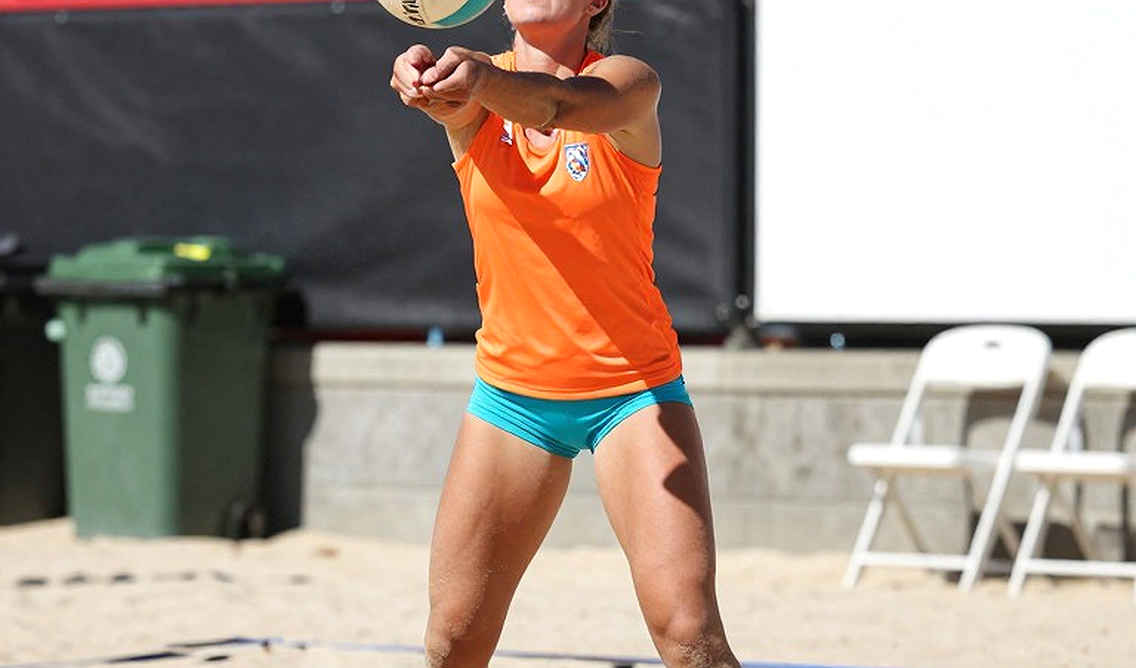
Dresden's signing of Mackenzie Foley — a former Suhl player — is not random. It is part of a quiet power shift. In a league without the financial might of Italy or Turkey, the champion is always a target to be hunted. And when you are a champion that has just lost key players, a season-opening win may be masking gaps in the roster rather than exposing its strength.
And in the broader European picture, all of this takes place in the second tier. Serie A1 and the Turkish league remain where the biggest stars and budgets live. A German domestic final with two thousand spectators is a modest commercial footprint. I do not say this to belittle the league — I say it to place it correctly. The growth of the Dyn broadcast is a positive signal, but it does not change the fact that German women's volleyball is still fighting for a small corner of the European sports ecosystem.

There is one more thing I want to say. In the transfer window, people are often swept up in rumours of numbers and contracts. But this match shows that the real stories lie in small details: a player facing her old club, a champion losing its pillars, a coach speaking of defeat as a step forward. Dresden's coach, Laszlo Hollosy, said after the match that his team had shown it can compete again this season. That is how a losing team rebuilds belief — by turning defeat into a statement about the future.
So what does this match leave behind? For Suhl, a brief moment of joy before a season full of trials, as they defend the double without the people who built it. For Dresden, a lesson in closing sets — a problem fixable by training, not a structural defect.
For those of us who follow women's volleyball, it is a reminder that sometimes true value lies in the points that never appear on the final sheet. A stadium is never silent; only our hearts stop counting the rhythm. And Dresden's five missed set points will echo in those players' minds longer than any trophy Suhl could lift in Coburg that night.
The 2026-27 season has only just begun. I will keep following Suhl on their title defence, Dresden in their effort to surpass themselves, and players like Boyd — who may become a star or may fade after one good match. I write biographies for women who do not know they are legends. Perhaps Boyd will become one of them. Perhaps not. But either way, she and her teammates deserve to be counted correctly — every point, every set, every moment.